
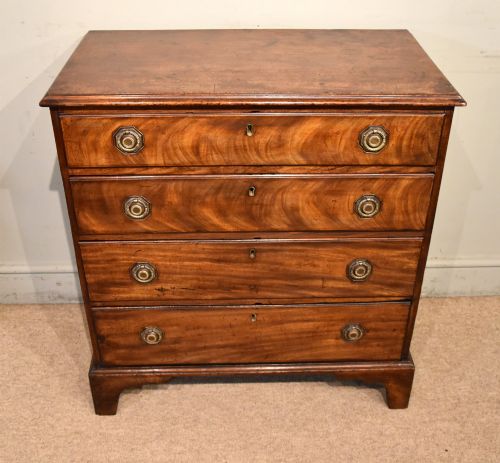
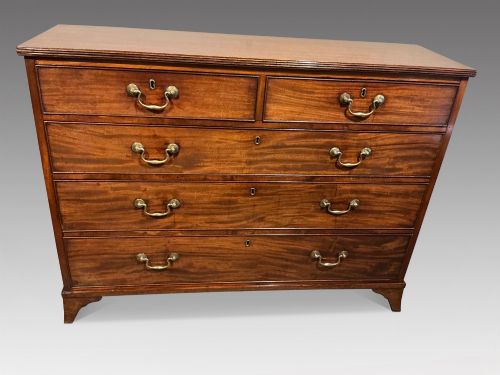
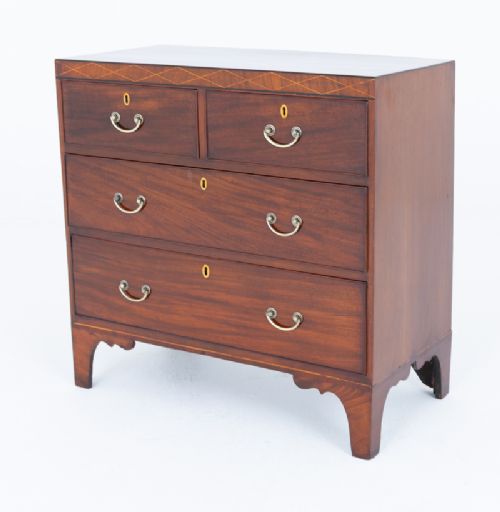
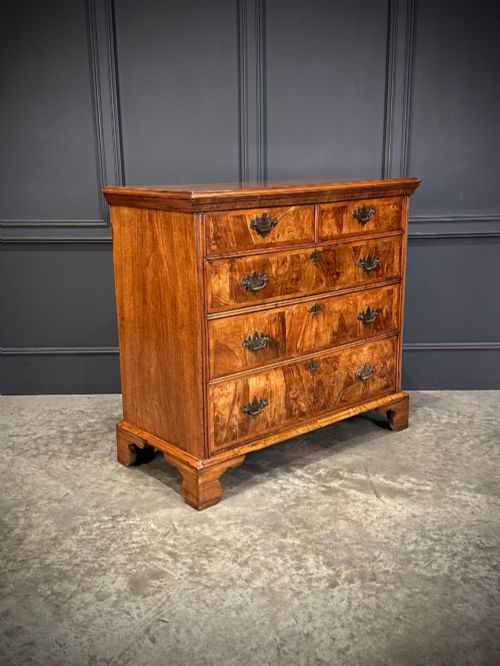
Georgian Period Bracket Feet
Georgian period bracket feet anchor classic storage forms like chests of drawers and mantel clocks, offering a stable and understated base that elevates 18th-century cabinetmaking.
Georgian Period Bracket Feet
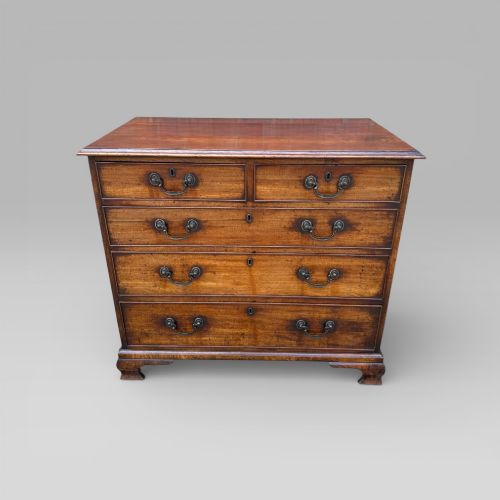
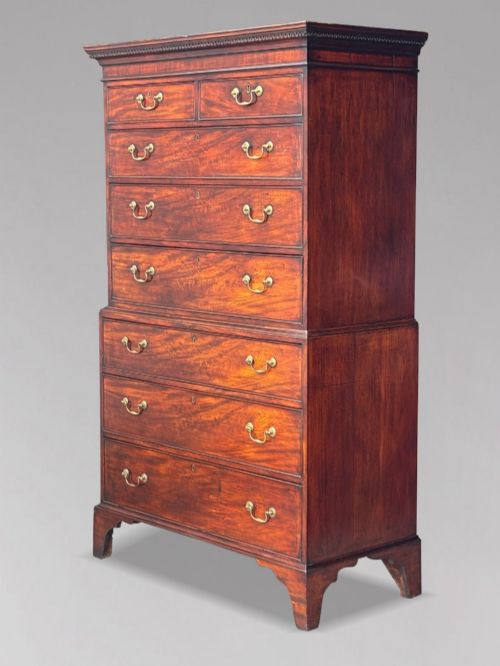
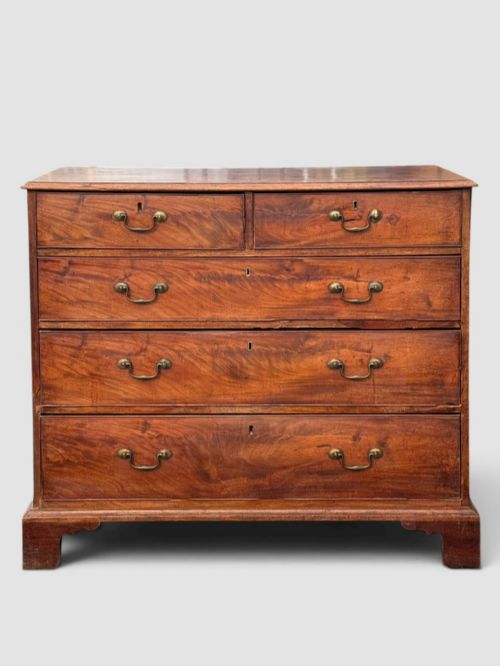
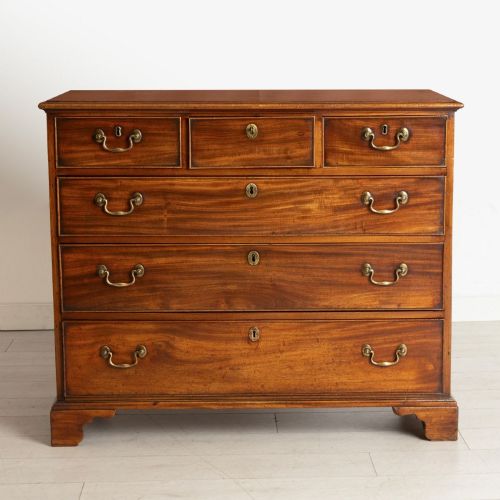
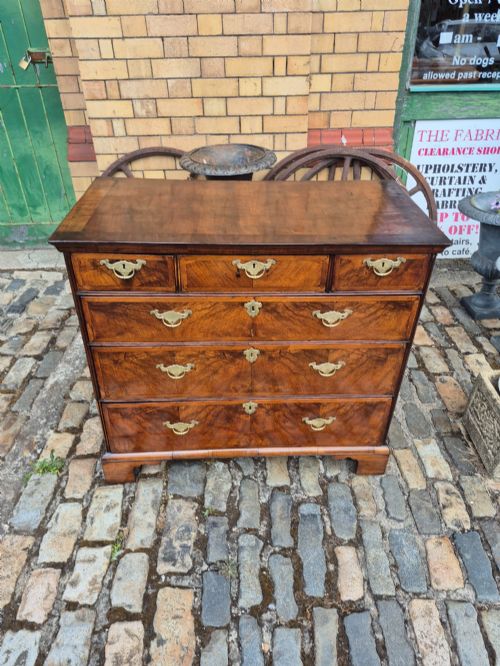
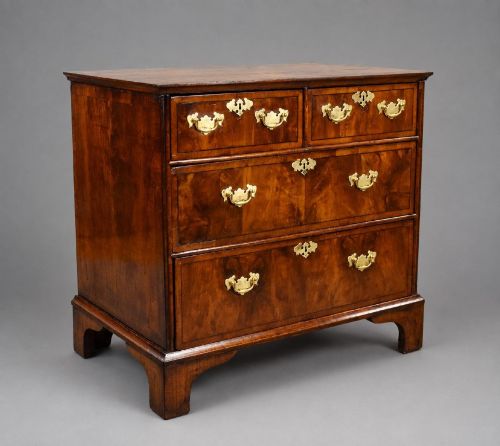
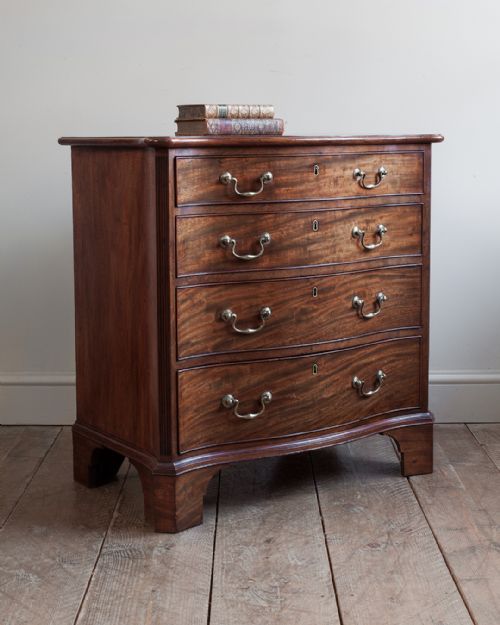
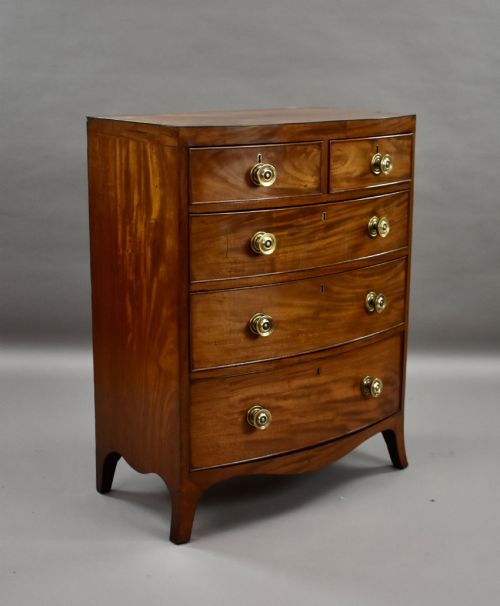
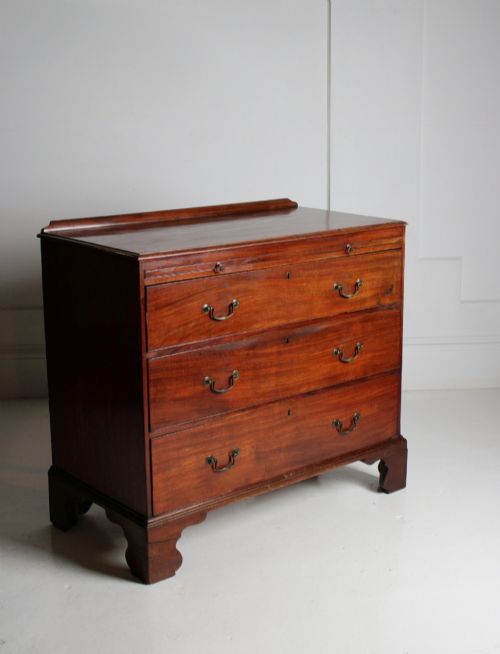
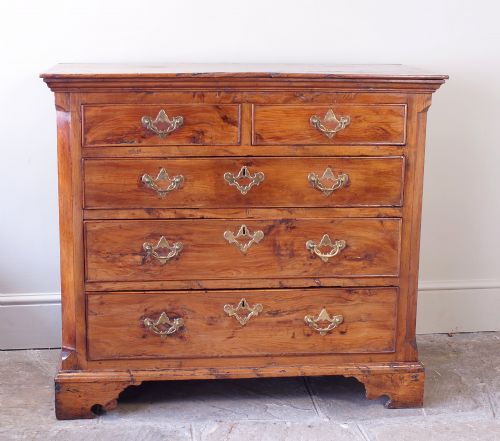
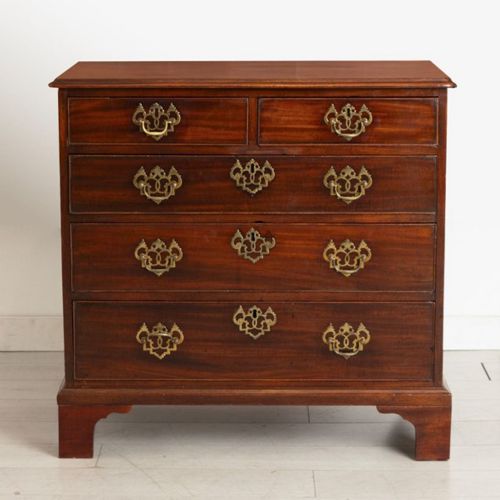
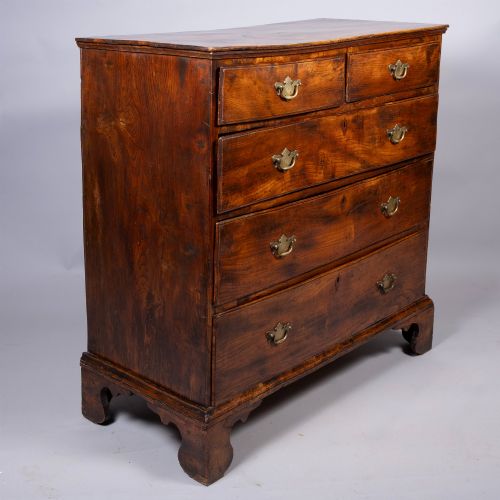
When you examine pieces featuring georgian period bracket feet, you encounter substantial utilitarian furniture primarily composed of chests of drawers, bachelor's chests, and chests on chests. These items originate predominantly from the eighteenth century and the Regency era, reflecting the domestic storage needs of the period.
The version you are most likely to meet on this page is the mahogany chest of drawers, often configured with two short drawers over three long ones, though oak, walnut, and yew wood examples also appear frequently alongside occasional bracket clocks.
How they were made
Cabinetmakers constructed these pieces using solid timbers and handsome veneers, relying heavily on mahogany, oak, and walnut. Timber selection dictated both the visual character and the structural integrity of the carcase.
Makers integrated brass handles, escutcheons, and occasional ebony stringing to complement the woodwork, while the characteristic feet were joined securely to the lower corners to support the heavy timber bodies.
What varies in quality
Quality in these items rests upon the choice of timber and the fidelity of the proportions. Figured veneers, well-chosen cross-banding, and restrained dimensions separate finer examples from standard utilitarian pieces.
The execution of the joinery around the base moulding and feet determines the overall harmony of the piece, distinguishing master cabinet work from simpler provincial production.
J Moorcroft·Desbois & Wheeler·L. Vick
The Georgian Period Bracket Feet Glossary
- Bracket foot
- A structural and decorative foot found at the corners of case furniture, shaped like a bracket and meeting at a mitred corner. It provides a stable architectural foundation for chests and desks.
- Chest on chest
- A tall storage unit comprising one chest stacked directly upon a slightly larger lower chest, popular during the eighteenth century. This form maximises vertical storage space in domestic interiors.
- Bachelor's chest
- A compact chest of drawers featuring a pull-out brushing slide above the main drawers. These versatile pieces served for correspondence and personal grooming in period bedchambers.
- Bowfront
- A convex curved front on a chest of drawers or sideboard, which softens the linear appearance of the furniture. This style gained particular popularity during the Regency period.
- Cross-banding
- A decorative border technique where thin strips of veneer are laid across the grain of the primary wood. It frames drawer fronts and top surfaces to create visual contrast.
Georgian Period Bracket Feet: Frequently Asked Questions
What is a bracket foot?
A bracket foot is a corner support shaped from wood, designed to lift case furniture off the floor while maintaining a solid and grounded appearance. These feet are typically mitred at the corner and can take ogee, shaped, or plain profiles depending on the date and style of the piece.
They represent a traditional alternative to tall legs or a plinth base, characteristic of furniture produced throughout the eighteenth and early nineteenth centuries.
How do I identify a Georgian chest of drawers?
Georgian chests typically feature dense native or imported timbers like mahogany, oak, or walnut, joined with hand-cut dovetails on the drawer carcasses. They prioritize functional proportions and often include brass drop handles or swing handles mounted on backplates.
Interior construction reveals secondary woods like pine or oak, while the exterior displays the restraint and balance typical of eighteenth-century design.
Where were bracket clocks placed?
Bracket clocks sat on tables, brackets, or mantelpieces in principal rooms of Georgian and Regency homes. Their portability allowed owners to move them between chambers as daily routines required.
Enclosed in wooden cases with brass carrying handles or architectural tops, they provided accurate timekeeping alongside decorative presence.
How do I care for antique mahogany furniture?
Antique mahogany requires stable indoor humidity levels and protection from direct sunlight to prevent timber shrinkage and fading. Regular dusting with a soft, dry cloth preserves the polished surface without the need for heavy modern polishes.
Applying occasional natural wax helps nourish old timber and maintains the subtle sheen developed over centuries of use.