


Yew Wood Drawers
These yew wood drawers offer rich figuring and deep natural warmth, spanning centuries from the 17th century through to the 20th century.
Yew Wood Drawers
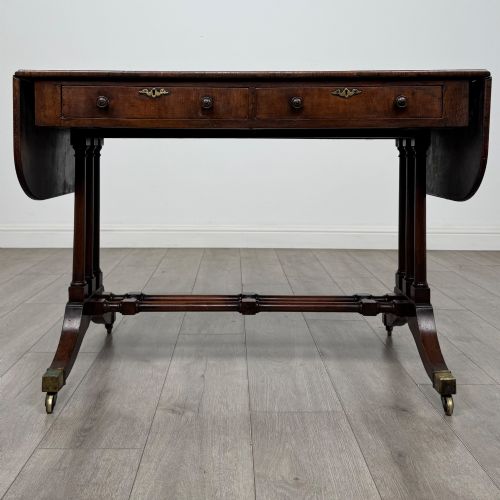
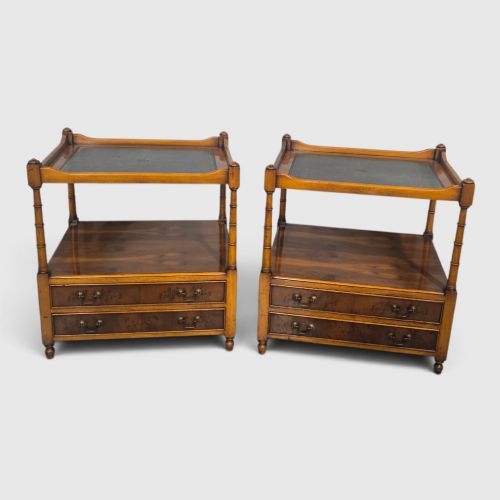
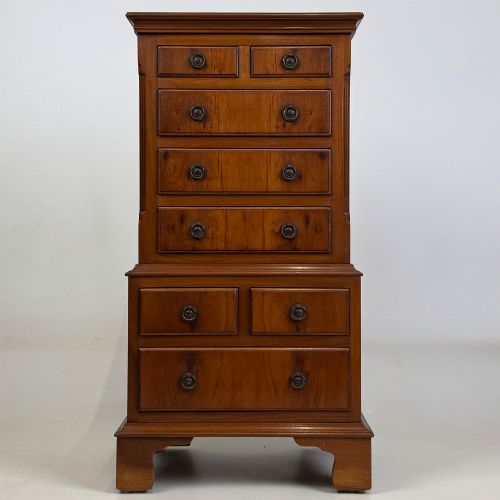
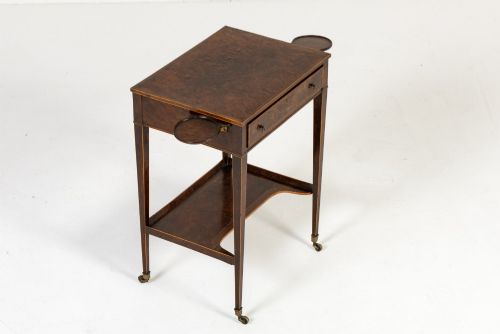
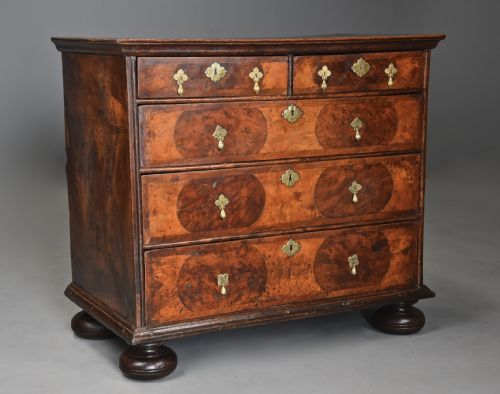
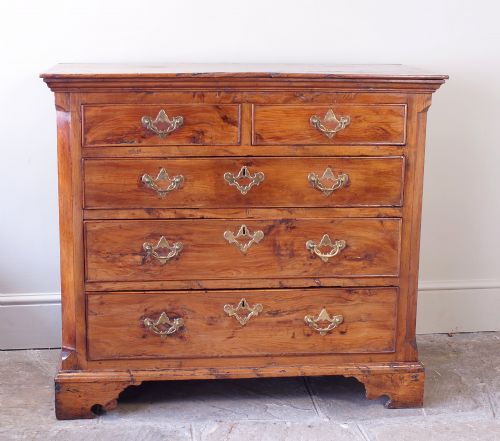
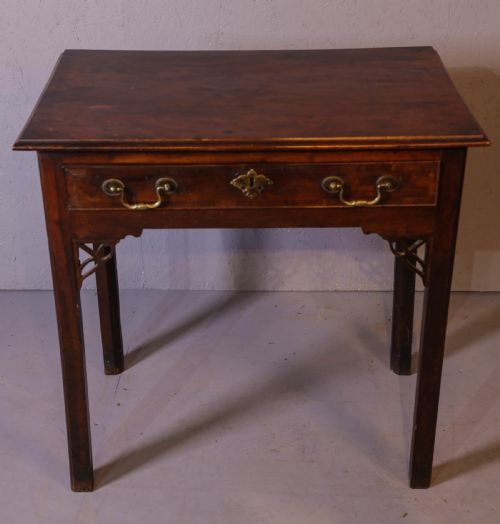
Yew wood drawers comprise forms ranging from compact side tables and writing desks to substantial chests of drawers, spanning periods from the 17th century to the 20th century. The chest of drawers remains the most common form encountered on this page, appearing alongside smaller lamp tables, sofa tables, and miniature apprentice pieces.
Makers and workshops constructed these pieces in styles including Georgian, Regency, William & Mary, and Arts and Crafts. Pieces surface in solid yew, burr yew, or with secondary timbers such as oak, walnut, and mahogany, reflecting the specific regional traditions of British cabinet makers.
How they were made
Cabinet makers utilised dense yew timber and burr yew veneers applied over secondary woods such as oak and pine. Workshops incorporated brass hardware, bone escutcheons, and leather writing inserts into desks and campaign chests.
Craftsmen built drawer carcasses using traditional dovetail joinery, often incorporating crossbanding, boxwood stringing, or oyster veneer patterns. Surface finishing relied on hand-applied polish to highlight the distinct grain patterns inherent in the wood.
Materials recorded across the inventory include solid yew, burr yew, brass, bone, leather, and oak.
What varies in quality
Quality depends upon the selection of timber, particularly the depth of figuring in burr yew and the precision of the veneer work. Pieces displaying well-matched grain patterns across drawer fronts demonstrate superior craftsmanship compared to simpler builds.
The integrity of the original brass handles, locks, and internal drawer construction separates standard items from exceptional examples. Surviving campaign brasses, original patination, and undisturbed secondary woods elevate the standing of a piece.
Edward Barnsley
The Yew Wood Drawers Glossary
- Burr yew
- A growth deformity in the tree that produces highly twisted, knotty grain patterns prized for decorative veneer.
- Oyster veneer
- Slices cut transversely from small branches to create circular, overlapping patterns across a drawer front.
- Crossbanding
- A narrow strip of veneer laid perpendicularly to the main grain direction around the border of a drawer.
- Dovetail
- An interlocking joint formed by interlocking wedge-shaped fingers, used to connect drawer sides to fronts.
- Campaign chest
- A modular chest built in sections with recessed brass handles for transport by military officers.
Yew Wood Drawers: Frequently Asked Questions
What periods do yew wood drawers cover?
These pieces date from the late 17th century through the Georgian, Regency, and Victorian eras into the 1930s. Later examples also emerge from Edwardian and Arts and Crafts movements.
Surviving examples show how cabinet making techniques evolved while retaining the characteristic timber throughout successive centuries.
How do I care for yew wood furniture?
Keep wooden furniture away from direct heat sources and strong sunlight to prevent the timber and veneer from drying out. Regular dusting with a soft cloth maintains the surface.
Apply a coat of appropriate wax polish periodically to nourish the grain and protect the historical finish.
What is burr yew?
Burr yew comes from an irregular growth on the yew tree filled with numerous small knots and swirling grain formations. Cabinet makers sliced this wood into thin veneers for decorative surfaces.
This timber creates highly patterned facades on drawer fronts and tabletops across Georgian and Regency pieces.
Were yew wood drawers used in campaign furniture?
Yes, cabinet makers built military campaign chests in sections fitted with brass corners and flush recessed handles. These pieces travelled with officers during the 18th and 19th centuries.
The durable nature of yew timber suited furniture designed for rigorous transport and field use.