



Yellow Wood Armchair
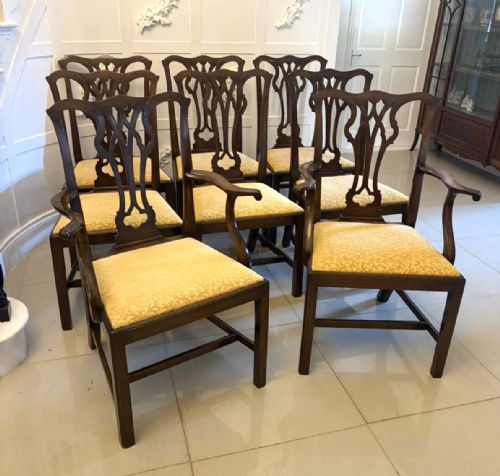
These yellow wood armchair selections bring together seating from the Regency, Victorian, and Edwardian periods.
Yellow Wood Armchair
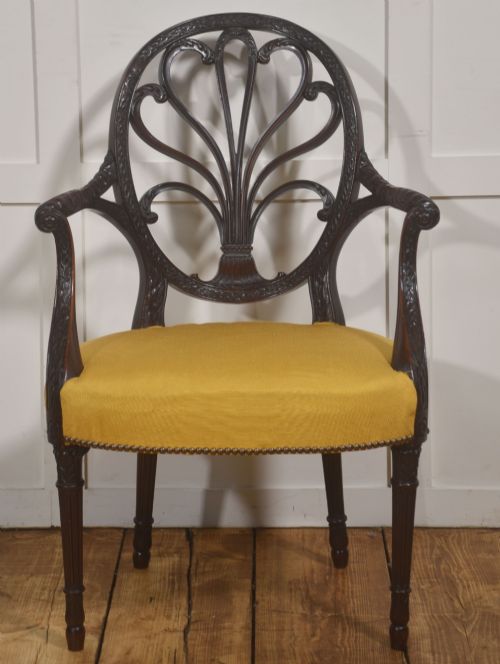
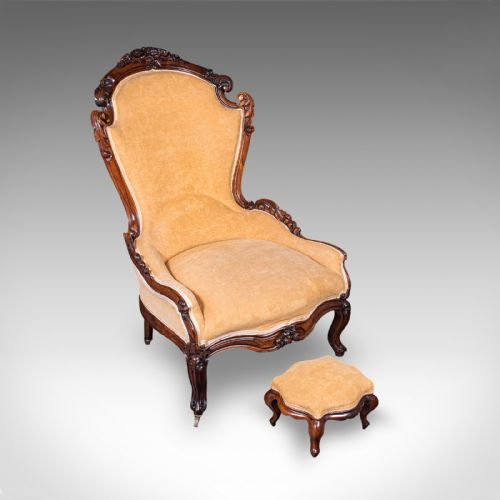
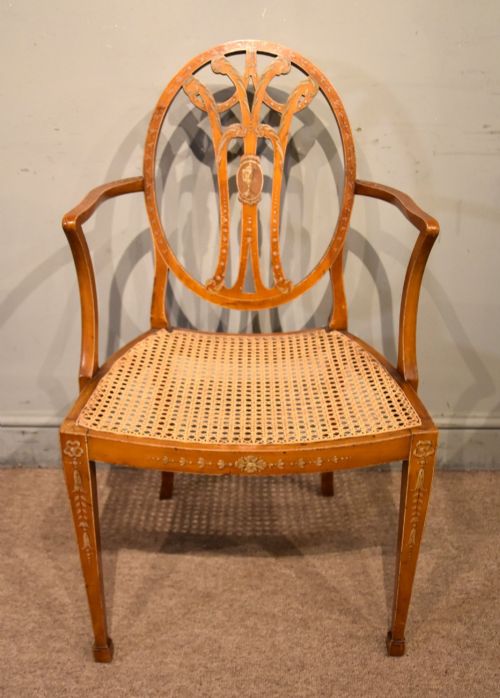
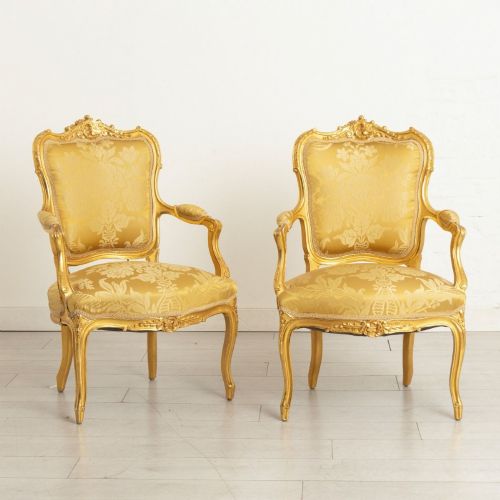
A yellow wood armchair encompasses seating forms spanning the nineteenth and twentieth centuries, including carved walnut desk armchairs, mahogany carvers, and Edwardian satinwood painted examples. These pieces appear across various regional styles such as Regency, French Rococo Revival, and Victorian Chippendale.
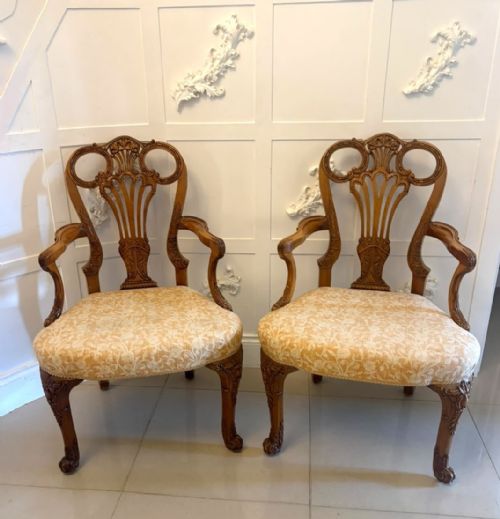
The selection ranges from large Regency bergere chairs and salon suites to pairs of open armchairs upholstered in silk, damask, velvet, and needlepoint tapestry panels. Buyers encountering these listings find diverse timber frames alongside formal dining and low-back lounge chairs.
How they were made
Craftsmen utilised solid timbers including mahogany, walnut, rosewood, elm, birch, and giltwood to construct the structural frames of these armchairs. Joinery methods and carved ornamentation define the execution of styles from Chippendale revival to Louis XV.
Upholstery techniques incorporate traditional fabric coverings such as velvet, silk, and damask, alongside needlepoint tapestry panels fitted to open and closed armchairs. Surface treatments range from painted satinwood finishes to gilded details on carved wood components.
Yellow Wood Armchair Retail Price Guide 2026
Typical asking prices for yellow wood armchair among the pieces listed under this phrase on Sellingantiques today, from the lower quarter to the upper quarter. They describe what is for sale here now, not the wider market.
Listings feature woods such as mahogany, walnut, rosewood, elm, and satinwood alongside fabrics like velvet, silk, and damask.
What varies in quality
The standard of carving across the wooden frames determines much of the distinction between ordinary and superior examples. Crisp hand-carved details on walnut and mahogany elements reflect greater artisan skill.
The integrity of the frame construction and the choice of covering materials, from standard fabric upholstery to bespoke silk and needlepoint tapestries, distinguish different tiers of workmanship.
The Yellow Wood Armchair Glossary
- Carver
- An armchair designed to match a set of dining chairs, usually featuring arms that accommodate formal dress. These items often stand at the head of a dining table.
- Bergere
- An enclosed upholstered armchair with wooden framing visible around the sides and back. This French form typically incorporates cane or upholstered panels.
- Fauteuil
- An open-arm armchair with an exposed wooden frame originating in France. The arms usually feature padded elbow rests.
- Show wood
- Timber frame construction left visible around the upholstered portions of an armchair. This reveals the grain and carving of the underlying wood.
- Giltwood
- Timber coated with a thin layer of gold leaf or gold paint. This finish appears frequently on decorative nineteenth-century salon seating.
Yellow Wood Armchair: Frequently Asked Questions
What periods do these armchairs come from?
The listings include pieces originating from the eighteenth, nineteenth, and early twentieth centuries.
Specific periods represented range from Regency and Victorian eras through to Edwardian and Art Deco designs.
Are these chairs suitable for daily use?
Many of these armchairs function effectively as desk chairs, accent seating, or lounge chairs in modern interiors.
Buyers often select them to complement existing antique furniture collections while serving practical seating needs.
What wood types are used in the frames?
Makers utilised various hardwoods including mahogany, walnut, rosewood, elm, birch, and satinwood.
Some pieces also feature painted finishes or giltwood surface decoration depending on the style.
How do I identify different regional styles?
Stylistic indicators include French Rococo curved lines, Regency classical proportions, and English Chippendale revival carving.
Examination of the woodwork and upholstery style helps differentiate between English, French, and Italian origins.