

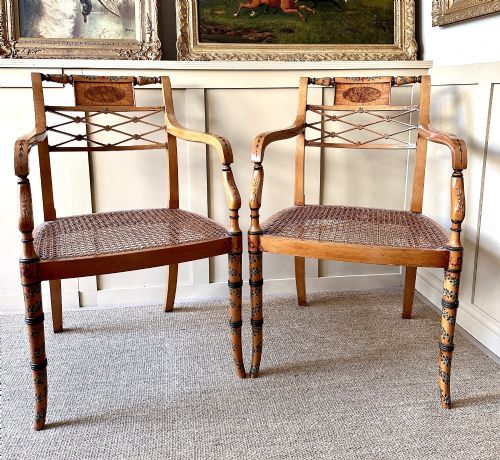
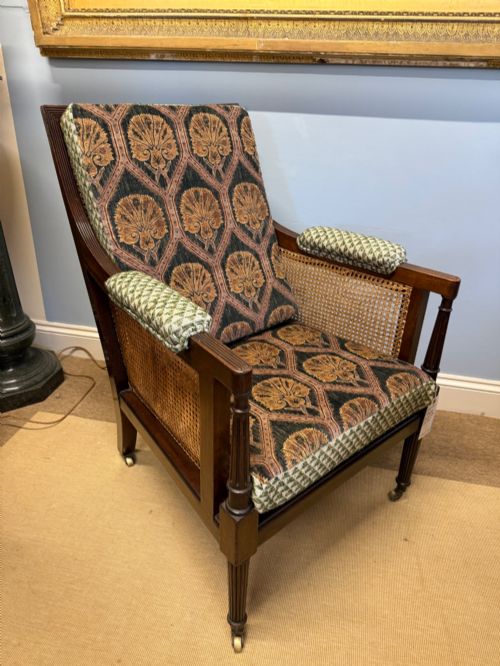
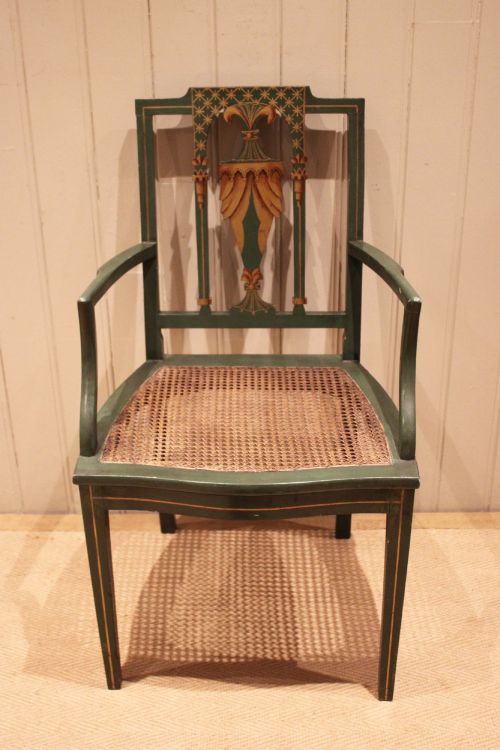
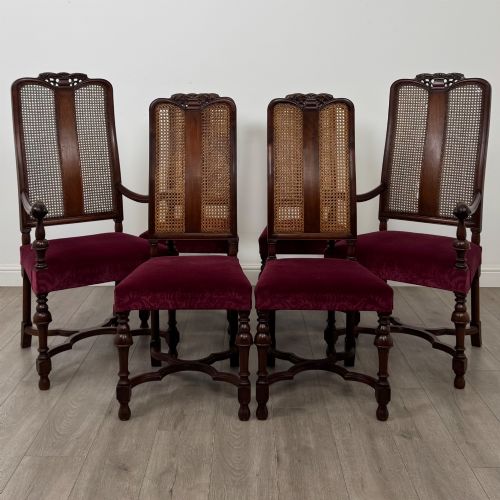


Edwardian Cane Armchairs
Edwardian cane armchairs offer woven seating that combines timber frames with lighter panels for comfort and style.
Edwardian Cane Armchairs
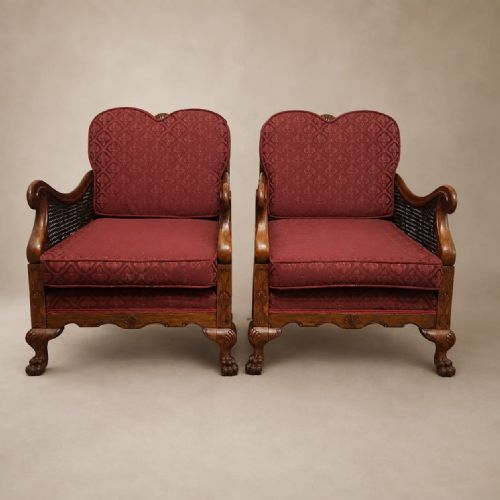
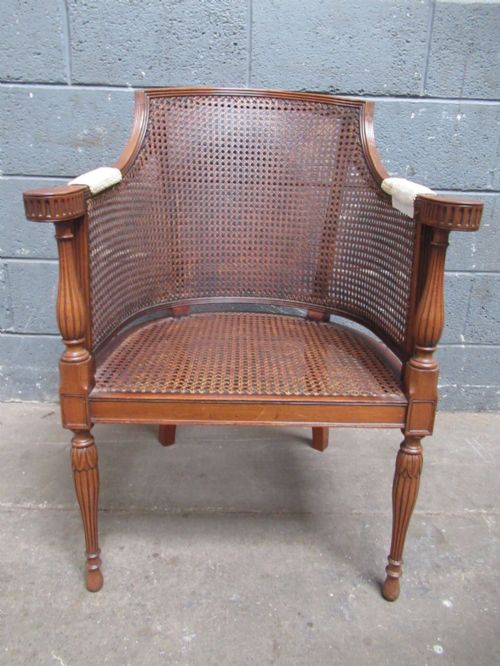
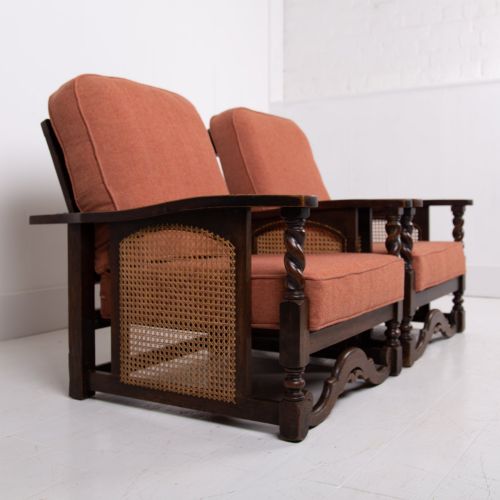
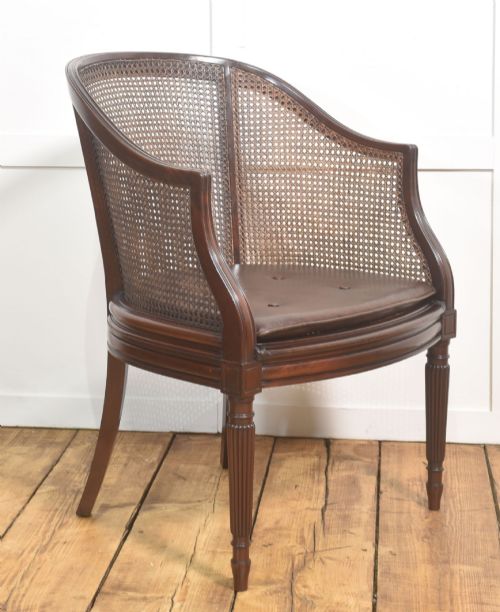
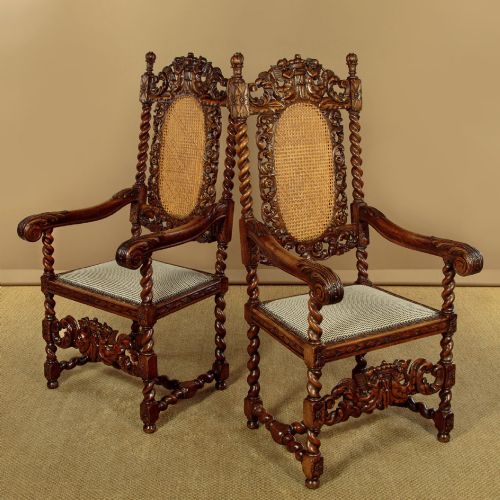
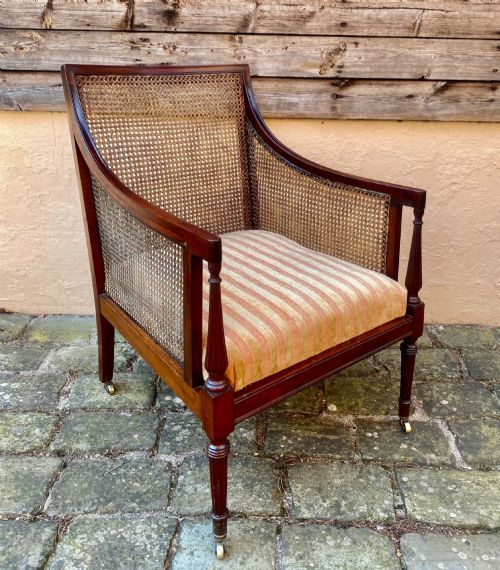
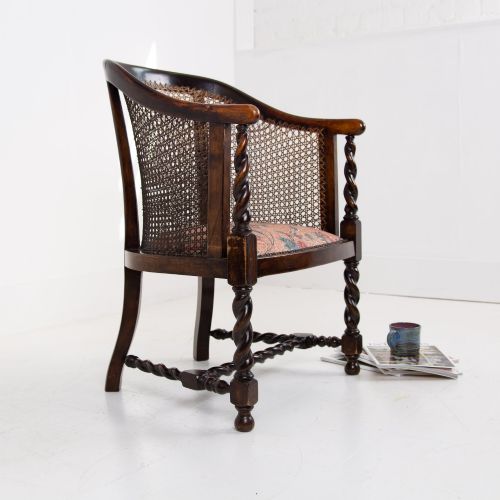
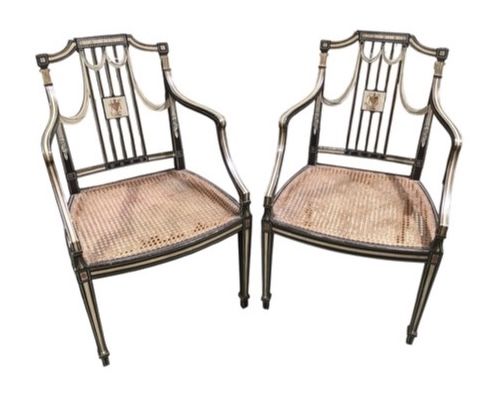
When searching for edwardian cane armchairs, buyers encounter seating built around wooden frames fitted with woven panels in the backrests and seats. These pieces range from upright library models to tub shapes and low lounge seating.
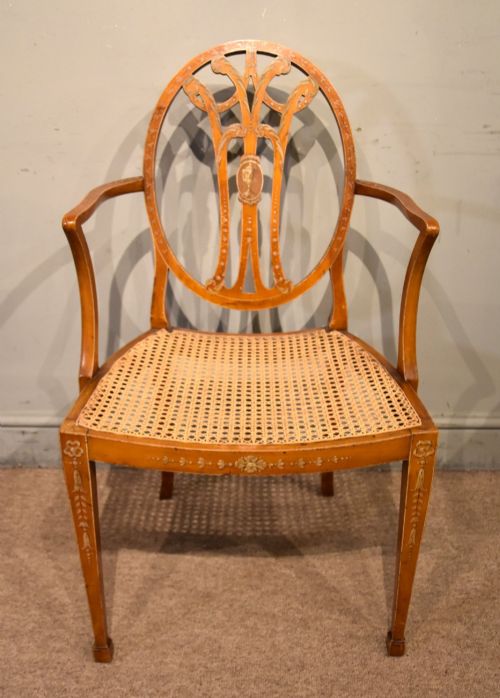
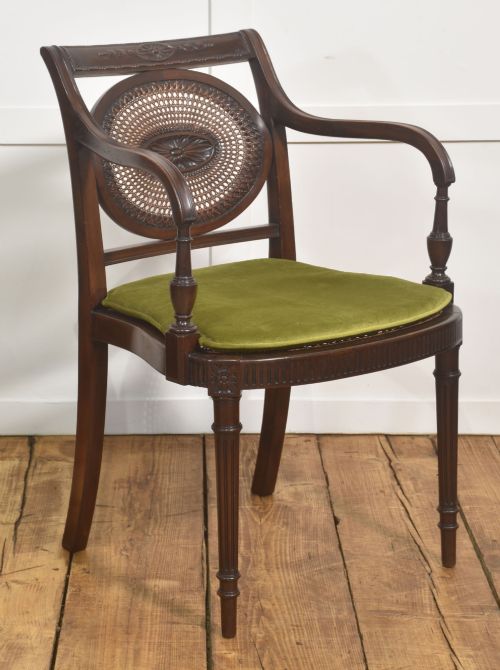
The materials span mahogany, walnut, oak, and satinwood alongside cane work, with various pieces showing Sheraton Revival, Arts and Crafts, or Regency styling influences. Many items date from the Edwardian period or the surrounding decades.
Most examples feature open arms or upholstered loose cushions placed over the woven base for support. The proportions vary from compact bedroom chairs to substantial library armchairs designed for reading spaces.
Quality factors in construction
The fineness of the cane weave and the tightness of its tension determine the durability and finish of the seating panel. Tightly woven strands across uniform drill holes display greater skill than loose or uneven work.
Frame carving detail and timber selection dictate the standard of the piece, with solid mahogany or figured walnut outperforming plain secondary woods. Original painted decoration or retained makers' signatures elevate the standing of individual examples.
Edwardian Cane Armchairs Retail Price Guide 2026
Typical asking prices for edwardian cane armchairs among the pieces listed under this phrase on Sellingantiques today, from the lower quarter to the upper quarter. They describe what is for sale here now, not the wider market.
Listings feature mahogany, oak, walnut, and satinwood combined with woven cane across the Edwardian, Victorian, and Regency periods.
James Shoolbred·Dryad of Leicester·Heals of London
The Edwardian Cane Armchairs Glossary
- Bergere
- An enclosed upholstered armchair with a wooden or cane back and sides, usually featuring a loose seat cushion.
- Cane
- Woven material made from the peeled bark of rattan palms, used to create breathable panels in seats and backs.
- Sheraton Revival
- A late nineteenth and early twentieth century design style drawing on eighteenth century neoclassical motifs, often featuring painted satinwood.
- Tub chair
- An armchair with a rounded, curved backrest that flows continuously into low arms, forming a deep seating enclosure.
- Split cane
- Cane material halved down its thickness before weaving, presenting a flat surface on the exterior face.
Edwardian Cane Armchairs: Frequently Asked Questions
How do I care for cane seats?
Keep cane panels supple by wiping them occasionally with a damp cloth to prevent the natural fibres from drying out and snapping under pressure.
Avoid placing these chairs directly next to intense heat sources or in harsh sunlight, which damages the woven material over time.
Can broken cane panels be repaired?
Skilled restorers can re-weave damaged sections or replace entire panels by threading new cane through the original frame holes.
Checking that the underlying timber channel remains sound ensures a successful re-caning process for older frames.
Were these chairs used outdoors?
These seating pieces are designed strictly for indoor domestic use within libraries, drawing rooms, and bedrooms rather than garden settings.
Moisture and damp conditions weaken both the wooden frames and the natural woven cane quickly.
How do I distinguish Edwardian from Victorian examples?
Edwardian items tend to show lighter wood tones, painted satinwood finishes, and slender proportions influenced by revival styles.
Victorian counterparts frequently employ darker mahogany or walnut timbers with heavier, more robust framing structures.