



Edwardian Oval Back Chair
An edwardian oval back chair brings lightness and refined revival style to a room, offering slender proportions and classic timber frames.
Edwardian Oval Back Chair
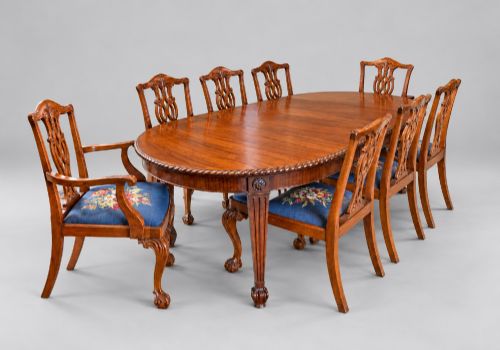
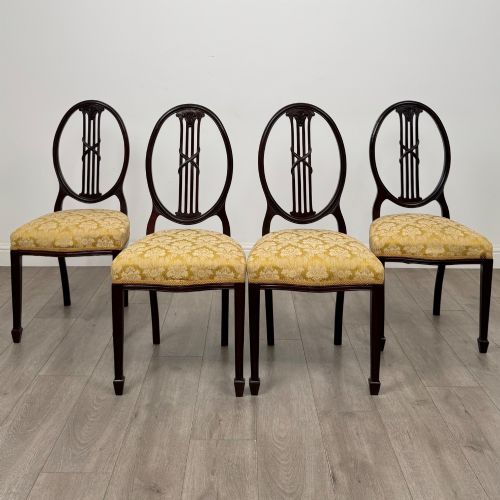
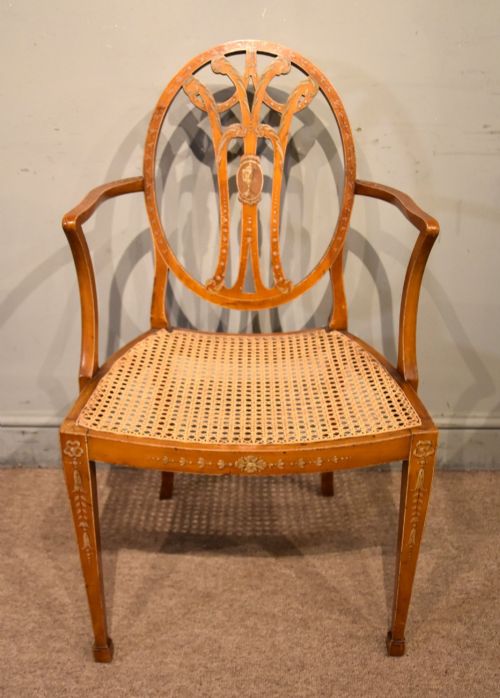
The edwardian oval back chair sits firmly within the revival tastes of the late nineteenth and early twentieth centuries, drawing heavily on Sheraton, Hepplewhite, and Louis XVI inspirations. These seats appear in forms ranging from bedroom and nursing chairs to pairs of dining armchairs and library elbow chairs.
Most examples on this page date from the Edwardian period or around nineteen hundred, alongside late nineteenth century Victorian pieces and occasional items from the nineteen twenties. Buyers most frequently encounter mahogany and walnut frames, often enhanced with delicate satinwood inlay or painted decoration.
How they were made
Cabinetmakers constructed these frames primarily from mahogany and walnut, shaping the characteristic oval backs through steam bending or precise joinery. Satinwood inlay and painted motifs added surface detail, reflecting the neoclassical revivals popular among period workshops.
Seating surfaces relied on traditional upholstery over webbing, or woven cane panels as seen in split cane back examples. Textile, fabric, and leather coverings completed the upholstered elements, secured with traditional tacks.
Edwardian Oval Back Chair Retail Price Guide 2026
Typical asking prices for edwardian oval back chair among the pieces listed under this phrase on Sellingantiques today, from the lower quarter to the upper quarter. They describe what is for sale here now, not the wider market.
Listings feature mahogany, walnut, satinwood, cane, and various fabric upholsteries across pieces spanning from eighteen eighty to nineteen twenty.
What varies in quality
Quality rests upon the crispness of the timber carving and the precision of the satinwood inlay work across the frame. Finer pieces demonstrate superior joinery in the delicate oval back structure, ensuring rigidity without excessive bulk.
The choice of primary timber and the sophistication of revival styling elevate certain examples above standard production. Original or sympathetic upholstery and well-preserved cane work further distinguish the better items in this range.
The Edwardian Oval Back Chair Glossary
- Satinwood
- A durable, yellowish wood prized for its lustrous grain and used extensively for stringing and decorative inlay work on mahogany furniture.
- Carver armchair
- A term for a dining chair with arms, designed to sit at the head of a table or function as a standalone elbow chair.
- Bergere
- An enclosed upholstered armchair with wooden framing, often featuring cane work panels on the back and sides.
- Library chair
- A substantial armchair designed for reading rooms, usually constructed from mahogany or walnut with upholstered comfort.
Edwardian Oval Back Chair: Frequently Asked Questions
What periods do these chairs date from?
The pieces span from the late nineteenth century through the Edwardian era up to nineteen twenty. Revival styles frequently incorporate design elements from earlier Georgian and Victorian periods.
Most items seen here cluster around nineteen hundred, reflecting the height of Edwardian furniture production and neoclassical revival tastes.
How do I identify a Sheraton Revival piece?
Sheraton Revival furniture typically utilises mahogany or satinwood with contrasting inlay work and symmetrical neoclassical motifs. These pieces often feature slender tapered legs and delicate framing.
The style looks back to eighteenth century designs, reinterpreting them with the manufacturing techniques of the late Victorian and Edwardian eras.
What is split cane work?
Split cane involves weaving thin strips of rattan to form supportive, porous panels for chair backs and seats. This technique provides both flexibility and ventilation.
It appears on specific revival armchair designs, offering a lighter visual weight compared to solid wooden splats or fully upholstered backs.
Where should I place an elbow chair?
Elbow chairs and carvers suit bedrooms, studies, and drawing rooms as occasional seating or desk chairs. Their proportions allow them to sit comfortably against walls or flanking a fireplace.
Pairs often work well framing a window or placed alongside complementary dining tables and library desks.