


Yellow Stone Necklace
A yellow stone necklace brings together warm golden hues and historic goldsmithing, offering a wearable piece of the past.
Yellow Stone Necklace
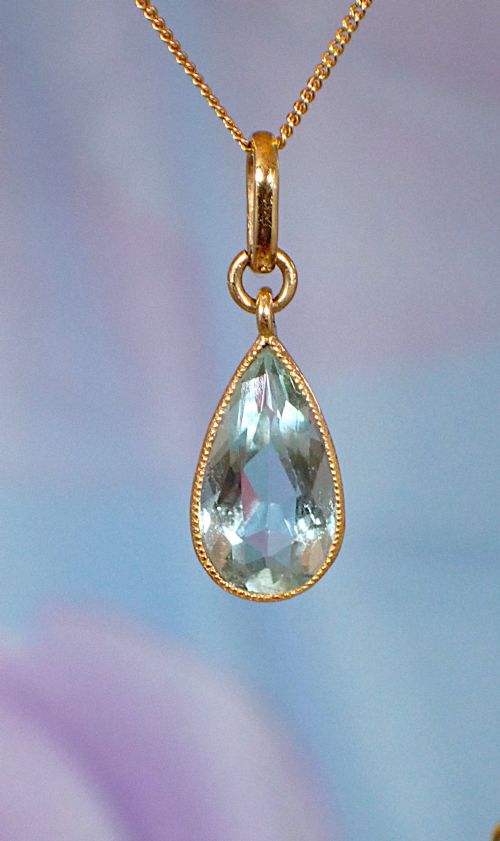
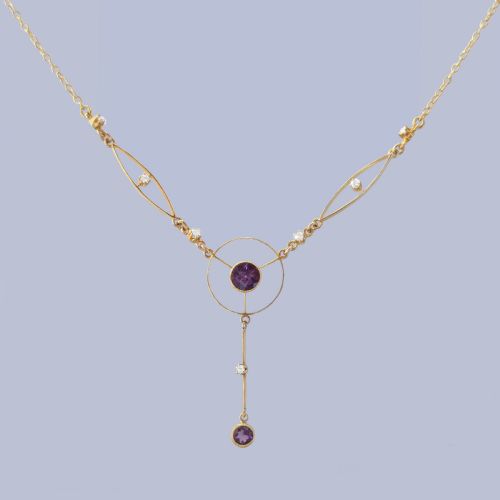
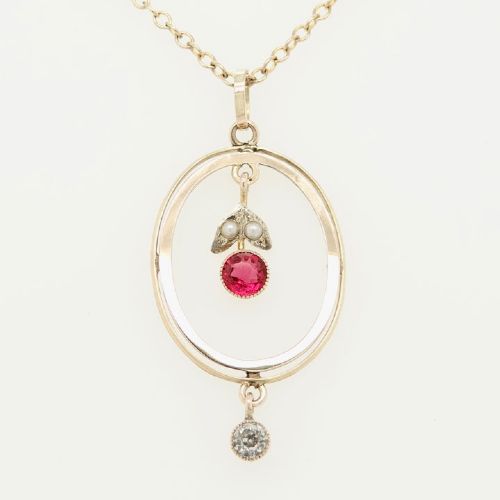
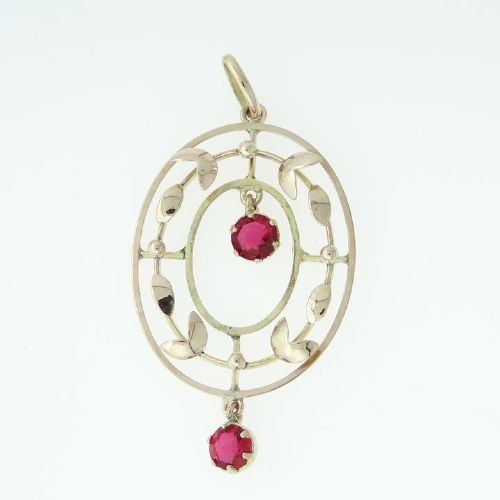
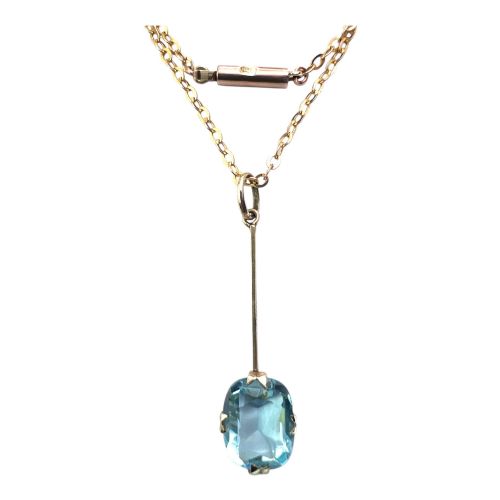
A yellow stone necklace encompasses pendants, lavaliers, and drop necklaces featuring golden or yellow-toned gems set in precious metals. When searching for a yellow stone necklace, buyers encounter pieces ranging from the Victorian and Edwardian eras through to the mid-twentieth century.
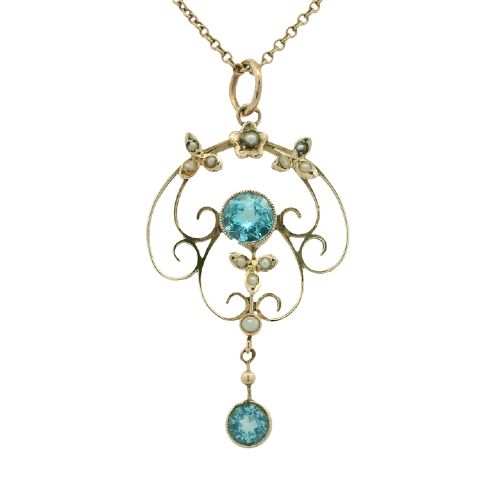
The selections span distinct historical periods including Victorian, Edwardian, and mid-century modern decades. Formats vary from delicate seed pearl accents and lavaliers to substantial cluster pendants and drop designs.
Originating largely from British and European workshops, these items showcase diverse gemstone choices paired with traditional mounting techniques. The aesthetic vocabulary shifts from ornate Art Nouveau curves to cleaner twentieth-century geometric lines.
Materials and construction methods
Craftsmen utilised various grades of gold, predominantly nine-carat, fourteen-carat, and eighteen-carat yellow and rose gold, to form the chains, settings, and pendant bodies. Gemstones such as topaz, citrine, quartz, and diamond are secured using claw settings, collets, or bezel mounts.
Intricate metalwork often incorporates wire twisting, granulation, and openwork galleries typical of Victorian and Edwardian manufacturing. Pendants frequently feature articulated drops and integrated bails designed to hang fluidly from fine gold chains.
Current listings feature yellow stone necklace examples spanning from the Victorian era through the Edwardian period and into the nineteen-fifties and sixties.
Determining quality and craftsmanship
Quality rests upon the stone's saturation, clarity, and depth of cut, alongside the precision of the metalwork surrounding it. Finer examples display harmonious proportions between the central yellow gem and any supporting diamonds or pearls.
The integrity of the original settings and the subtlety of hand-finished details distinguish superior pieces. Wear patterns on the gold and secure stone mountings reflect the standard of the original workshop.
S. Blanckensee & Son
The Yellow Stone Necklace Glossary
- Lavalier
- A pendant necklace featuring a central drop stone suspended below a main decorative motif, popular during the Edwardian period. These pieces often incorporate pearls and delicate chainwork.
- Cluster pendant
- A gemstone arrangement where a central stone is surrounded by a ring of smaller accent stones, typically diamonds or pearls. This setting maximises light reflection and perceived visual weight.
- Collet
- A band of metal that holds a gemstone in place by folding over the edge of the girdle. It provides a secure and smooth enclosure for faceted stones.
- Bail
- The ring or loop attached to the top of a pendant that allows the chain to pass through. In period pieces, this is often integrated into the overall design.
- Paste
- Hand-cut and polished lead glass used historically to imitate gemstones. High-quality antique paste stones exhibit deep brilliance and are securely foil-backed or set in closed backs.
Yellow Stone Necklace: Frequently Asked Questions
How do I date a yellow stone necklace?
Dating relies upon stylistic markers such as the flowing asymmetry of Art Nouveau or the geometric precision of mid-century design. Hallmarks stamped on the metal provide official assay office marks and date letters.
Examining the type of stone cuts, such as old-cut diamonds or cabochons, further narrows the manufacturing era alongside the construction of the clasp and chain.
How were these necklaces worn historically?
Victorian and Edwardian necklaces were typically worn high on the neckline to complement the high collars and tailored bodices of the period. Lighter lavalier styles moved with the wearer, catching the light during evening gatherings.
Heavier cluster pendants served as focal points for formal daywear and evening attire, often suspended from matched gold link chains.
Are these necklaces suitable for daily wear?
Many antique pieces remain robust enough for regular wear provided they receive proper care and periodic inspection of the settings. Harder stones like topaz and quartz resist everyday scratching well.
Delicate elements like seed pearls and fine chain links require mindful handling to prevent snagging or undue stress on the historic metal.
What is the difference between citrine and yellow topaz?
Citrine is a variety of quartz that owes its yellow or orange colour to iron impurities, while true precious topaz is a distinct mineral silicate containing fluorine and aluminium. Precious topaz generally exhibits a denser weight and a different refractive index.
In historic jewellery, both stones were utilised to achieve warm yellow tones, though topaz commanded higher value in earlier centuries.