

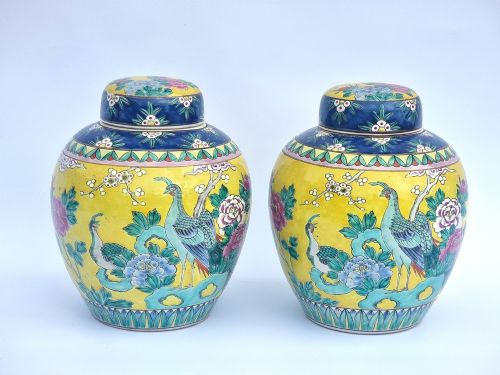


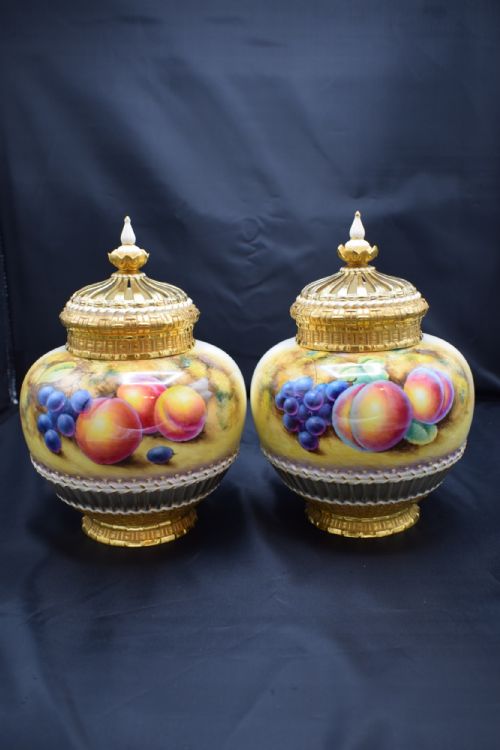


Yellow Porcelain Jar
Yellow porcelain jar pieces bring bright citrus tones and rich historical character to a room, offering both decorative presence and classic vessel forms.
Yellow Porcelain Jar
A yellow porcelain jar search brings together diverse periods ranging from the seventeenth century through to the mid-twentieth century, encompassing both Asian export wares and European interpretations. Buyers exploring this category encounter everything from monumental nineteenth-century Qing Dynasty floor vases to delicate French Art Deco powder boxes and traditional English porcelain.
The objects on this page span several functional forms beyond standard vessels, including ginger jars, lidded vases, pot pourri vases, and bonbonnières. The visual character varies significantly between regions and eras, uniting Chinese transitional styles, Regency Chinoiserie, and twentieth-century English decorative ceramics under a shared colour palette.
Assessing quality in yellow ceramics
Quality in these vessels rests upon the crispness of the hand-painted execution and the evenness of the glaze application across the ceramic surface. Superior examples demonstrate confident brushwork in the enamel detailing, whether depicting floral arrangements, figurative scenes, or geometric Art Deco patterns.
The distinction between standard production and finer pieces also lies in the precision of the form and the preservation of delicate decorative elements like gold leaf accents. Maker attribution and historical provenance further elevate certain items, separating mass-produced homeware from works by notable factories and named decorators.
Yellow Porcelain Jar Retail Price Guide 2026
Typical asking prices for yellow porcelain jar among the pieces listed under this phrase on Sellingantiques today, from the lower quarter to the upper quarter. They describe what is for sale here now, not the wider market.
Materials represented across the selection include traditional porcelain, ironstone, earthenware, and applied gold leaf over enamel.
Mason’s·Royal Doulton·Royal Worcester·Limoges
The Yellow Porcelain Jar Glossary
- Porcelain
- A hard, white, vitrified ceramic material fired at high temperatures. It forms the primary substrate for many of the finest historical and decorative vessels.
- Enamel
- A glassy substance fused to the ceramic body through kiln firing. It provides vibrant, durable colour in both overglaze and underglaze painted decoration.
- Ironstone
- A heavy, durable type of earthenware developed in the nineteenth century. It offers robust utility while accepting rich coloured glazes and patterns.
- Bonbonniere
- A small decorative container designed for holding sweets or confections. These lidded vessels frequently appear in European ceramic productions from the early twentieth century.
- Ginger jar
- A ceramic vessel characterised by a wide shoulders and a high-domed lid, originally used for storing spices. Later periods adopted the form purely for decorative display.
Yellow Porcelain Jar: Frequently Asked Questions
What is a yellow porcelain jar used for?
These vessels historically served practical purposes for storing dry goods, spices, or cosmetics such as powder.
Today, collectors primarily utilise them as decorative objects, mantel centrepieces, or lidded containers for small household items.
How do I date a yellow ceramic jar?
Dating relies heavily on stylistic markers, factory backstamps, and the specific glazing techniques characteristic of periods like the Qing Dynasty or Art Deco.
Examining the wear on the base and the composition of the ceramic body also helps determine the approximate era of production.
Where were these yellow jars made?
The pieces originate from diverse geographic workshops, including historic Chinese kilns as well as French and English ceramic manufacturers.
European factories often adapted Asian forms like ginger jars to suit Regency and twentieth-century tastes.
Are lidded vases and ginger jars the same?
While both share a vessel body and a fitted cover, ginger jars typically feature broad shoulders and a short neck designed for tight sealing.
Lidded vases encompass a wider variety of ornamental shapes intended more for display than for storage.