
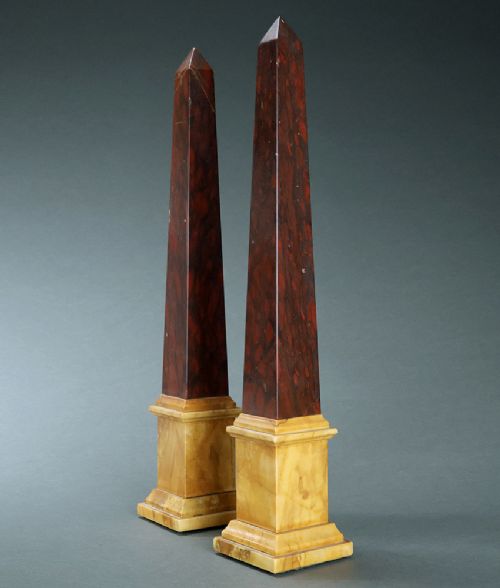


Yellow Marble Ornament
These yellow marble ornament pieces bring rich Neoclassical presence and heavy mineral weight into a room.
Yellow Marble Ornament
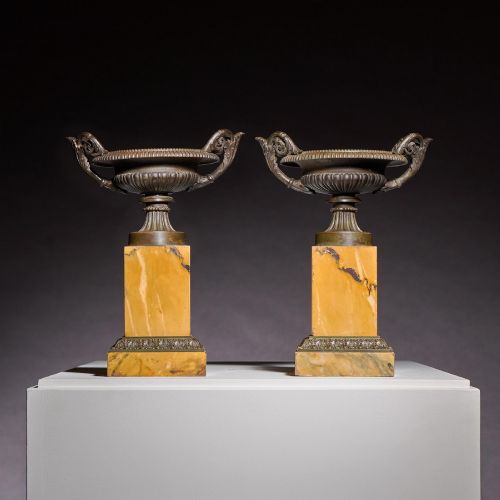
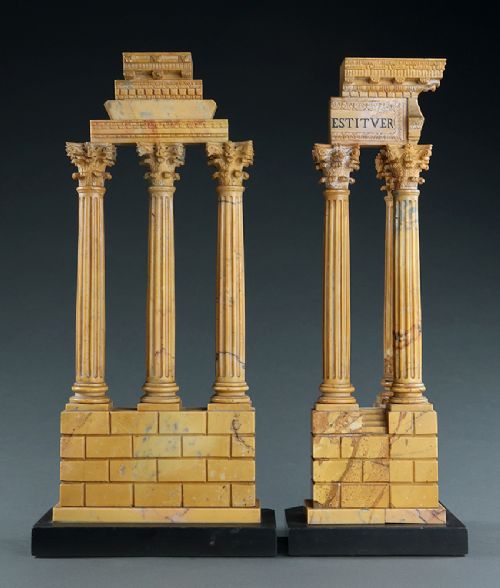
A yellow marble ornament takes the form of architectural models, tazzas, urns, and sculptural bases originating primarily from the nineteenth century. When buyers search for a yellow marble ornament, they encounter Grand Tour souvenirs and French decorative objects that translate classical antiquity into domestic scale. The pieces on this page lean heavily towards Siena marble combined with cast bronze elements.
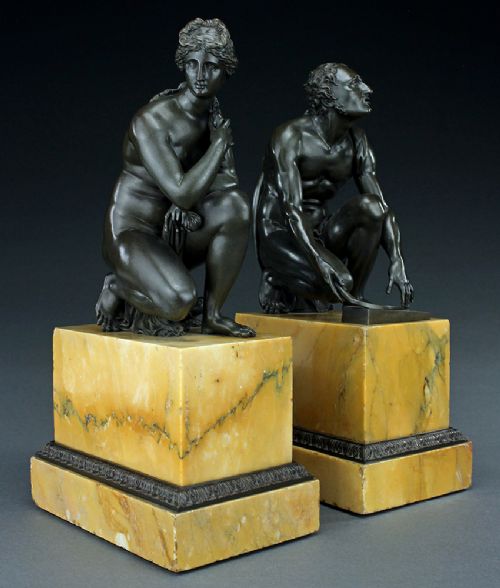
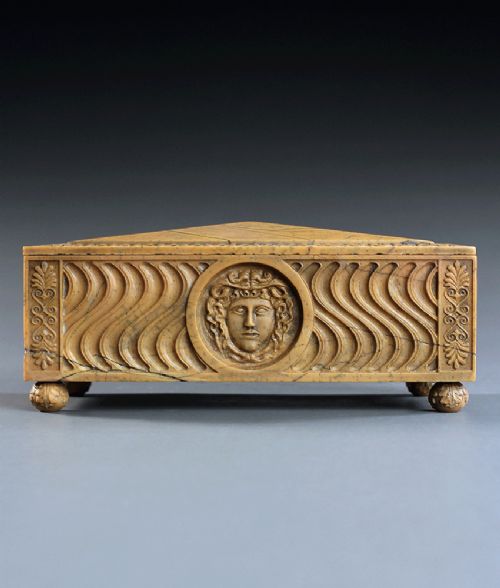
The architectural models reproduce Roman temples, columns, and sarcophagi using dense mineral sections. Decorative objects range from pairs of classical tazzas to lidded cassolettes and portrait bronzes mounted on marble plinths. These items reflect Regency and French Empire tastes that dominated elite European interiors.
How they were made
Makers shaped the yellow stone using sawing, turning, and hand-polishing techniques to achieve smooth architectural surfaces. Siena marble provides the warm, veined ground, often contrasted with black marble sections for structural plinths and bases.
The metal components rely on bronze casting, sometimes gilded with ormolu to highlight figurative details and mounts. Founders assembled these mixed-media objects using threaded pins and hidden fixings to join the heavy stone to the cast metalwork.
Several pieces feature miniature bronze figures of Roman deities and philosophers keeping permanent watch over a block of yellow Italian stone.
What varies in quality
Quality rests on the depth of the marble veining, the crispness of the architectural carving, and the fidelity of the bronze casting. Superior examples display precise turning on columns and obelisks alongside sharply chased patinated bronze figures.
Lesser pieces feature simpler stone turning with softer, less detailed metal mounts that lack distinct chiselling. The density and colour saturation of the Siena marble also dictate the visual impact of the finished object.
The Yellow Marble Ornament Glossary
- Siena marble
- A distinctive yellow Italian limestone featuring dark grey and brown veins that became highly prized during the Grand Tour. It provides the primary warm yellow tone seen across these nineteenth-century decorative objects.
- Grand Tour
- A traditional trip of Europe undertaken by upper-class young European men of means to absorb classical art and culture. The custom generated a thriving market for miniature architectural models and sculpted marble souvenirs.
- Ormolu
- Finely ground high-carat gold mercury-gilded to bronze metalwork. It adds a bright metallic contrast against the dark patinated figures and yellow stone bases.
- Cassolette
- A decorative container with a pierced lid that functions as both a vase and a perfume burner. Makers often fashioned these from French marble with bronze mounts.
Yellow Marble Ornament: Frequently Asked Questions
What is a yellow marble ornament?
A yellow marble ornament is a nineteenth-century decorative object or architectural model carved from Siena marble, often paired with cast bronze figures or mounts.
These pieces capture classical antiquity through miniature temples, tazzas, and obelisks designed for display on desks and mantelpieces.
How were these decorative objects used?
Wealthy collectors used these items as intellectual and aesthetic statements to demonstrate their classical education and travels across Europe.
They sat in libraries, studies, and drawing rooms as conversation pieces and tangible links to ancient Roman architecture.
How do I care for marble and bronze?
Dust the stone and metal surfaces gently with a dry, soft cloth to prevent abrasive particles from scratching the polished finish.
Avoid chemical cleaners, moisture, and placement in direct sunlight, which can dull the natural mineral polish and the bronze patina.
How can I tell the period of these pieces?
Look to the manufacturing techniques, tool marks, and stylistic indicators such as French Restauration or Regency design cues.
Nineteenth-century pieces exhibit hand-turned stone and hand-finished bronze casting methods distinct from modern reproductions.