

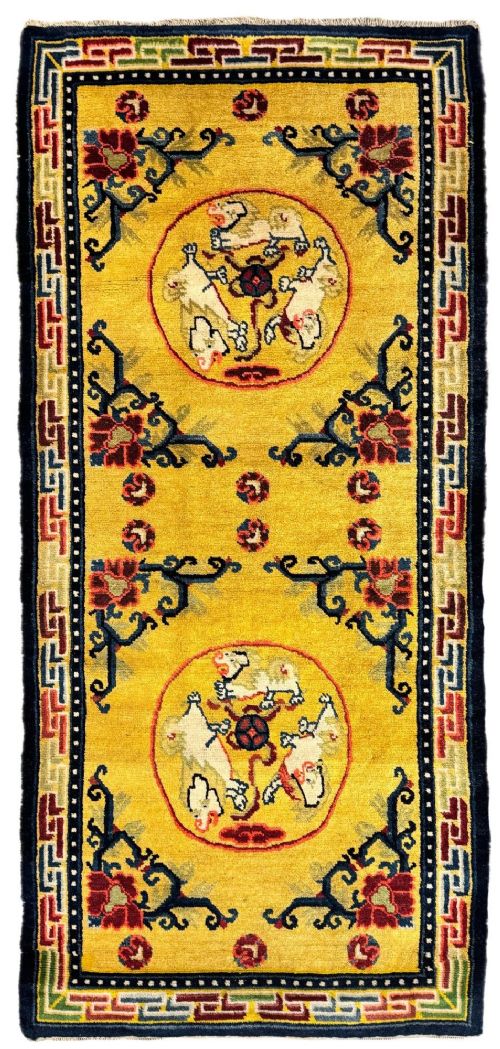
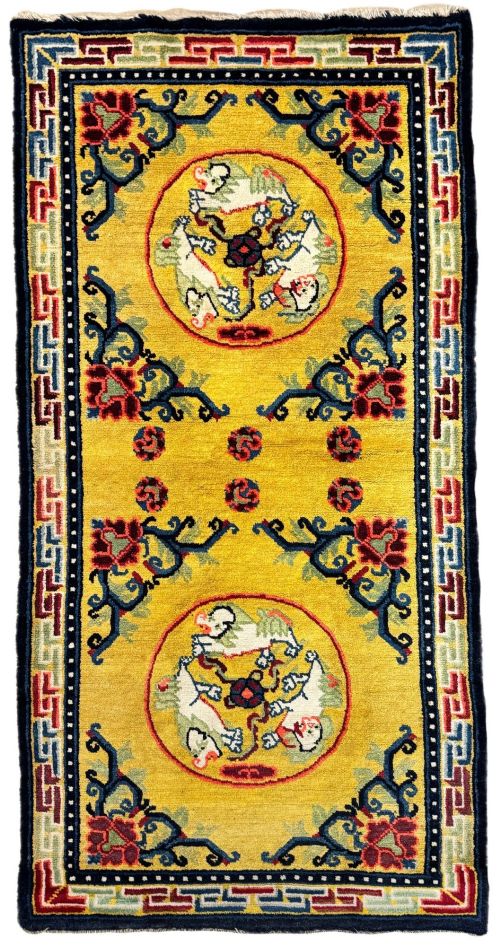
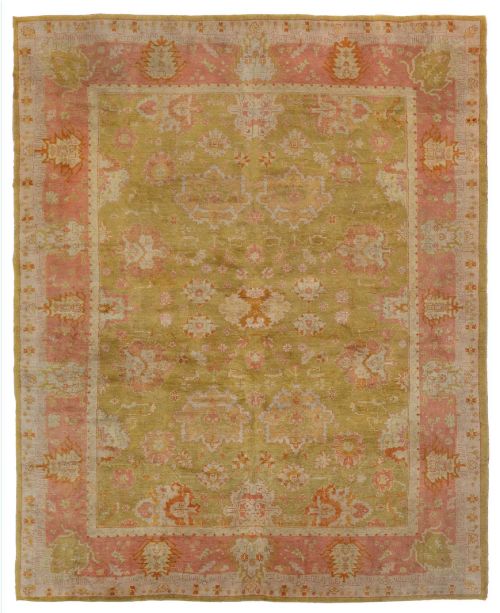
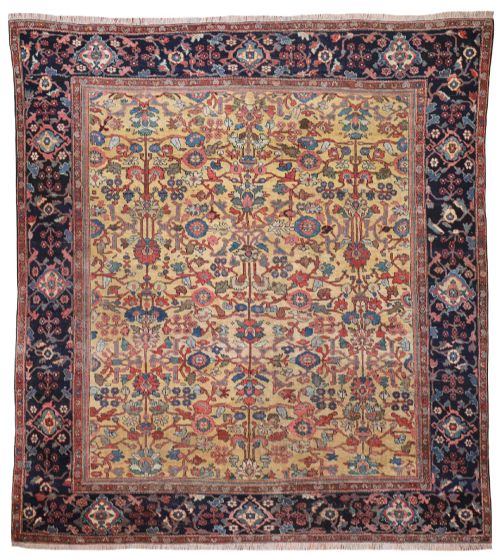


Yellow Hand Knotted Rug
A yellow hand knotted rug brings a luminous warmth to a room through centuries-old traditions of regional dye work.
Yellow Hand Knotted Rug
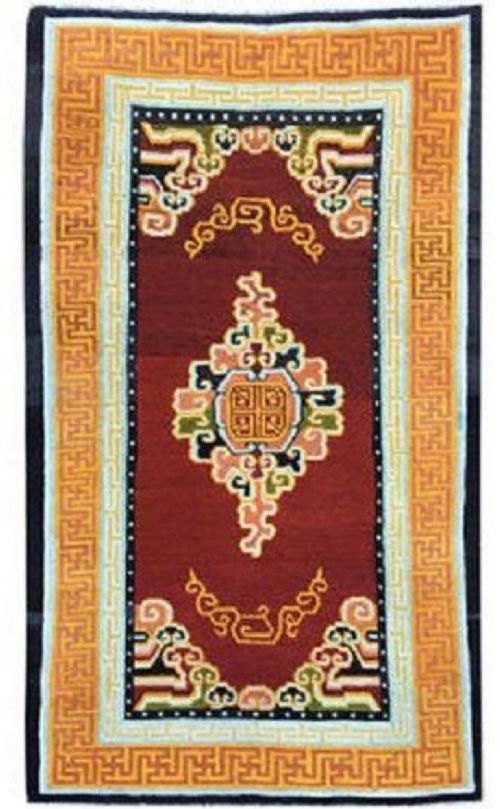
A yellow hand knotted rug encompasses woven floor coverings and smaller mats originating from Persian, Caucasian, Anatolian, and Chinese workshops. When searching for this specific colour ground, buyers encounter examples ranging from late nineteenth-century village weaves to large carpets produced in urban centres.
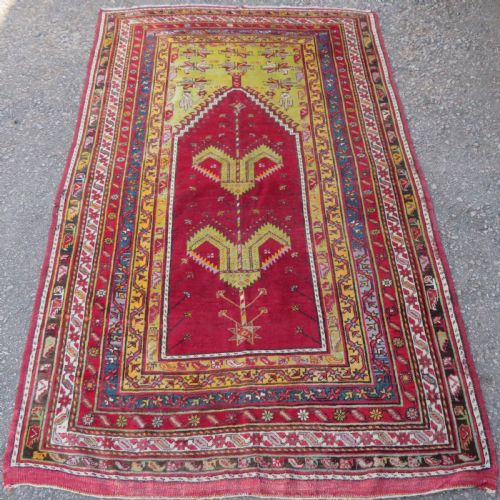
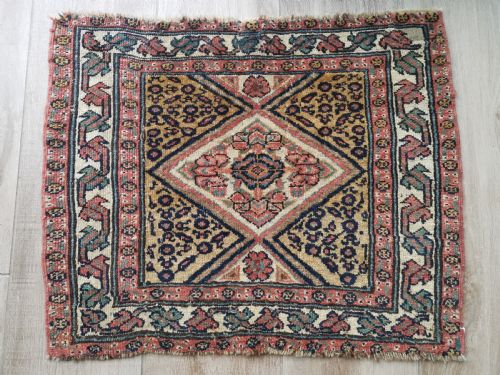
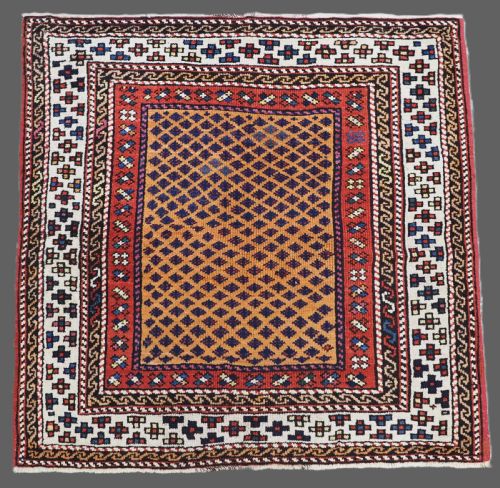
The selection on this page leans heavily towards antique Turkish Oushak and Ushak carpets, Persian regional pieces such as Bijar and Farahan, and Caucasian examples including Dagestan and Gendje types. These range from small square formats and prayer rugs to expansive room-sized carpets.
Origins span from Western Turkey and Central Anatolia across to Northwest Persia, Khorassan, and Ningxia in China. Each producing region contributes distinct structural characteristics and tribal motifs to the palette.
How they were made
Construction relies primarily on wool pile knotted by hand onto cotton or wool foundation warps and wefts. Certain pieces utilise hand-spun wool, imparting natural textural variation across the surface.
Dye methods involve traditional natural sources to achieve distinct yellow, lemon, and golden ground colours, often paired with contrasting wool detailing in geometric and floral patterns.
Yellow Hand Knotted Rug Retail Price Guide 2026
Typical asking prices for yellow hand knotted rug among the pieces listed under this phrase on Sellingantiques today, from the lower quarter to the upper quarter. They describe what is for sale here now, not the wider market.
Geographic origins represented include Caucasian, Persian, Anatolian, Ottoman, Kurdish, and Chinese traditions.
What varies in quality
Quality diverges according to the fineness of the knotting and the complexity of the design execution. Urban workshop carpets display precise, intricate floral lattices, whereas tribal and village pieces exhibit bolder, more rustic geometric interpretations.
The integrity of the wool and the depth of the yellow ground dye also differentiate standard utility pieces from exceptional examples. Surviving pile depth and structural stability largely determine how well a rug retains its visual impact over time.
Gavin Morton Donegal
The Yellow Hand Knotted Rug Glossary
- Warp
- The vertical threads stretched lengthwise on the loom that form the structural foundation of the rug. Fringe ends typically originate from these warp threads.
- Weft
- The horizontal threads passed across the warp threads between rows of knots to secure the pile in place. These contribute to the overall rigidity and handle of the textile.
- Pile
- The upright cut or looped ends of wool that form the soft surface of the rug. Pile height varies significantly between heavily worn antique pieces and well-preserved examples.
- Prayer rug
- A small format rug featuring a mihrab or niche design historically used for ritual Islamic prayer. Many antique Turkish examples incorporate this layout.
- Bagface
- The front panel of a storage bag produced by nomadic and tribal weavers, later removed and utilised as a small decorative mat. These often display dense geometric compositions.
Yellow Hand Knotted Rug: Frequently Asked Questions
How do I care for an antique wool rug?
Vacuum gently using suction only without a rotating brush roll to protect the aged wool pile and foundation threads.
Keep the rug out of direct sunlight to prevent fading of natural yellow and golden ground dyes over extended periods.
Where were these yellow ground rugs made?
Production spans several distinct geographic regions, including Anatolia, the Caucasus, Persia, and China. Each area developed characteristic knotting structures and local design vocabularies.
Turkish Oushak and Caucasian Dagestan workshops produced notable examples featuring yellow fields, alongside Persian Bijar and Farahan weaves.
How do I distinguish between tribal and urban carpets?
Tribal rugs typically display bolder, more abstract geometric motifs and occasionally irregular formats resulting from nomadic production conditions. Village weavers worked with materials and designs passed down through generations.
Urban workshop carpets exhibit refined symmetry, sophisticated floral lattices, and tighter knot densities achieved on stationary professional looms.
What periods do these pieces date from?
The inventory spans from the nineteenth century through the early twentieth century, encompassing pieces dated from the 1850s to the 1930s.
Most examples originate from the late Victorian period, specifically around the 1880s and 1890s, when traditional carpet production remained active.