


Yellow Gold Mary Charm
A yellow gold mary charm combines devotional heritage with delicate metalwork, offering a wearable piece of religious history.
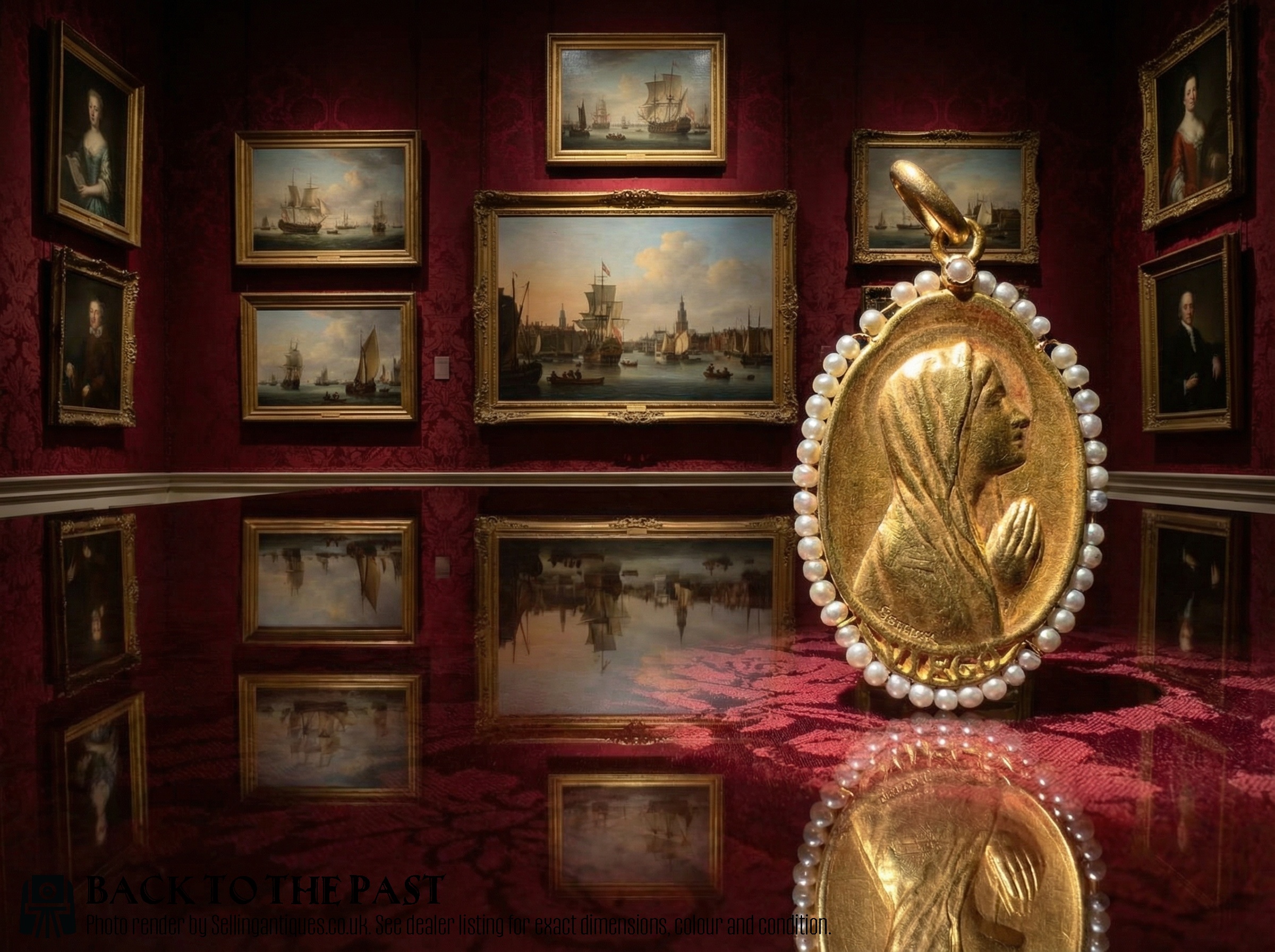
Yellow Gold Mary Charm
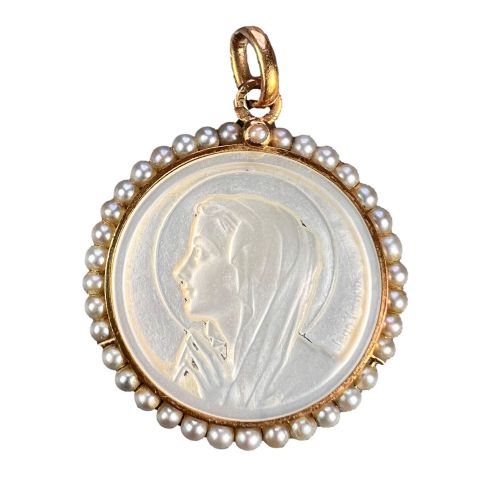
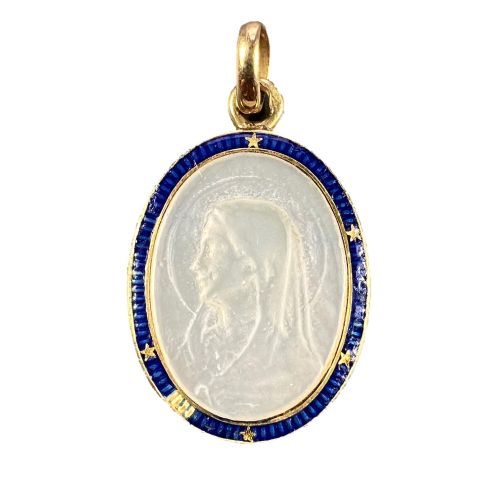
A yellow gold mary charm represents a devotional pendant or medal, typically depicting the Virgin Mary or the Madonna and Child. These pieces originate predominantly from France and span the late nineteenth century through the mid-twentieth century.
Makers and designers from various twentieth-century French workshops contributed to this category, producing oval, circular, and pierced pendant forms. Collectors appreciate them for their intricate religious imagery and association with specific stylistic movements like Art Nouveau.
Materials and Techniques
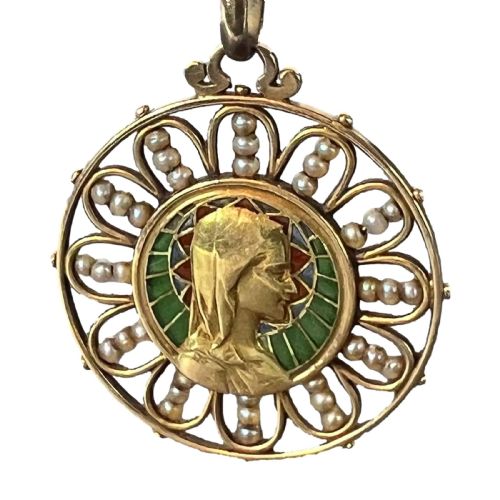
Goldsmiths utilised eighteen-carat yellow gold alongside accents of yellow rose gold and white gold to form the structural bodies of these charms. Metalworking techniques included piercing, filigree, and framing to highlight the central devotional figures.
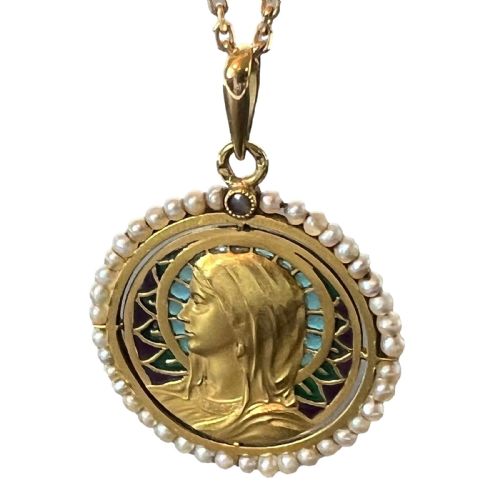
Enamelling techniques, notably plique-à-jour, added translucent colour to the metallic backgrounds, allowing light to pass through the composition. Artisans also incorporated natural materials such as mother-of-pearl plaques and seed pearls to frame the miniature portraits.
Several charms double as tiny metalwork shrines, proving the French took their pocket-sized devotion very seriously indeed.
Distinctions in Quality
Hand-finished engravings and the presence of specialised decorative techniques such as plique-à-jour elevate the standard of manufacture. Pieces signed by recognised medallists often demonstrate superior artistic execution compared to unmarked workshop productions.
Emile Monier·Pageli Perriat·Emile Dropsy·Sellier·Augis Grun·Arnault·Ruffony
The Yellow Gold Mary Charm Glossary
- Plique-à-jour
- An enamelling technique where the enamel is applied without a backing, creating a translucent, stained-glass effect. This delicate method allows light to illuminate the coloured glass within a gold framework.
- Miraculous Medal
- A devotional medal whose design was based on apparitions reported by Saint Catherine Labouré. It typically depicts Mary standing upon a globe with rays emanating from her hands.
- Seed Pearl
- Very small natural pearls, often half-drilled and glued or pegged onto a backing. They provide a subtle, luminous border to religious medals and pendants.
- Madonna and Child
- A traditional representation of the Virgin Mary holding the infant Jesus. This subject appears frequently in devotional jewellery across various stylistic periods.
- Filigree
- Delicate jeweller's work consisting of twisted threads of gold soldered together in intricate patterns. It adds a lacy texture to the edges or surrounds of religious charms.
Yellow Gold Mary Charm: Frequently Asked Questions
What periods do these charms come from?
The pieces span from the late nineteenth century through the mid-twentieth century, with a heavy concentration originating from the nineteen-tens and nineteen-twenties.
French workshops during these decades produced a vast quantity of religious medals using traditional methods and eighteen-carat gold.
How were these charms worn?
Wearers primarily suspended these items from gold chains as pendants around the neck or attached them to charm bracelets.
Their dual classification as pendants and charms reflects this versatility in historical usage.
What is plique-a-jour enamel?
Plique-a-jour is a demanding enamelling technique that resembles miniature stained glass, lacking a solid backing behind the coloured glass.
When light passes through the enamel, it highlights the translucent colours set within the yellow gold frame.