






Yellow Gold Gypsy Ring
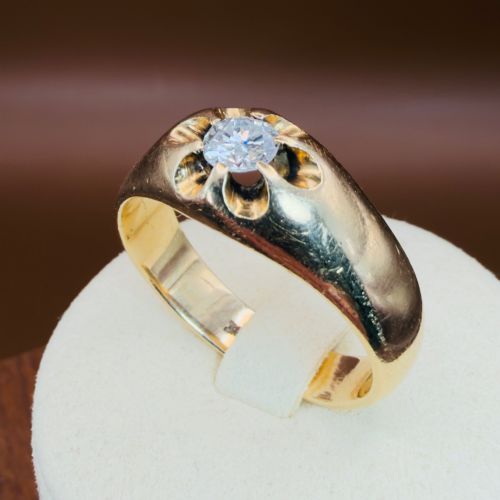
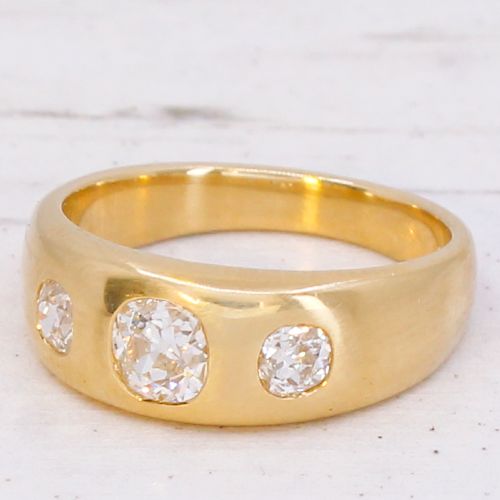
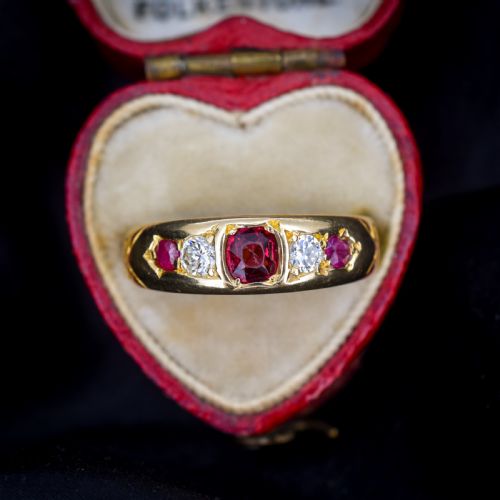
A yellow gold gypsy ring sits flush to the finger with stones sunk securely into heavy metal.
Yellow Gold Gypsy Ring
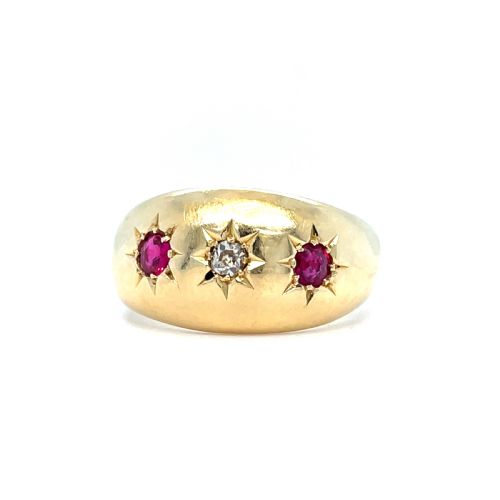
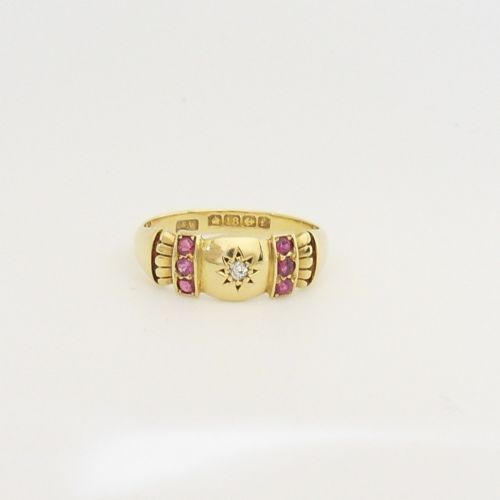
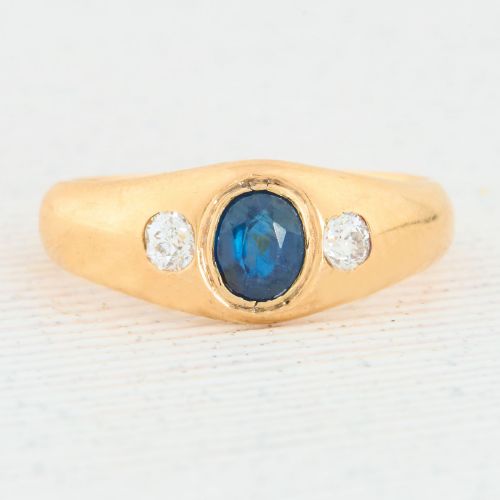
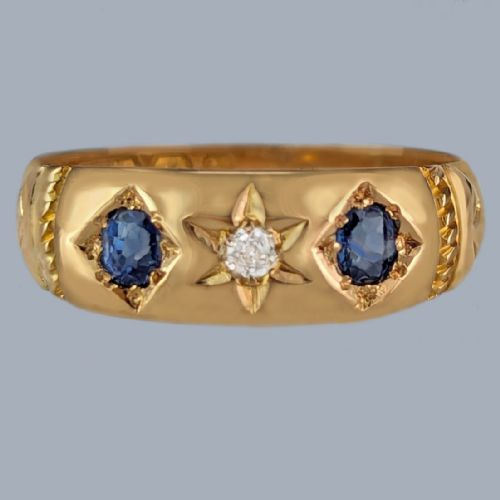
The stones, most frequently old cut diamonds, rubies, sapphires, or turquoise, sit star-set or flush within the heavier shoulders of the band. These rings were designed for daily wear, offering a smooth profile that avoids snagging on fabrics while displaying secure flush settings.
Materials and construction
Goldsmiths fabricated these pieces predominantly in eighteen carat and nine carat yellow gold, casting or forging heavy bands to support flush-mounted stones. The metal is often worked into thick profiles with starburst engravings radiating from the stone settings.
Stones are secured through burnishing, where the surrounding gold is rubbed over the girdle of the diamond, ruby, or sapphire. Old cut diamonds and rose cut diamonds predominate, chosen for their lower profiles that suit the flush setting technique.
Listings span periods from the nineteenth century through the mid-twentieth century, utilising eighteen carat and nine carat yellow gold.
Judging quality in yellow gold gypsy rings
The weight and gauge of the yellow gold band dictate much of the structural integrity, with thicker hoops resisting distortion over decades of wear. Finer examples display crisp starburst hand-engraving around the stone bezels rather than worn or shallow tool marks.
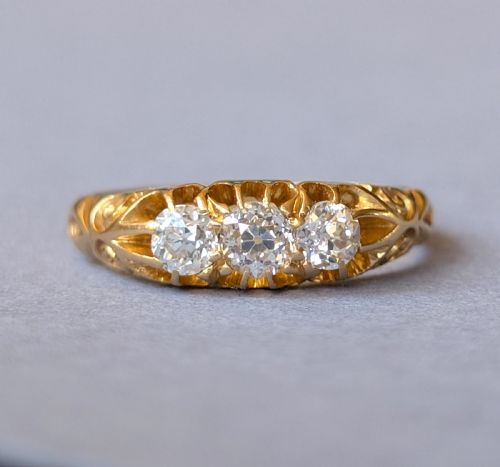
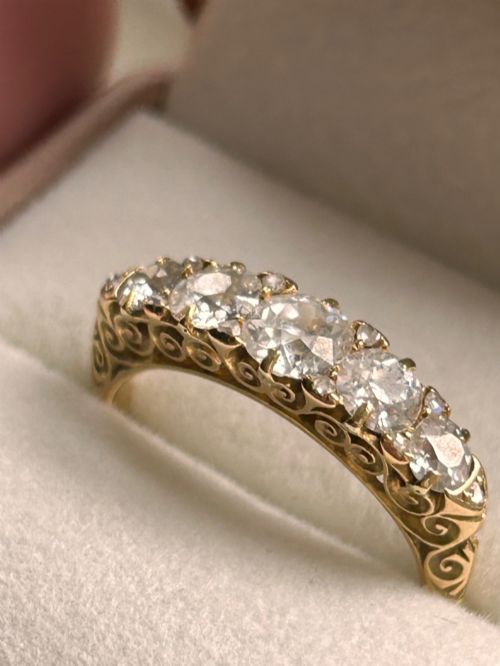
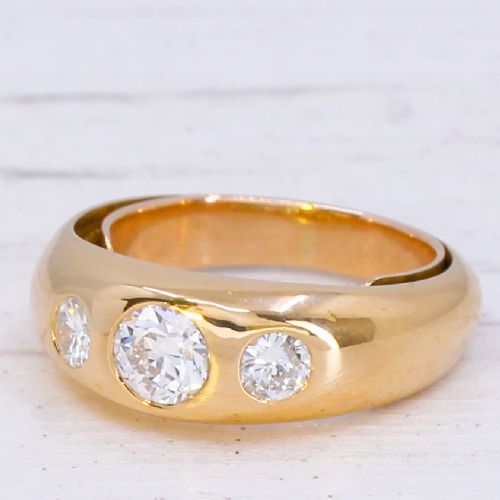
Stone selection and matching determine the upper tier of pieces, particularly in multi-stone trilogy or five-stone arrangements. Well-matched old cut diamonds or vivid natural rubies and sapphires integrated flush into heavy gold elevate the craftsmanship.
The Yellow Gold Gypsy Ring Glossary
- Gypsy setting
- A mounting style where the gemstone is set flush into the surface of the metal, with the gold tapered up to meet the girdle. This technique creates a smooth, snag-free profile.
- Star set
- A method of engraving a multi-pointed star pattern around a flush-set diamond or coloured stone on a gold band. The rays enhance the visual spread of the stone.
- Old cut
- A precursor to the modern brilliant cut diamond, featuring a smaller table, higher crown, and open culet. These stones display hand-faceted symmetry typical of nineteenth-century production.
- Trilogy ring
- A ring featuring three stones set side by side in the band, often representing a past, present, and future theme. In this inventory, they appear in flush gypsy mountings.
- Belcher mounting
- A rounded, protruding setting style where the metal surrounds the lower portion of the stone. It bridges the gap between traditional prong settings and flush gypsy styles.
Yellow Gold Gypsy Ring: Frequently Asked Questions
Can I wear a yellow gold gypsy ring every day?
The flush setting style and heavy gold bands make these rings exceptionally durable for daily wear. Stones sit level with the metal, protecting them from knocks.
Prongs are absent, which prevents the ring from catching on clothing or everyday items. Regular inspection by a jeweller ensures the flush edges remain tight.
How do I tell a Victorian gypsy ring from a later one?
Victorian and Edwardian examples often feature hand-applied starburst engravings and distinct hallmarking stamps characteristic of nineteenth-century assay offices. Gold purity marks like eighteen carat or fifteen carat also point toward older British manufacture.
Mid-century pieces tend to feature cleaner, more uniform casting with less hand engraving. Examining the interior of the band usually reveals manufacturing clues.
What stones are typically found in these rings?
Old cut diamonds are the most frequent choice, often appearing as solitaires, trilogies, or five-stone rows. Rubies and sapphires also appear frequently, sometimes interspersed with diamonds.
Less common variations include turquoise, garnets, pearls, and coral set directly into the yellow gold band. Each gemstone is chosen for its ability to sit low within the metal.
Are these rings suitable for men and women?
Historical examples were worn by both men and women, often functioning as wedding bands or everyday dress rings. Heavier bands with minimal stones frequently catered to men.
Multi-stone gemstone and diamond variations served as decorative rings for women. The unisex appeal stems from the substantial width and flat profile of the band.