


Gold Diamond Band Ring
A gold diamond band ring pairs precious metal with brilliant stones, offering enduring style from Victorian, Edwardian, and later twentieth-century periods.
Gold Diamond Band Ring
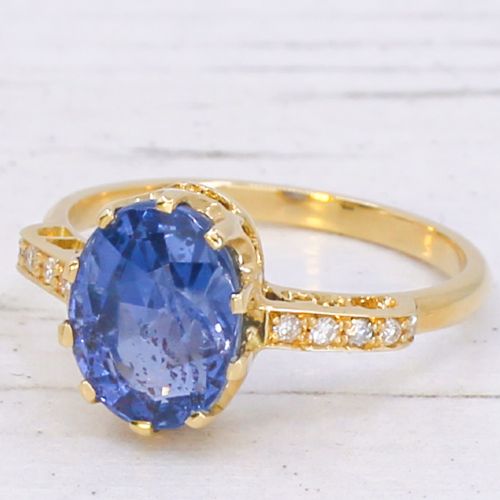
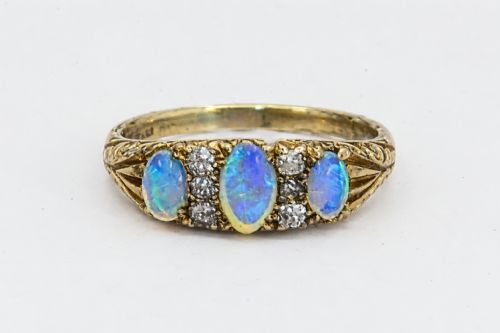
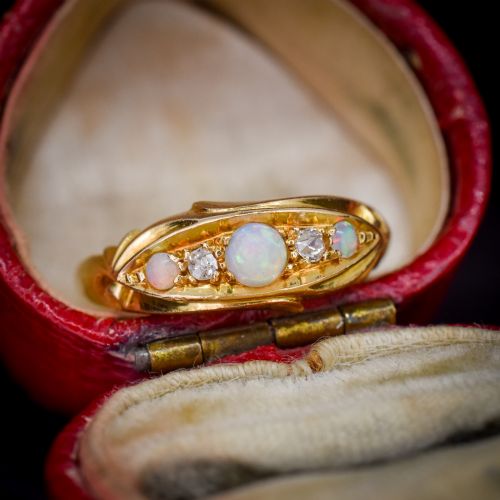
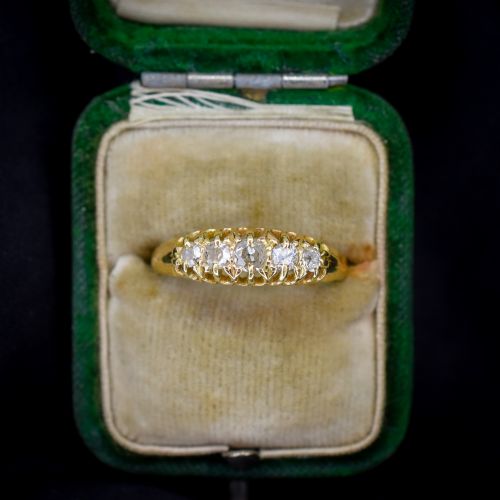
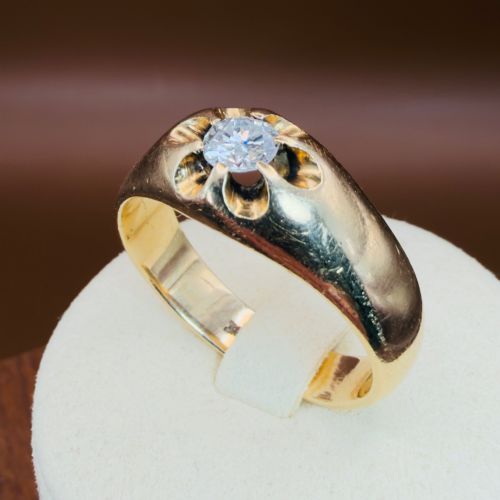
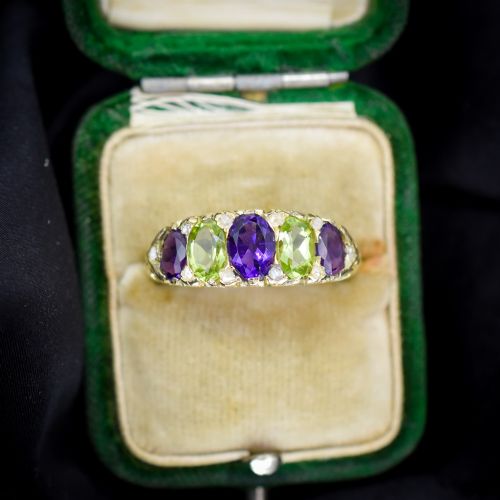
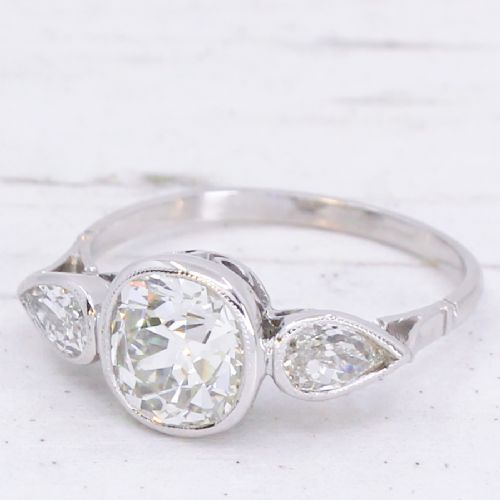
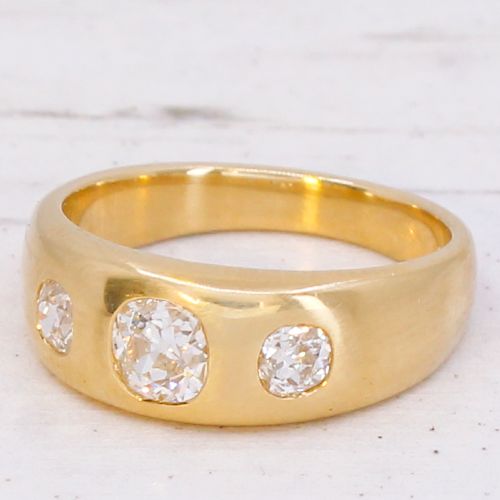
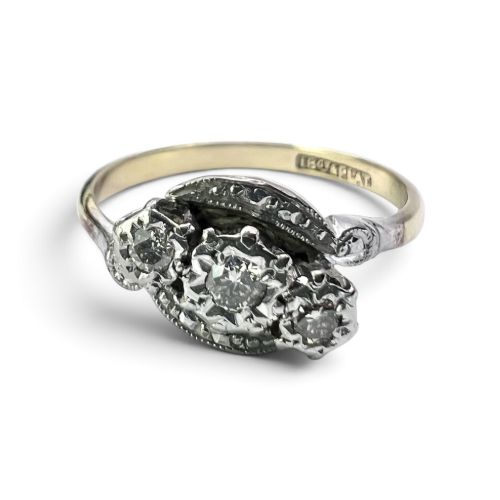
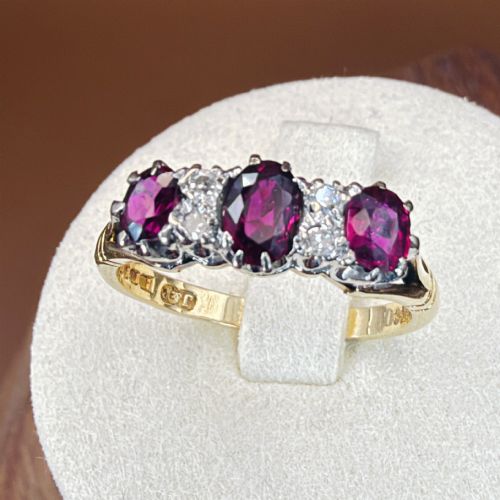
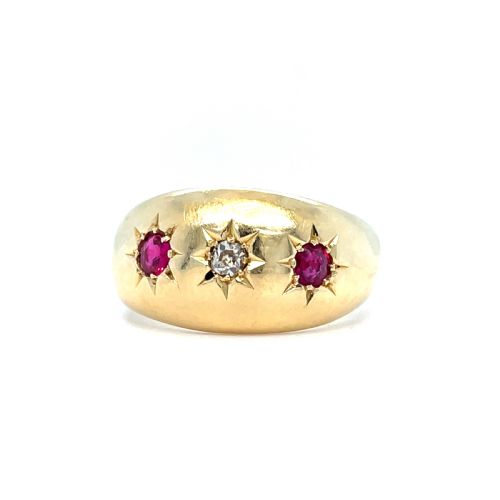
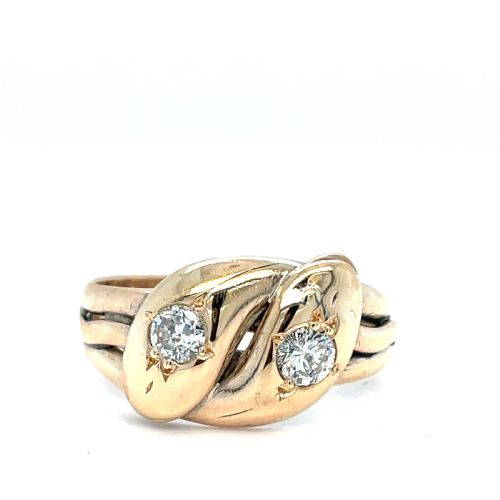
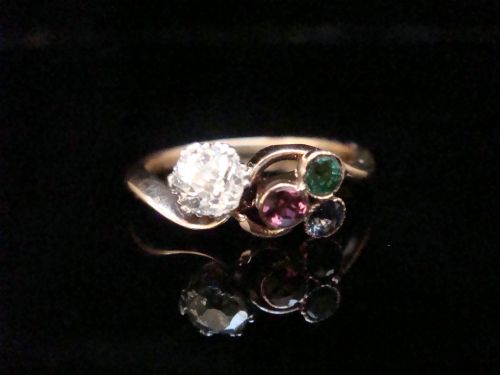
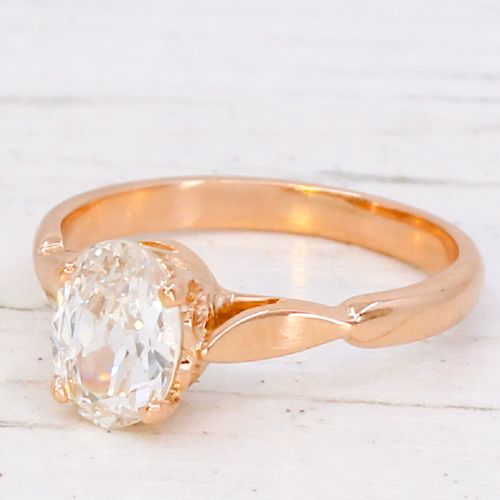
A gold diamond band ring encompasses styles ranging from Victorian multi-stone bands and Edwardian boat settings to geometric Art Deco designs and mid-century dress rings. Buyers encounter various forms, including traditional five-stone rings, gypsy settings, starburst patterns, and buckle motifs.
Materials and construction
Goldsmiths utilised 18ct yellow and white gold alongside platinum settings to secure old cut, brilliant, and rose cut diamonds. Many pieces incorporate complementary gemstones such as rubies, sapphires, opals, and emeralds alongside the primary diamonds.
Techniques varied from flush gypsy mountings and starburst engravings to raised boat settings, trilogy arrangements, and cluster formations. Platinum tops were frequently combined with gold shanks during the Edwardian and Art Deco eras to enhance the brilliance of the diamonds.
The selection includes serpentine snake rings, buckle bands, and multi-stone cluster designs spanning the Victorian period to the mid-twentieth century.
Determinants of quality
Quality depends upon the skill of the original setting work, the symmetry and cut of the diamonds, and the preservation of the metalwork details. Heavier gauge gold shanks and intact claw or star settings indicate superior original craftsmanship.
The matching of stone sizes in multi-stone bands, the clarity of engravings on Victorian and Edwardian bands, and the structural integrity of the gallery dictate the overall standard of each piece.
The Gold Diamond Band Ring Glossary
- Old cut
- A diamond facet style popular before modern brilliant cutting, characterised by a smaller table and higher crown.
- Gypsy ring
- A design where stones are flush-set directly into the thick band, creating a smooth outer surface.
- Boat ring
- A navette or boat-shaped cluster setting rising from the band, typical of the Edwardian period.
- Trilogy ring
- A ring featuring three prominent gemstones, often interpreted to represent past, present, and future.
- Navette
- A pointed, ovoid-shaped setting resembling a little ship, frequently seen in late nineteenth-century jewellery.
Gold Diamond Band Ring: Frequently Asked Questions
What periods do these rings come from?
The inventory spans the Victorian and Edwardian eras, progressing through Art Deco designs up to mid-century and vintage pieces from the 1950s and 1960s.
These periods bring distinct metal choices and stone cuts, ranging from old mine cut diamonds in nineteenth-century yellow gold to geometric platinum settings from the 1930s.
How do I care for an antique ring?
Historic gold and platinum rings require gentle cleaning with warm soapy water and a soft brush, avoiding harsh chemical ultrasonic cleaners.
Regular inspection by a jeweller ensures that older claw settings and flush mountings remain secure around the diamonds and coloured gems.
Can these rings be resized easily?
Resizing depends on the construction of the band, the distribution of stones around the hoop, and the metal type.
Plain gold shanks are straightforward to adjust, whereas full eternity or heavily engraved band rings present greater technical challenges for a jeweller.
What is a gypsy set diamond?
A gypsy setting embeds the diamond directly into a thick gold or platinum band so that the surface sits level with the metal.
This technique provided durability for everyday wear in the late nineteenth and early twentieth centuries.