


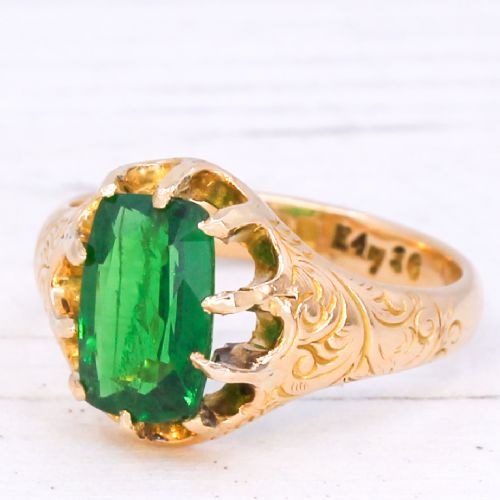
Yellow Gold Gemstone Band
A yellow gold gemstone band brings together warm precious metal and vibrant stones, offering a rich piece of jewellery that sits comfortably on the hand for daily wear.
Yellow Gold Gemstone Band
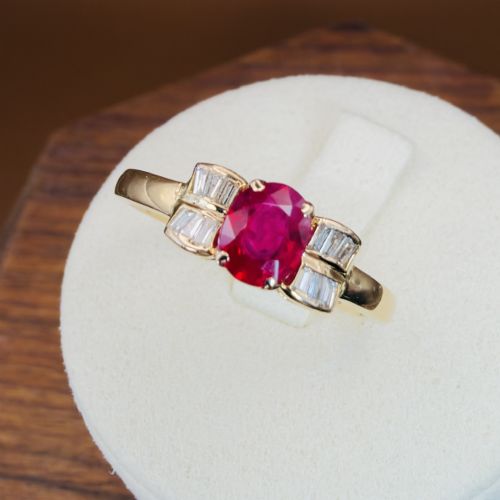
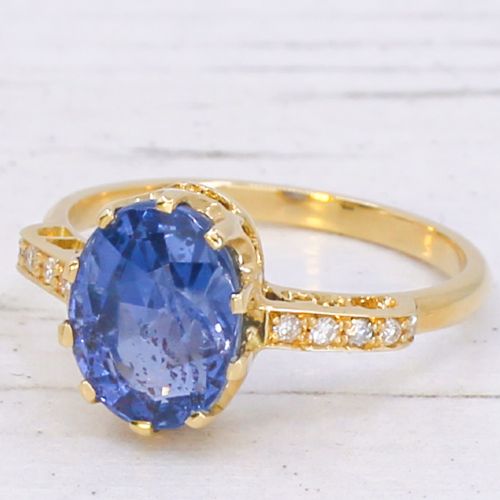
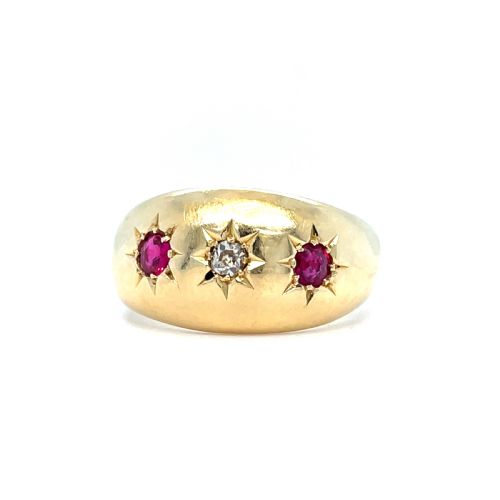
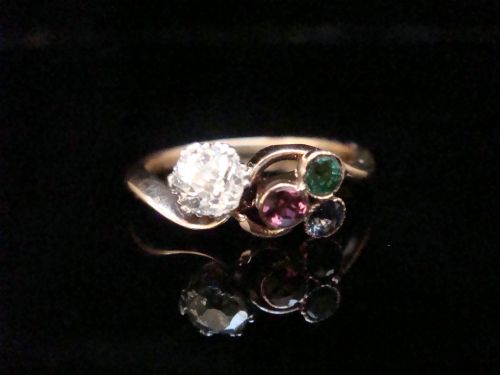
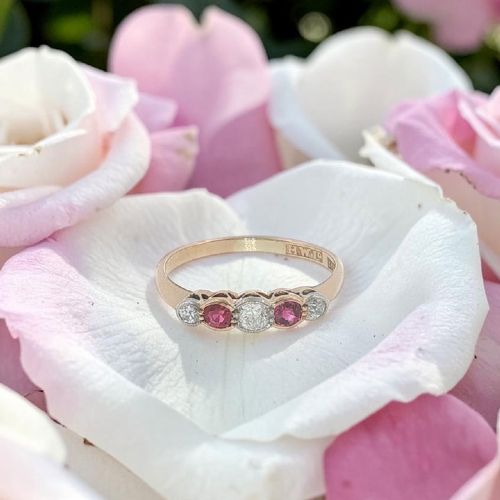
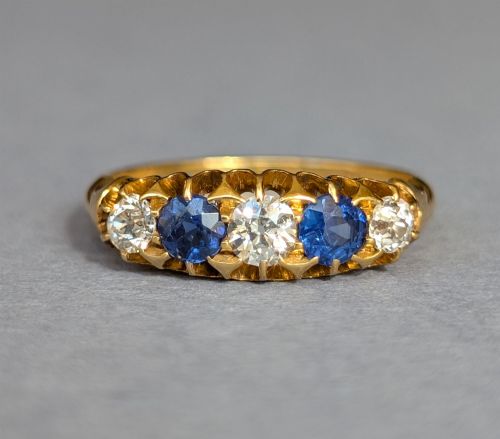
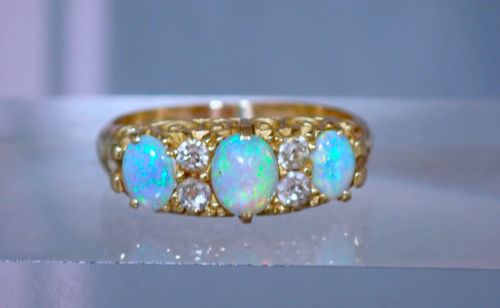
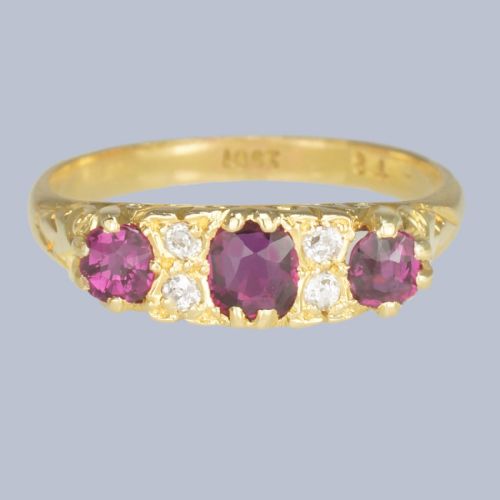
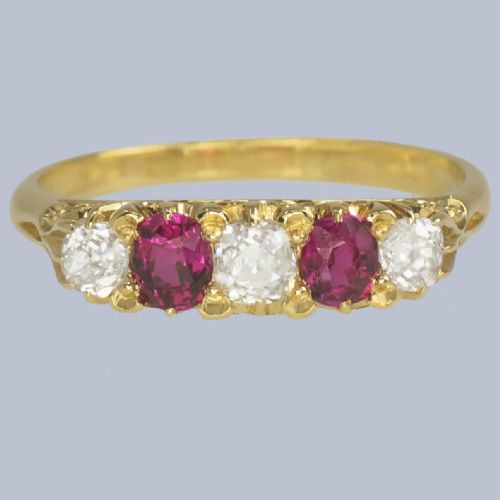
A yellow gold gemstone band combines durable precious metal settings with vibrant stones, ranging from single stone arrangements to intricate multi-stone clusters and historical patterns. When searching for a yellow gold gemstone band, buyers encounter pieces stretching from the Victorian and Edwardian eras through to the mid-twentieth century and the nineteen-sixties.
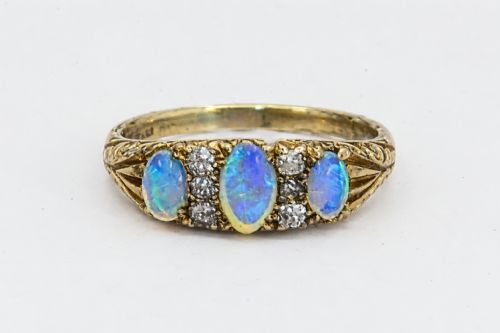
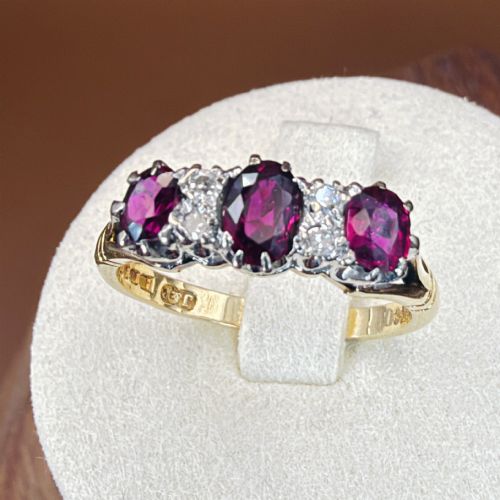
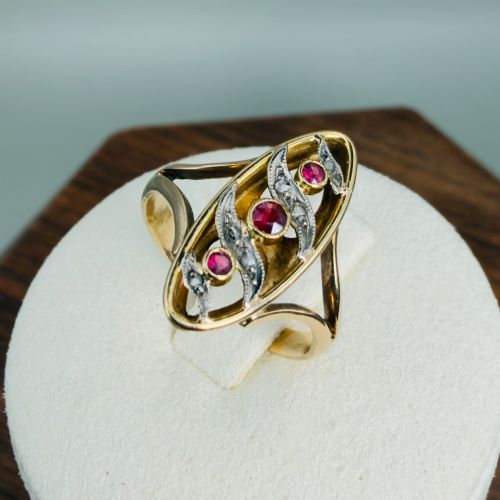
The most common formats on this page include five stone rows, trilogy arrangements, and cluster designs featuring rubies, sapphires, opals, and diamonds. These rings span various regional British assay offices and periods, capturing the evolving tastes in gemstone combinations over more than a century of jewellery design.
Materials and construction methods
The construction relies predominantly on yellow gold in varying purities such as fifteen carat and eighteen carat, providing a warm foundation for secure claw, flush, and starburst settings. Stones are chosen for their colour and cut, incorporating traditional old mine cuts, brilliant cuts, and rose-cut diamonds alongside rubies, sapphires, and opals.
Metalworking techniques recorded in these pieces include patterned band engraving, navette shaping, and boat mountings that lift the central stones. Goldsmiths balanced structural durability with refined detailing, utilising platinum accents in later vintage examples to contrast the yellow gold.
Several Victorian pieces tuck tiny starburst engravings right beside the gems, giving the metal its own twinkle before the light even hits the stones.
Distinguishing quality across periods
Quality in these rings is determined by the clarity of the gemstone selections, the crispness of the metal chasing, and the integrity of the setting work. Superior examples display well-matched stone sizes, natural untreated colour in rubies and sapphires, and minimal wear to the structural shank.
Finer pieces maintain robust claw integrity and retain original engraved details on the band shoulders, whereas lower quality or heavily worn variants show thinning metal and replaced stones that disturb the original design harmony.
The Yellow Gold Gemstone Band Glossary
- Trilogy
- A ring featuring three primary gemstones set in a row, often symbolising past, present, and future.
- Cluster
- An arrangement where a central stone is surrounded by a border of smaller accent stones, typically diamonds.
- Old mine cut
- An antique diamond cut with a near-square girdle, high crown, and a small table facet, prevalent in nineteenth-century jewellery.
- Navette
- A boat-shaped ring setting that tapers to points at either end, sitting lengthways along the finger.
- Half eternity
- A band ring featuring a single continuous line of channel or claw-set stones across the upper half of the hoop.
Yellow Gold Gemstone Band: Frequently Asked Questions
How do I wear a gemstone band daily?
These rings suit daily wear provided the metal shank remains thick and the gemstone settings are secure. Harder stones like diamonds, rubies, and sapphires withstand regular use better than softer materials.
Take care to remove the ring during heavy manual work or swimming to protect delicate prongs and softer gems like opals from impact or moisture damage.
Can antique rings be resized easily?
Most gold band rings can be adjusted by a skilled jeweller, though the presence of patterned shoulders or stones set all the way around the band requires extra care. An assay mark on the inner shank should be protected during any alteration work.
Consult a specialist who understands antique construction to ensure the structural integrity of the ring remains intact after adjustment.
How should I clean my antique ring?
Clean these pieces gently using warm water, mild soap, and a soft brush to remove everyday oils and dust from beneath the stone settings. Avoid harsh chemical dips or ultrasonic cleaners, particularly for opals, pearls, and emeralds.
Dry the ring thoroughly with a soft cloth before storing it separately in a lined jewellery box to prevent scratching against other pieces.