



Antique Ruby Anniversary Ring
An antique ruby anniversary ring brings together vibrant crimson stones and warm gold, offering a tangible piece of history for a significant milestone.
Antique Ruby Anniversary Ring
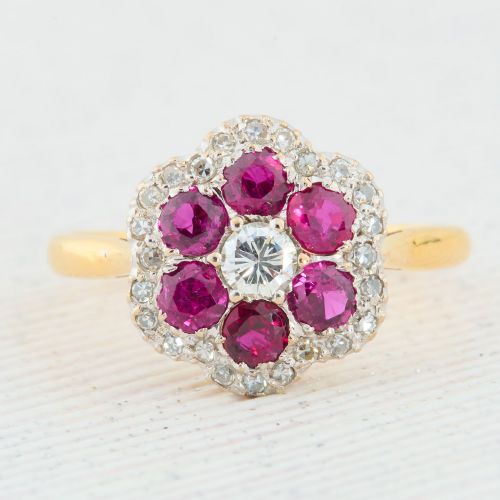
When you search for an antique ruby anniversary ring, you encounter pieces designed to celebrate enduring partnerships through centuries of craftsmanship. These rings manifest primarily as band rings, five stone configurations, and floral cluster arrangements.
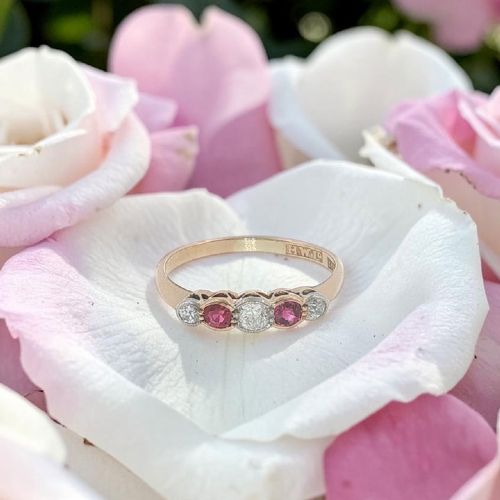
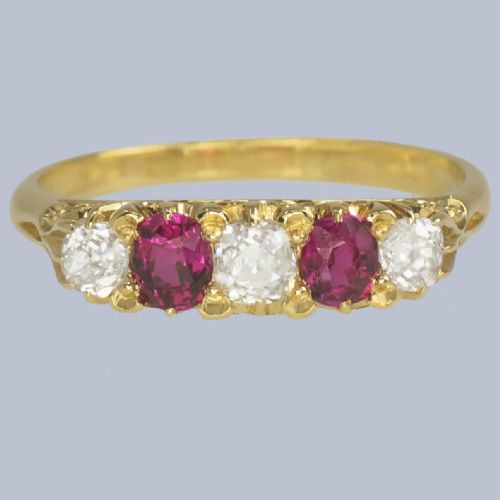
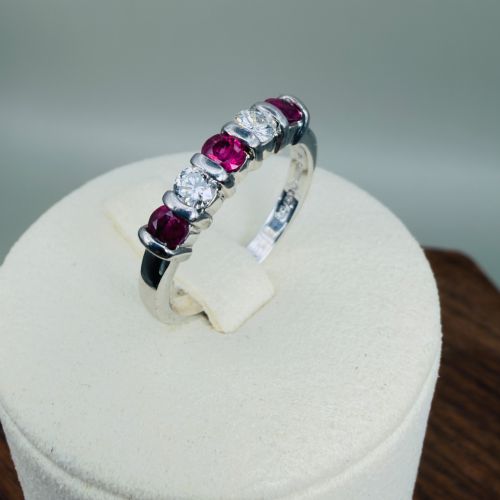
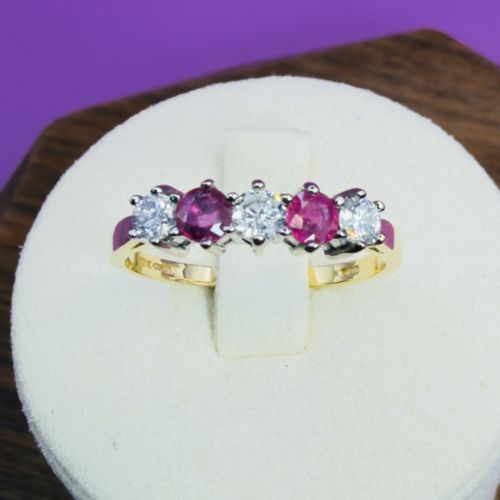
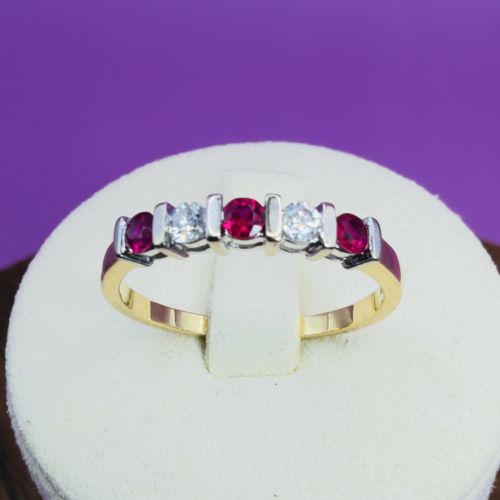
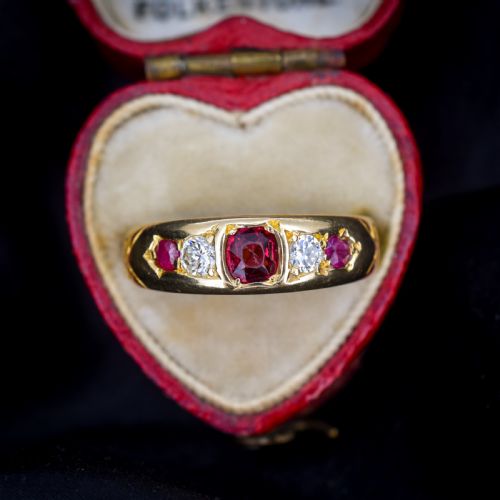
The selection on this page spans distinct periods from the Victorian era and 1880 through Edwardian, Art Deco, and Mid-Century designs. You will frequently meet five stone rings featuring alternating or paired rubies and diamonds set in gold bands.
Originating from periods such as 1900, 1910, 1930, 1950, and 1960, these items reflect the prevailing aesthetic of their decade of creation. Traditional band rings sit alongside more ornate cluster styles, providing diverse options for modern wear.
Materials and construction
Goldsmiths utilised 18ct gold, 15ct gold, yellow gold, white gold, and platinum to form the structural mounts and bands of these pieces. Gemstones including ruby, diamond, pearl, and garnet are integrated using secure settings suited to each distinct era.
Techniques range from patterned band construction to intricate five stone arrangements and floral cluster layouts. Individual stones, such as old mine cut and old cut diamonds, are paired with natural rubies to create balanced visual compositions.
Listings feature items from the Victorian period, 1880, 1900, 1910, 1930, 1950, and 1960 in gold, platinum, ruby, diamond, pearl, and garnet.
Factors of quality and distinction
Quality in these pieces rests upon the clarity and colour saturation of the rubies alongside the cut and brilliance of the accompanying diamonds. The precision of the metalwork, whether patterned engraving or smooth polished bands, also distinguishes individual items.
The integrity of the original settings and the preservation of hallmarks, such as those from Chester and London, contribute significantly to a piece's standing. Finer examples maintain crisp details in their gold mounts and secure stone alignments across decades of existence.
The Antique Ruby Anniversary Ring Glossary
- Five stone ring
- A ring featuring a linear arrangement of five prominent gemstones, commonly alternating rubies and diamonds in antique pieces. This layout was particularly favoured during the Victorian and Edwardian eras for band designs.
- Old mine cut
- An early diamond cutting style characterised by a cushion shape, high crown, and small table facet. These stones appear frequently in Victorian and Edwardian jewellery.
- Floral cluster ring
- A ring design where central stones are surrounded by a halo of smaller gems to resemble a flower blossom. This style highlights the contrast between red rubies and white diamonds.
- Trilogy ring
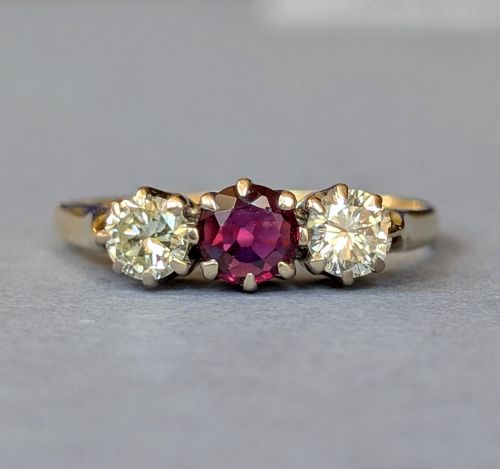
- A three-stone ring traditionally symbolising the past, present, and future of a relationship. In the evidence, these combine rubies and diamonds set in yellow gold.
- Hallmark
- An official stamp or marks struck on precious metal items to certify the purity of the gold and the place of origin. Pieces in the evidence feature assay office stamps from locations such as Chester and London.
Antique Ruby Anniversary Ring: Frequently Asked Questions
What periods do these rings come from?
The pieces span the Victorian era, 1880, 1900, 1910, the Art Deco period of the 1930s, the Mid-Century 1950s, and 1960.
Each era brings distinct stylistic touches, ranging from patterned 15ct gold bands to platinum-accented cluster designs.
Which gemstone combinations are most common?
Rubies paired with diamonds dominate the selections, often arranged in five stone or cluster formats.
Pearls and garnets also appear alongside rubies in specific Victorian and Edwardian band configurations.
What metal types were used?
Goldsmiths utilised 18ct gold, 15ct gold, 18ct yellow gold, white gold, and platinum.
Yellow gold provides a warm tone typical of older Victorian and Edwardian pieces, while white metals emerge more prominently in later twentieth-century designs.
How do five stone rings differ from cluster rings?
Five stone rings arrange gems in a single horizontal line across the finger, frequently alternating rubies and diamonds.
Cluster rings group the stones tightly together into a central focal point, often creating a floral motif.
Are these rings suitable for daily wear?
Many buyers choose these items for daily wear, particularly robust band and five stone configurations.
Careful consideration of stone settings and metal thickness helps ensure longevity for vintage and antique jewellery.