


Ruby Diamond Engagement Ring
A ruby diamond engagement ring brings together rich red stones and bright cut diamonds in durable gold and platinum settings.
What these rings are
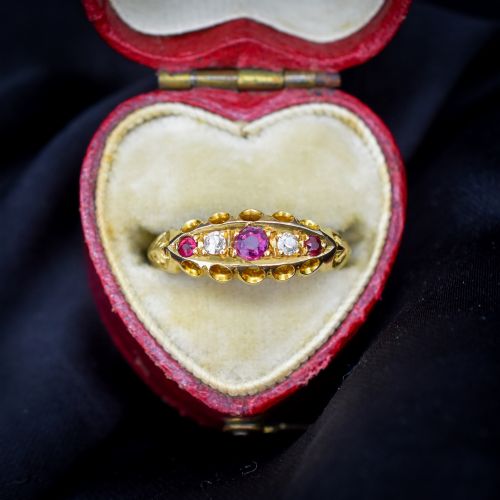
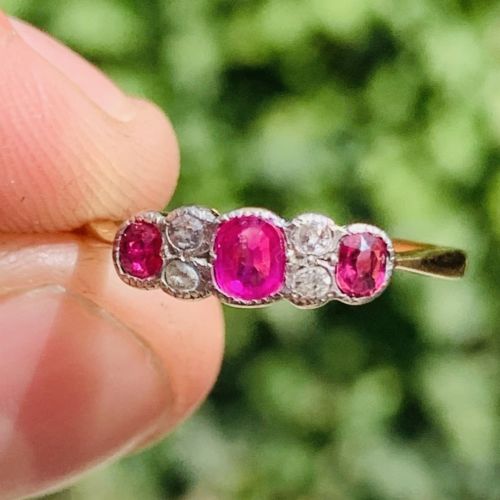
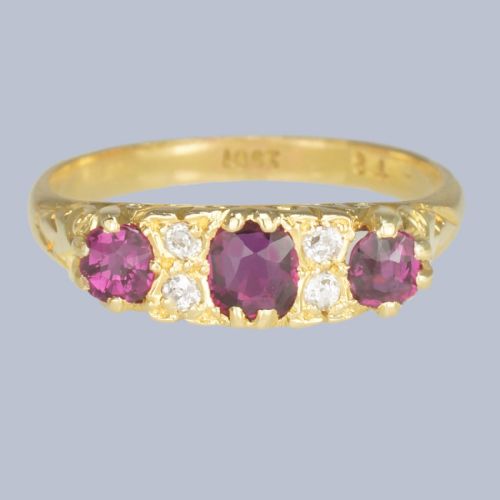
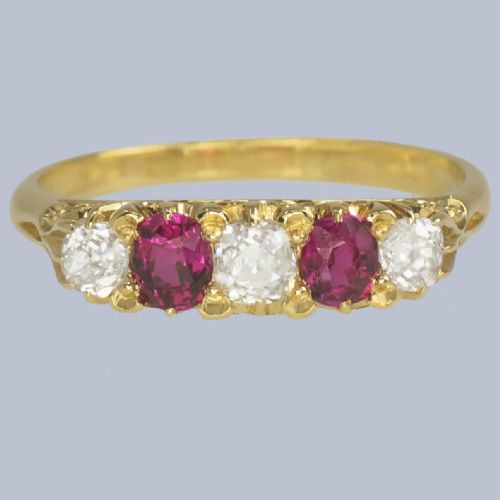
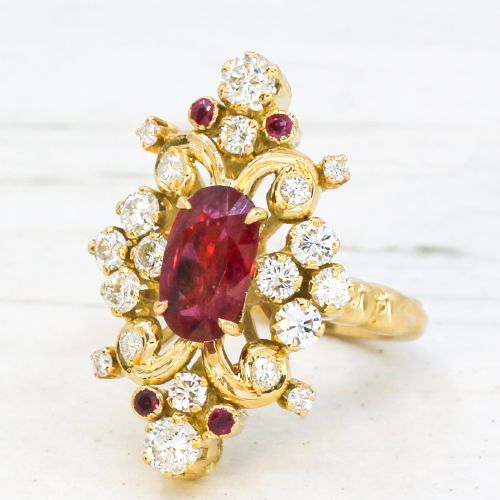
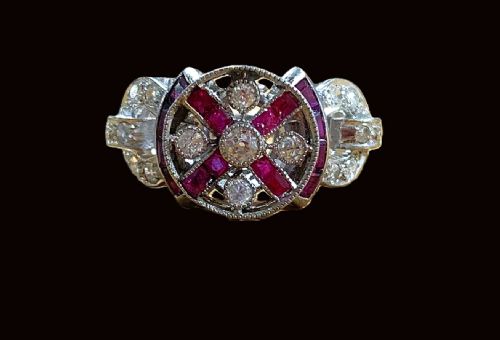
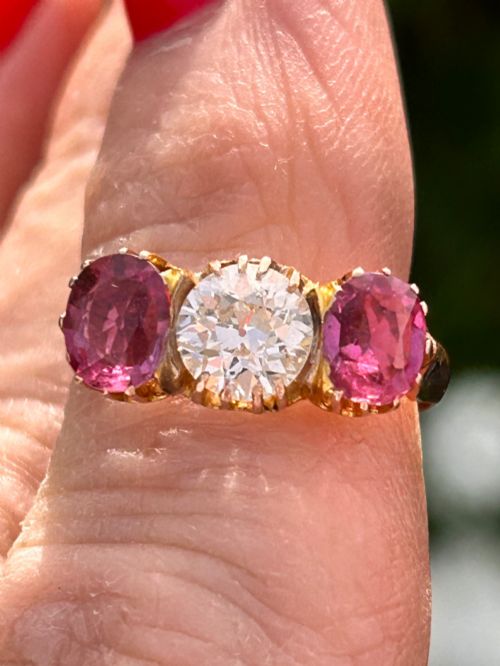
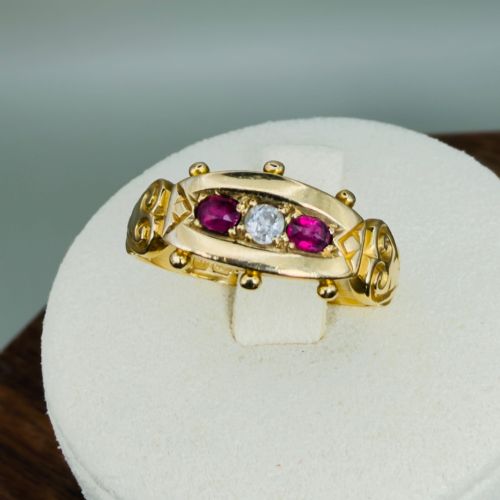
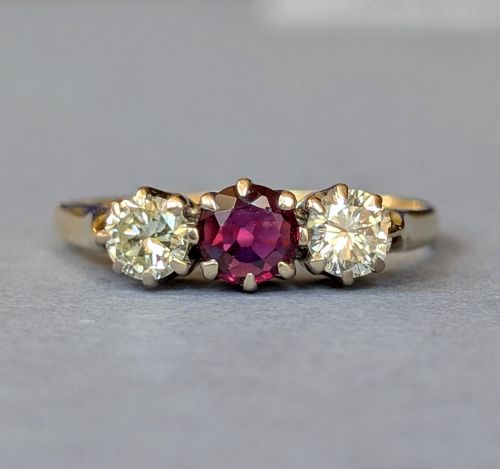
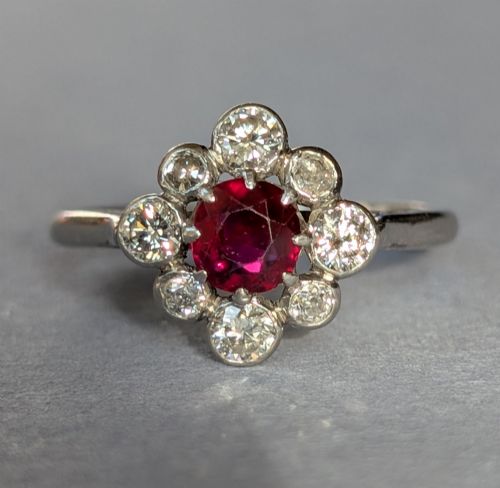
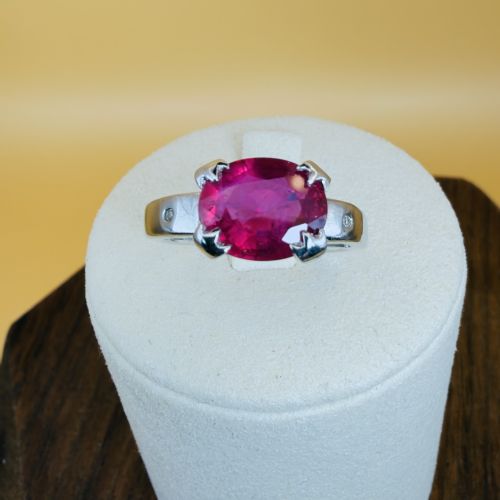
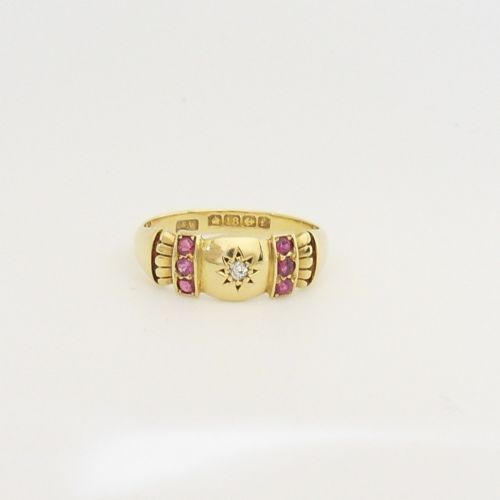
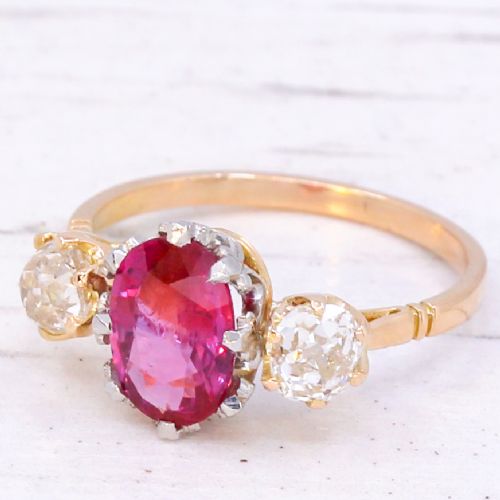
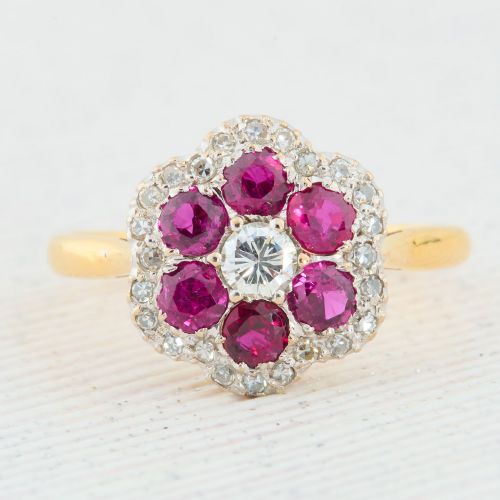
A ruby diamond engagement ring combines central red rubies with contrasting white diamonds in cluster, trilogy, five stone, and daisy formats. These rings emerge across multiple distinct eras, spanning late Victorian designs, Art Deco creations, and mid twentieth century examples.
Buyers meet varied traditional configurations on this page, including old mine cut stones set in eighteen carat yellow gold and platinum. The diverse selections demonstrate classic gemstone pairings that have endured through successive jewellery periods.
How they were made
Goldsmiths shape these pieces using eighteen carat gold and platinum to secure the precious gems firmly in place. Metalwork styles adapt across the decades, transitioning from substantial yellow gold mounts to platinum settings.
The stones themselves feature distinct historical cuts, including old mine cut and transitional cut diamonds alongside vibrant natural rubies. Each gem is positioned carefully within cluster, daisy, or multi stone arrangements.
Retail Price Guide 2026
Typical UK retail prices for ruby diamond engagement ring, calculated from the Sellingantiques database of over a million retail prices indexed since 2003. This retail price guide relies exclusively on Sellingantiques data; no external sources or auction records are used, so the figures do not describe the wider market.
Listings feature items spanning the Victorian era through the nineteen fifties, utilising yellow gold, platinum, rubies, and diamonds.
What varies in quality
Quality rests upon the natural saturation and clarity of the ruby paired with the carat weight and cutting style of the diamonds. Heavier carat distributions and finer historical cutting techniques elevate the standing of a piece.
The integrity of the metal setting and the crispness of the original mounting work distinguish exceptional examples from standard specimens. Masterful arrangement of multiple stones creates a cohesive visual harmony that defines superior items.
The Ruby Diamond Engagement Ring Glossary
- Old mine cut
- An early diamond cutting style characterised by a cushion outline, high crown, and small table facet. This hand cut form predates modern brilliant cutting standards.
- Trilogy ring
- A ring featuring three principal stones set in a row, often symbolising past, present, and future. This layout accommodates combinations of rubies and diamonds.
- Cluster ring
- A central gemstone surrounded by a border of smaller accent stones. This arrangement maximises visual presence on the finger.
- Daisy cluster
- A circular flower shaped cluster design with central stones encircled by petals of smaller gems. It remains a popular format in vintage fine jewellery.
- Platinum
- A dense, strong, silvery white precious metal used to securely hold fine gemstones. Its natural strength allows for delicate claw work.
Frequently Asked Questions
What periods do these rings come from?
These rings span several distinct historical eras, including late Victorian origins, Art Deco periods from the nineteen twenties and thirties, and mid twentieth century decades.
Each period introduces specific mounting styles and gemstone cuts that distinguish the age of the jewellery.
What metal types are used?
Makers utilise eighteen carat yellow gold, standard yellow gold, and platinum for these mountings.
Platinum offers a bright white secure setting, while yellow gold delivers traditional warmth to the overall piece.
How are the stones arranged?
Gems appear in various multi stone formats such as trilogy settings, cluster designs, daisy formations, and five stone rows.
These configurations alternate rubies and diamonds to create contrasting colour and texture across the band.