


Ruby and Gold Ring
A ruby and gold ring brings together rich crimson stones and warm yellow, rose, or white precious metal across centuries of design.
Ruby and Gold Ring
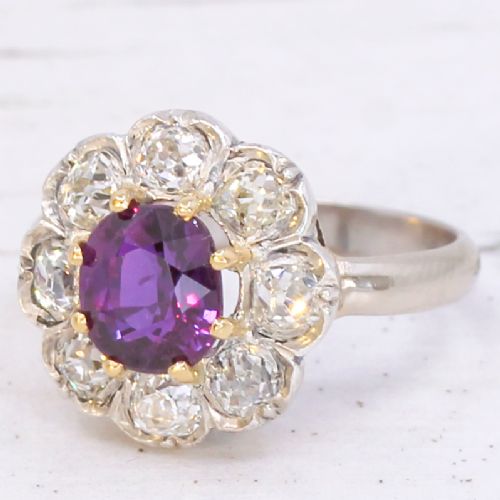
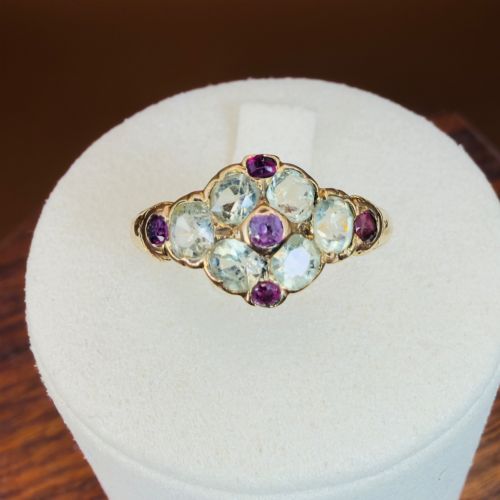
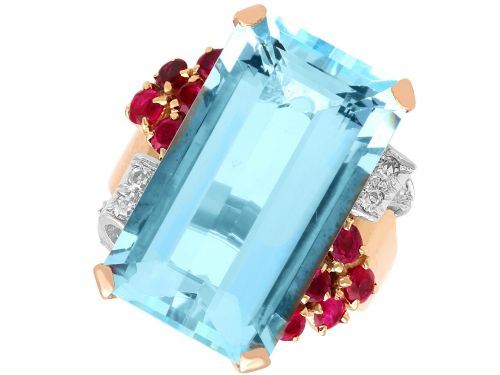
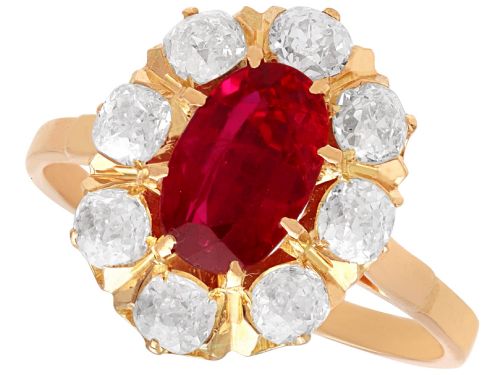
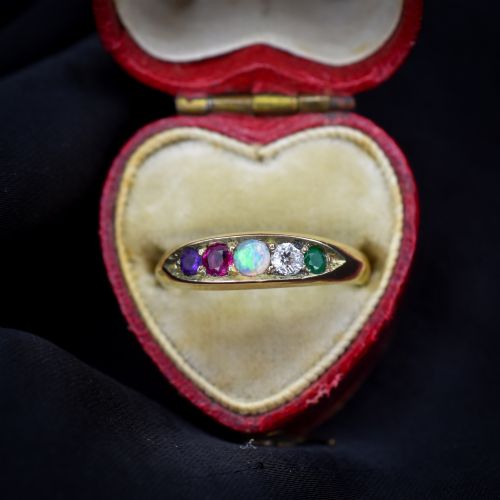
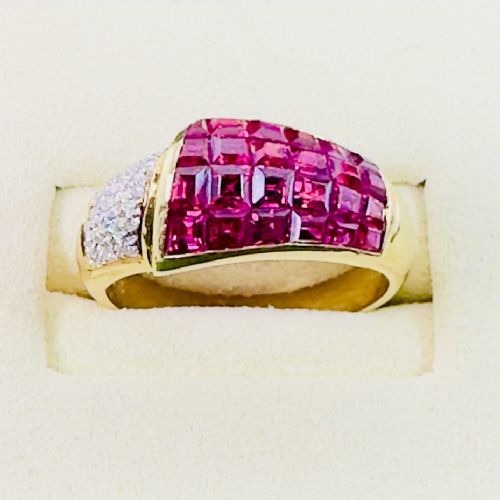
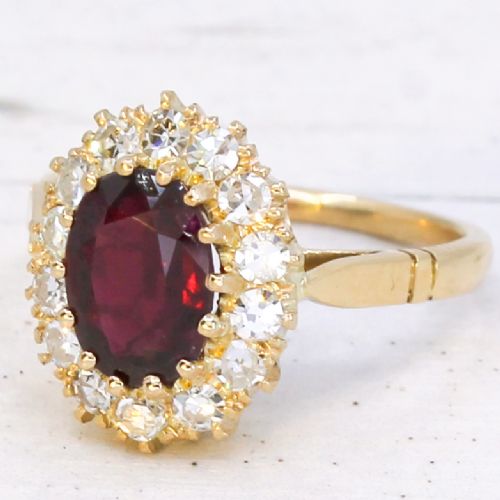
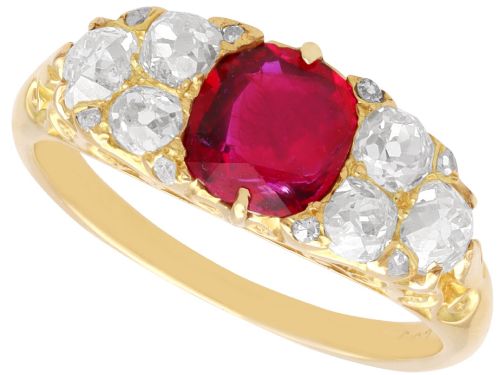
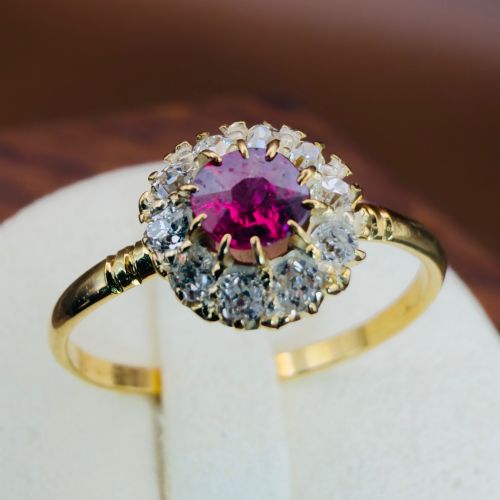
A ruby and gold ring encompasses a wide span of jewellery traditions, featuring forms ranging from traditional Victorian cluster designs to mid-century cocktail rings. Buyers searching this phrase encounter pieces that pair vibrant red rubies with yellow gold, rose gold, white gold, or platinum settings.
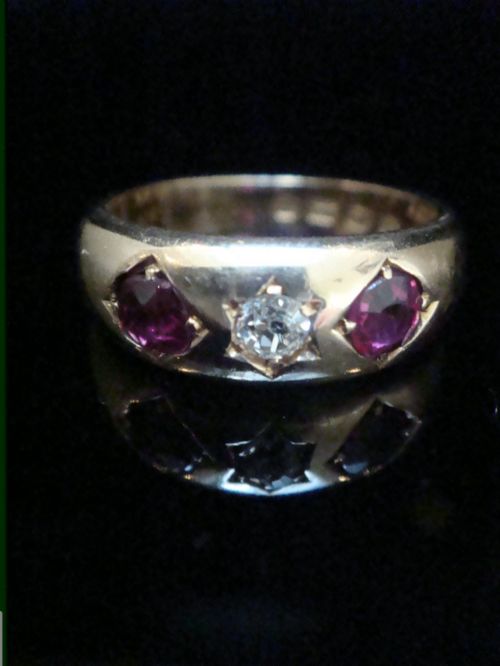
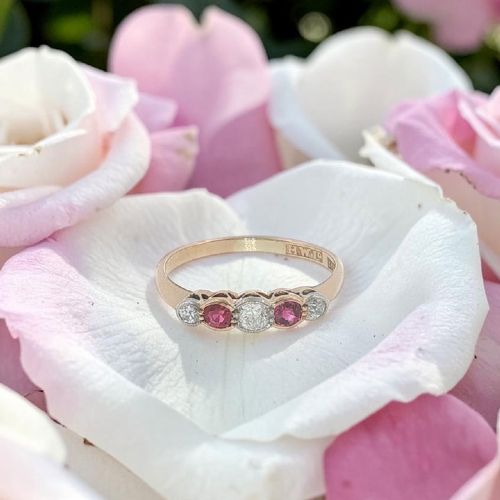
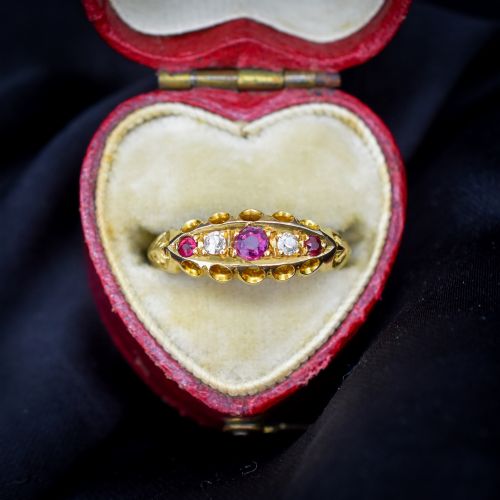
The selections on this page draw from distinct eras including the Victorian, Edwardian, Art Deco, and mid-century periods. Cluster configurations, five-stone bands, and gypsy settings appear frequently alongside floral motifs and navette shapes.
How they were made
Goldsmiths utilised 18ct yellow gold, 15ct gold, 14ct rose gold, and white gold to construct sturdy bands and detailed settings. Platinum also appears alongside gold, particularly in mounting older cut diamonds and securing central gems.
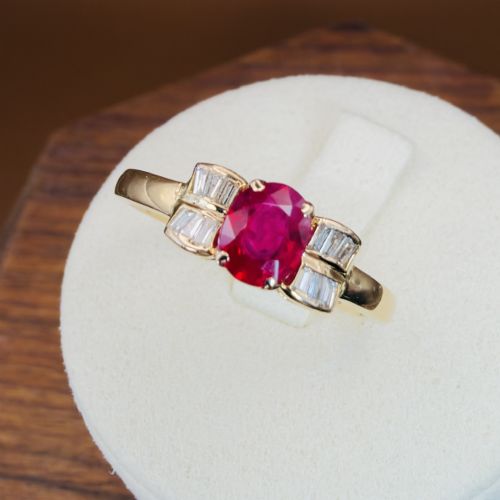
Craftsmen shaped rubies into oval, princess, and old cuts, often pairing them with diamonds, pearls, or garnets. Traditional claw settings, bezel mounts, and starburst engravings hold the stones securely within the metalwork.
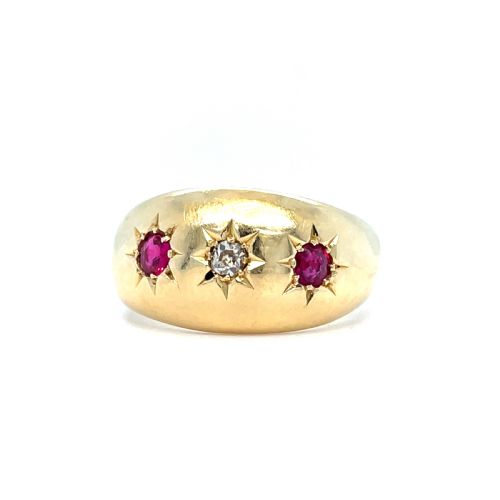
Several rings conceal small starburst engravings around their flush-set stones, designed to catch the candlelight of nineteenth-century evenings.
What varies in quality
The distinction between tiers rests upon the origin and treatment of the rubies, with unheated stones from sources like Burma commanding particular interest. Colour saturation, clarity, and the weight of the central gems define the upper echelon of these pieces.
Execution of the surrounding metalwork and the quality of accompanying old-cut or baguette diamonds also shape the character of each ring. Substantial weight in the gold band and crisp detail in cluster or navette arrangements separate ordinary examples from finer works.
The Ruby and Gold Ring Glossary
- Cluster ring
- A ring featuring a central stone encircled by a group of smaller gems, creating a prominent floral or geometric display on the finger.
- Gypsy ring
- A style where stones are flush-set directly into a thick tapering band of metal, popular during the Victorian and Edwardian eras.
- Navette
- A boat-shaped mounting design that sits lengthwise along the finger, often set with multiple diamonds and rubies.
- Trilogy ring
- A three-stone ring traditionally symbolising the past, present, and future, frequently combining rubies and diamonds.
- Old cut
- A vintage diamond cutting style characterised by a smaller table, higher crown, and open culet, commonly found in antique settings.
Ruby and Gold Ring: Frequently Asked Questions
How do I care for my ruby and gold ring?
Rubies are durable gemstones that tolerate everyday wear, yet gold settings require periodic inspection by a jeweller to ensure stones remain secure in their claws.
Clean the metal and stones gently with warm soapy water and a soft brush, avoiding harsh chemical cleaners that might affect older gold alloys or treated gems.
Can I wear a ruby and gold ring daily?
Most 18ct gold and platinum ruby rings suit daily wear, provided the setting is robust and the prongs show no signs of thinning.
Heavily carved antique bands or delicate Edwardian filigree benefit from occasional rests during heavy manual tasks to preserve the historic metalwork.
How do I identify the period of my ring?
Hallmarks stamped inside the gold band offer the most reliable evidence for dating, often indicating the assay office and year of manufacture.
Stylistic clues such as the cut of the diamonds, the profile of the gallery, and mounting techniques also help distinguish Victorian pieces from mid-century designs.
What is the difference between an unheated ruby and standard stones?
Unheated rubies have not undergone thermal enhancement to improve their natural colour or clarity, making them scarcer and more desirable to collectors.
Gemmological certification frequently accompanies unheated Burmese stones to verify their natural origin and lack of artificial treatment.