

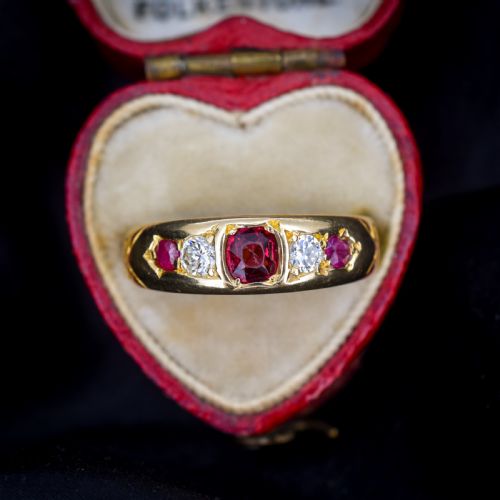


Edwardian Ruby Five Stone
These edwardian ruby five stone rings combine saturated red rubies with shimmering diamonds in elegant gold or platinum settings.
Edwardian Ruby Five Stone
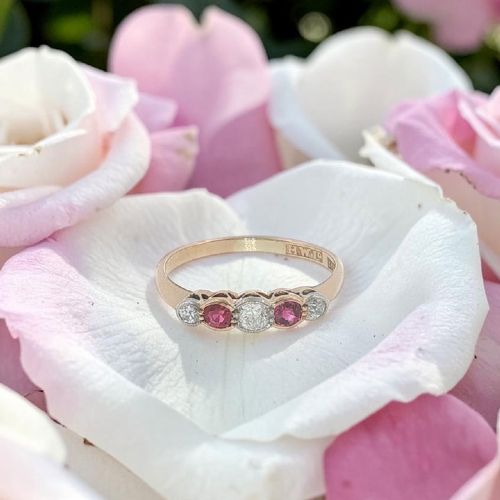
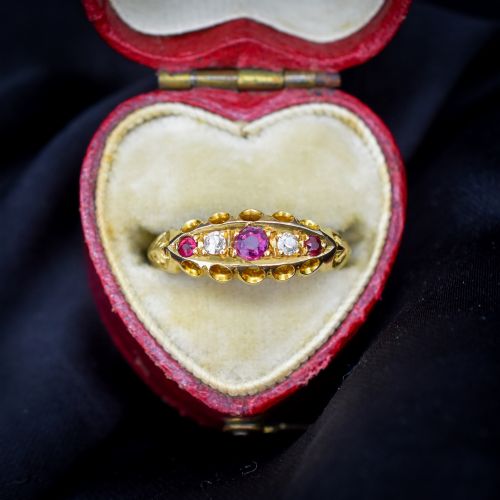
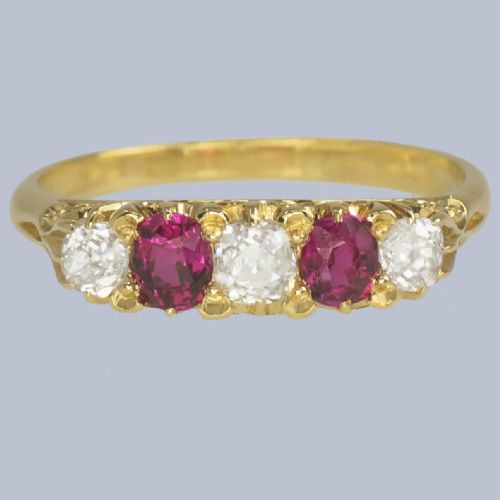
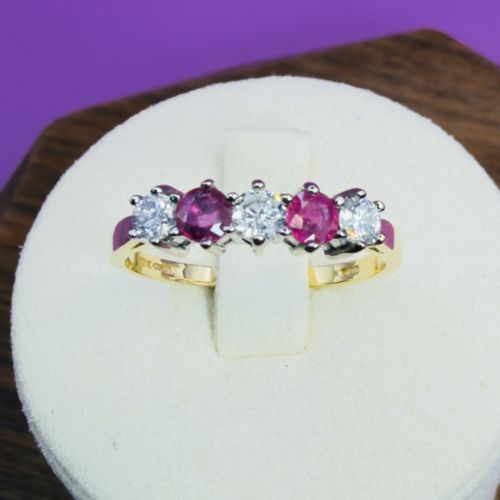
An edwardian ruby five stone ring presents a graceful line of alternating red gemstones and diamonds across the finger. This selection captures genuine examples from the early twentieth century alongside related Victorian and later expressions.
Most pieces on display utilise the traditional boat shape or linear band format favoured by makers of the period. These rings span yellow gold and platinum mounts, often featuring hallmarks from assay offices such as Chester.
Collectors encounter variations including starburst arrangements, navette profiles, and trilogy formations alongside standard linear five stone layouts. The materials combine natural rubies with old mine cut or modern diamonds.
Materials and Construction
Goldsmiths constructed these rings primarily in eighteen carat yellow gold and platinum, utilising durable metals to secure fragile gemstone settings. The combination of gold bands with platinum top mounts became prominent during the Edwardian era to enhance the brilliance of white stones.
Gemstones are secured using claw settings or low profile flush techniques that maximise light entry. Old cut diamonds and vibrant rubies were hand selected to fit graduating or uniform spaces across the finger.
The documented pieces showcase regional British craftsmanship, frequently featuring Chester assay office marks alongside standard London or provincial indicators.
Assessing Quality and Craftsmanship
Quality rests in the saturation and match of the rubies, where deeper crimson tones command attention alongside well proportioned diamond partners. Subtle variations in the hand cutting of old mine cut stones reveal the individual skill of the period artisan.
The integrity of the gold or platinum band and the crispness of Chester hallmarks contribute significantly to desirability. Strong claw work that securely holds each gemstone without excess metal mass demonstrates superior workshop execution.
The Edwardian Ruby Five Stone Glossary
- Old mine cut
- An early diamond cutting style featuring a cushion outline, high crown, and large open culet. This cut absorbs candlelight beautifully and marks genuine antique provenance.
- Boat ring
- A mounting style where the central section curves upward like a boat hull, gently elevating the stones. It remains a hallmark of Edwardian and Victorian finger jewellery.
- Navette
- A boat shaped or eye shaped gemstone setting pointed at both ends. The design creates an elongated silhouette along the finger.
- Hallmark
- An official stamp struck into precious metal indicating purity, origin assay office, and date of manufacture. Chester stamps frequently appear on these pieces.
- Trilogy ring
- A three stone configuration representing the past, present, and future. These items often pair central rubies with flanking diamonds.
Edwardian Ruby Five Stone: Frequently Asked Questions
How do I care for an antique ruby ring?
Clean your ring gently using warm soapy water and a soft brush, avoiding harsh ultrasonic cleaners that might disturb old settings. Store the piece separately to prevent softer rubies from scratching against harder diamonds.
Regularly check the claws with a loupe to ensure the gemstones remain firmly anchored in their original mountings.
Can an edwardian ruby ring be resized?
Most gold and platinum bands can be adjusted by a skilled jeweller who understands antique construction techniques. The presence of delicate shoulders or full Chester hallmarks requires careful consideration before any metal is added or removed.
Consult a specialist who works routinely with early twentieth century jewellery to preserve the structural integrity of the piece.
What is the difference between Victorian and Edwardian rings?
Victorian rings often display heavier yellow gold settings and warmer, romantic motifs like starbursts. Edwardian examples tend towards lighter platinum tops paired with yellow gold, favouring delicate openwork and linear geometry.
Both periods utilise natural rubies and old cut diamonds, though the overall aesthetic shifted from robust sentimentality to refined grace.
Are these rubies treated?
Natural rubies from this era typically exhibit untreated characteristics consistent with early mining sources. Minor historical heat treatments can occasionally occur, though untampered stones remain standard for antique pieces of this calibre.
Independent certification helps confirm the geological origin and untreated status of significant red stones.