
Yellow Gold Amethyst
Yellow gold amethyst pieces combine rich purple quartz with warm metal settings across Victorian, Edwardian, and mid-century designs.
Yellow Gold Amethyst
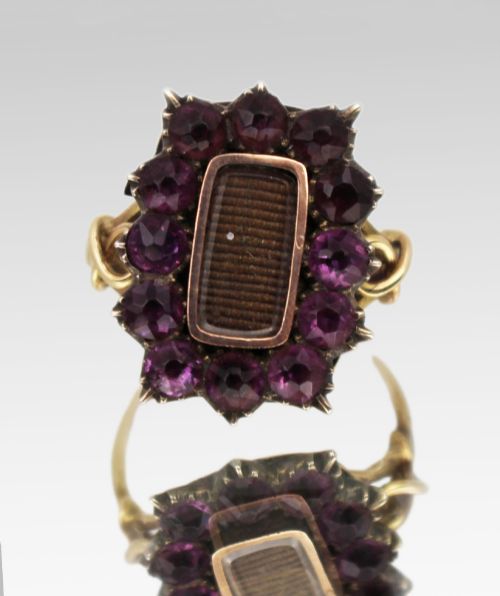
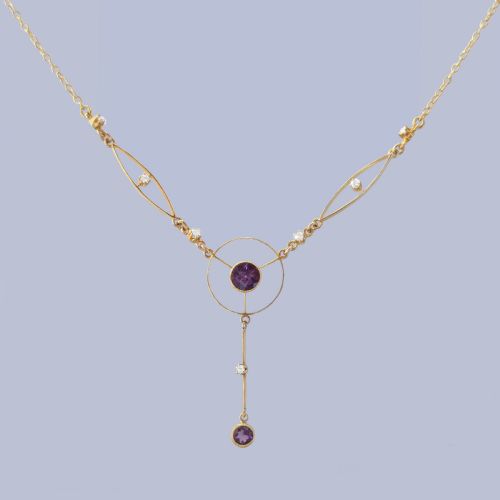
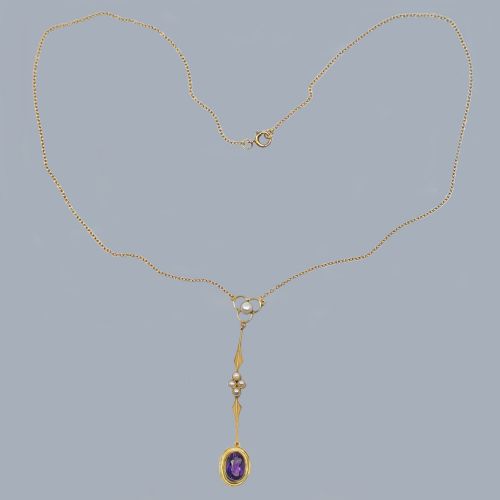
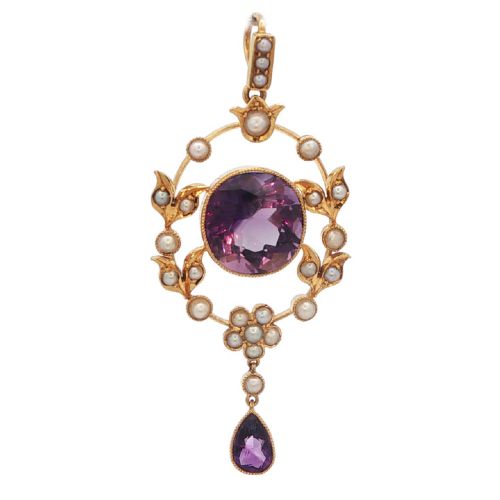
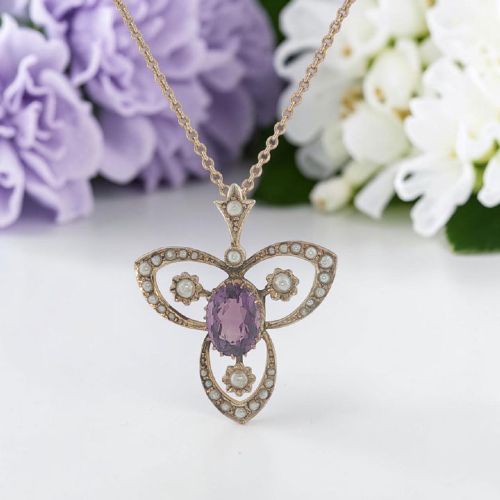
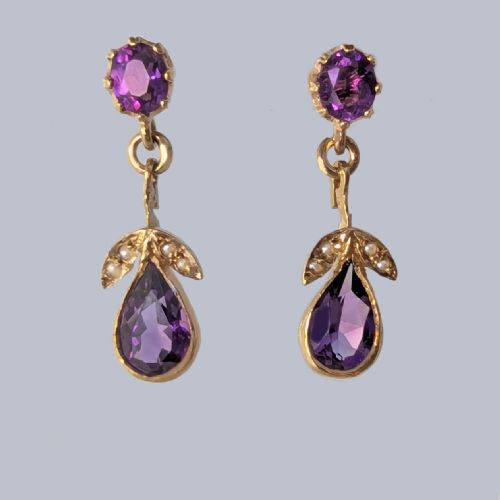
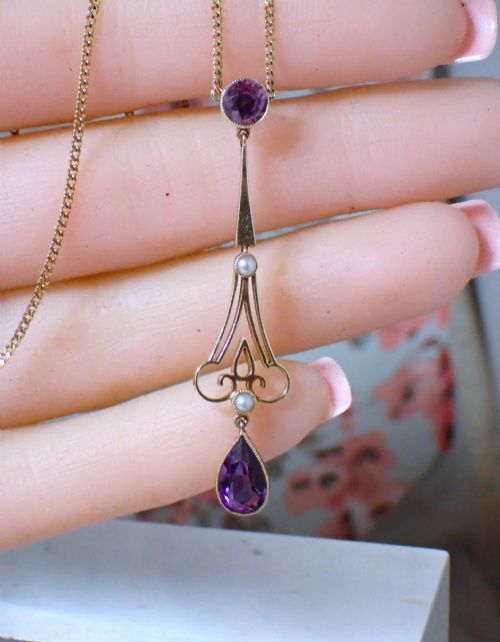
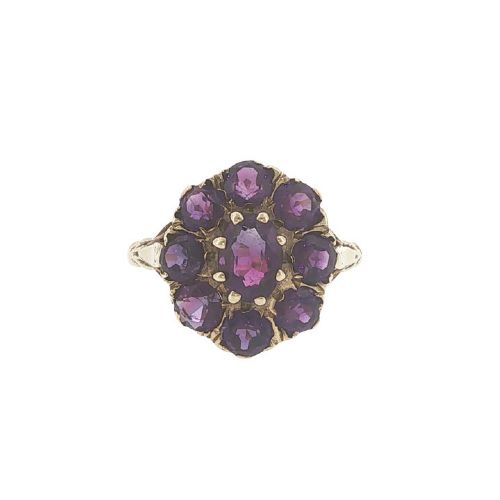
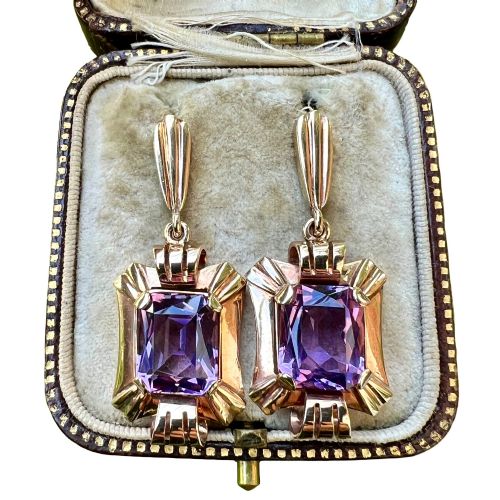
Yellow gold amethyst jewellery spans multiple eras, with strong representation from Victorian, Edwardian, and mid-century periods. Buyers frequently encounter rings, drop earrings, and intricate lavalier necklaces featuring this combination of purple quartz and warm metal.
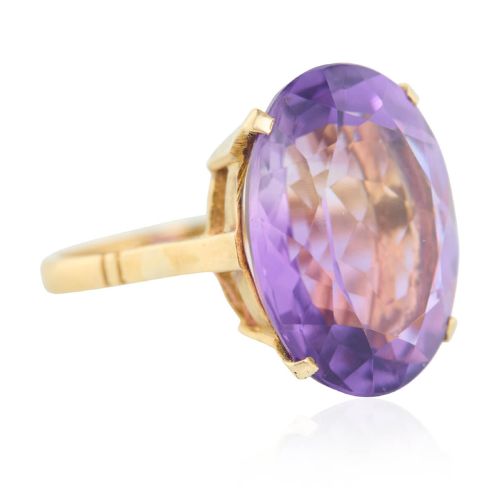
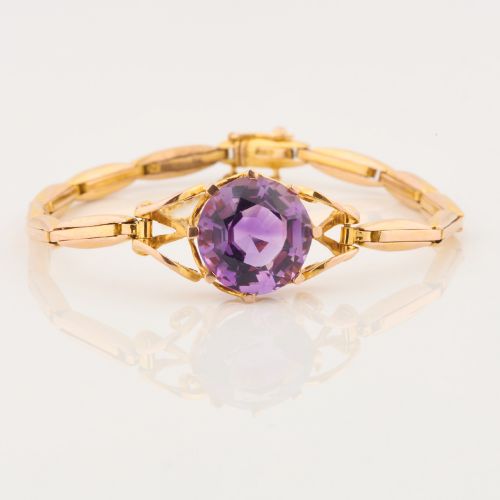
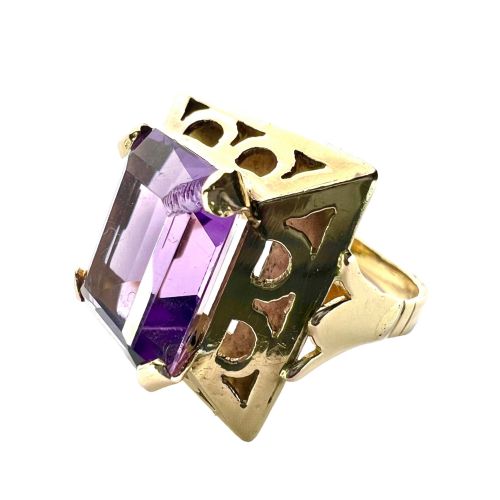
Early examples often incorporate seed pearls or diamonds in cluster rings and flowing Art Nouveau pendants. Later mid-century pieces favour substantial solitaire cocktail rings and heavy link bracelets.
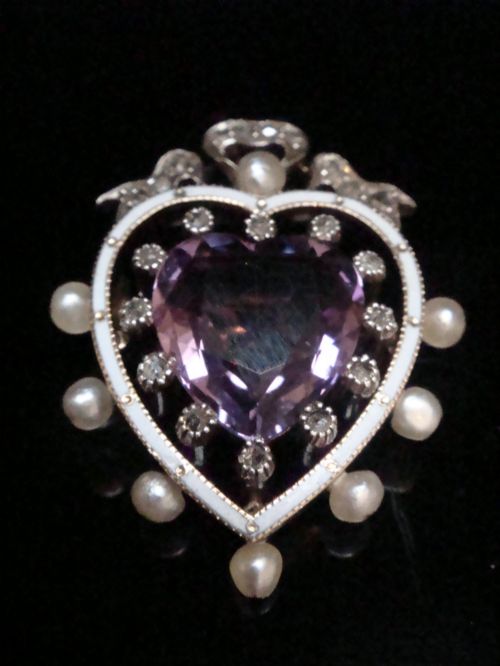
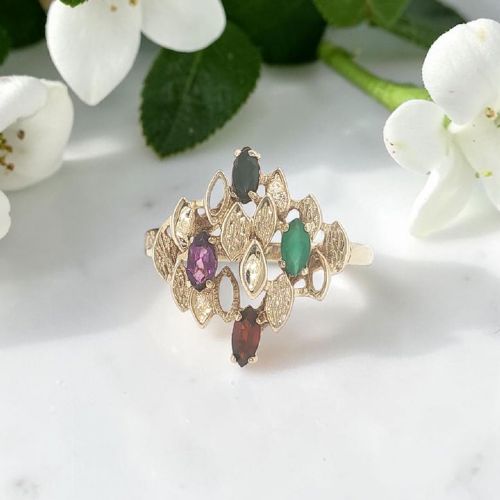
The selection ranges from delicate mourning pieces and heart brooches to bold faceted lockets and dress rings. These items reflect shifting decorative tastes while maintaining the central pairing of amethyst and yellow gold.
Materials and Technique
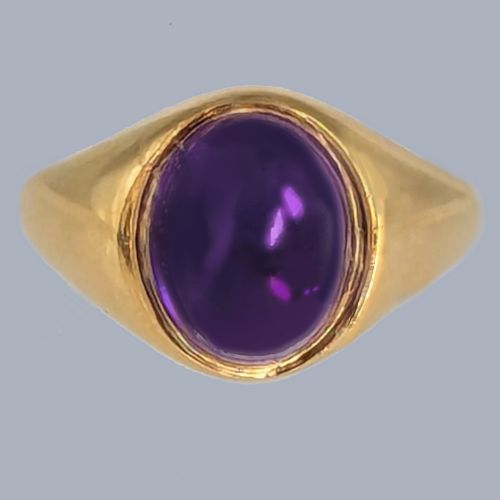
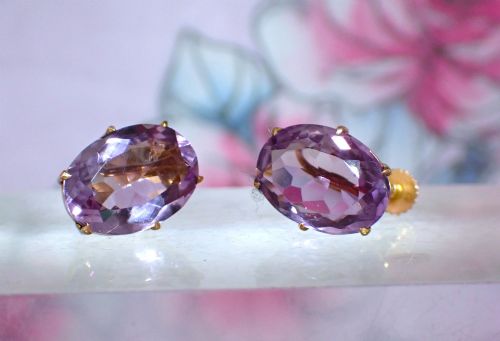
Goldsmiths utilised various purities of yellow gold, ranging from nine carat to eighteen carat, alongside lower-alloyed settings found in antique and vintage work. Amethyst stones appear in multiple cuts, including emerald, oval, cabochon, and heart shapes.
Constructive techniques involve delicate claw and bezel settings, often paired with surface decoration like guilloche enamel or hand-engraved detailing. Many Edwardian and Victorian items integrate seed pearls threaded on fine wire or secured with seed pearls alongside old-cut diamonds.
Listings feature yellow gold amethysts across Victorian, Edwardian, Art Nouveau, and mid-century periods, utilising nine, fifteen, and eighteen carat gold.
Evaluating Craftsmanship
Quality rests on the depth of colour and clarity within the amethyst crystal, alongside the weight and durability of the gold mount. Fine pieces exhibit secure stone setting, symmetrical faceting, and meticulous integration of secondary gems like diamonds or pearls.
Construction methods also distinguish standard production from superior workshops, visible in the solidity of hinges on bangles and the fineness of openwork metal galleries on pendants and rings.
S. Blanckensee & Son
The Yellow Gold Amethyst Glossary
- Lavalier necklace
- A pendant necklace featuring a central gemstone drop suspended from a fine chain, popular during the Edwardian era. These often incorporate cascading amethysts and seed pearls.
- Cabochon
- A gemstone shaped and polished with a smooth convex surface rather than faceted edges. This cut highlights the rich, uninterrupted colour of larger amethysts.
- Demi parure
- A matched set of jewellery, typically comprising two or three pieces such as earrings and a brooch. Victorian examples are frequently preserved together in original fitted boxes.
- Guilloche enamel
- A decorative technique where transparent enamel is layered over engine-turned metal engraving. It creates geometric patterns beneath the glossy coloured surface.
- Fob charm
- A small decorative ornament attached to a pocket watch chain. In yellow gold and amethyst, these often feature a heavy swivel seal or carved stone.
Yellow Gold Amethyst: Frequently Asked Questions
How do I clean my yellow gold amethyst jewellery?
Clean amethyst pieces using warm soapy water and a soft brush to remove everyday oils and dust from the settings.
Avoid harsh chemical dips and ultrasonic cleaners, as these can damage softer surrounding stones like seed pearls or weaken fragile antique mountings.
Are these antique amethysts natural?
Most amethysts found in Victorian and Edwardian pieces are natural quartz varieties mined before modern synthetic production methods became widespread.
Their characteristic colour zoning and natural inclusions help distinguish period stones from later laboratory-grown alternatives.
Can I wear an amethyst ring every day?
Amethyst is a durable quartz suitable for daily wear, though its hardness sits below that of diamonds and sapphires. Taking care during manual tasks prevents unnecessary scratching of the stone and wear to the gold claws.
Regular checks by a jeweller ensure the prongs holding the amethyst remain secure over time.
How do I date a yellow gold amethyst ring?
Dating relies on hallmarks, gemstone cuts, and the overall structural style of the gold setting. Victorian pieces often feature closed-back settings or mourning motifs, while Edwardian examples favour delicate openwork filigree.
Official assay office marks and date letters stamped inside the band provide precise manufacturing years for many twentieth-century items.