
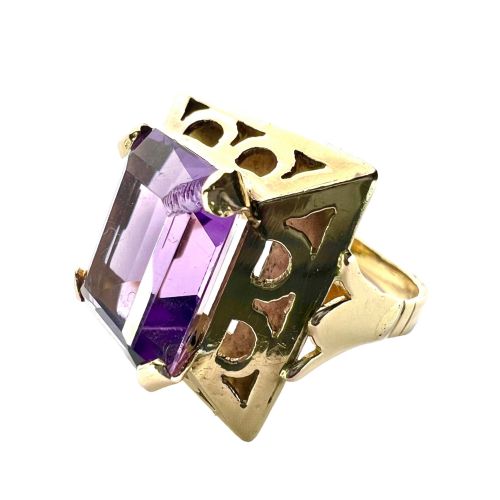


Vintage Amethyst Ring
A vintage amethyst ring brings rich purple stones set in gold, offering a bold piece of jewellery suited to daily wear.
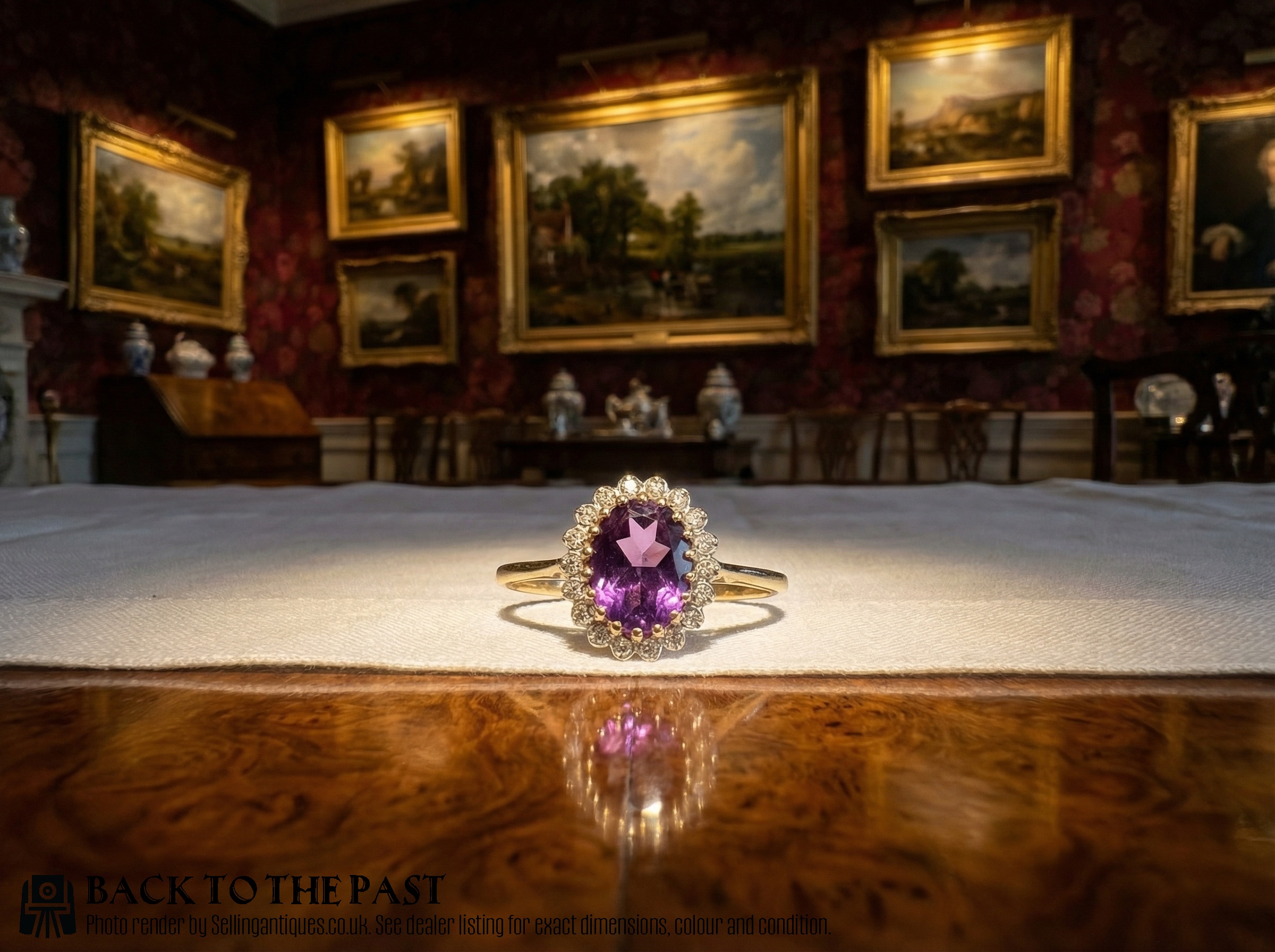
Vintage Amethyst Ring
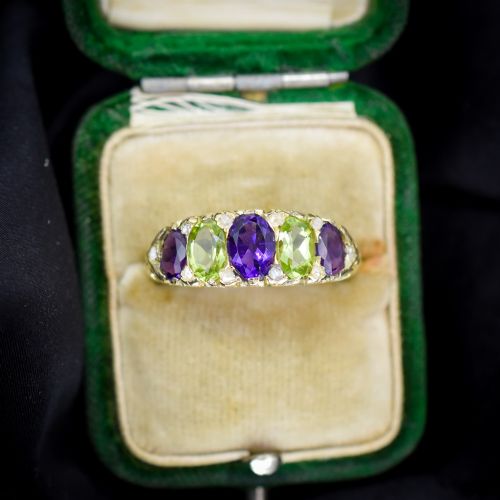
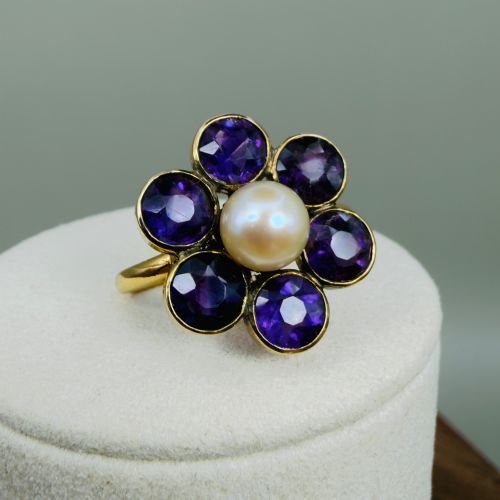
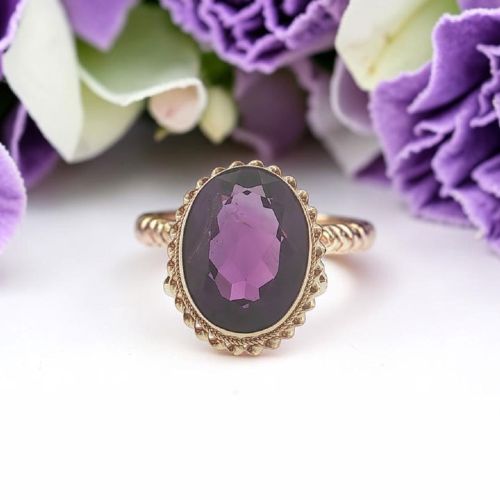
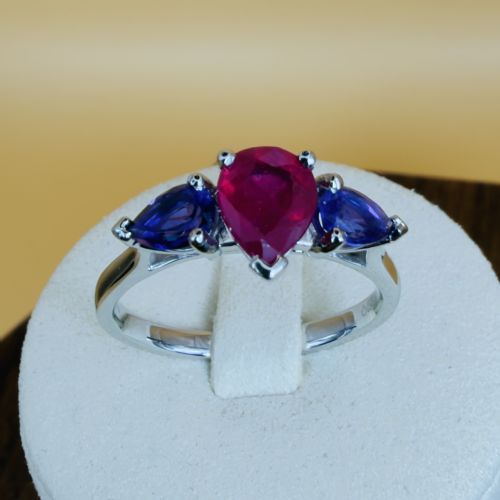
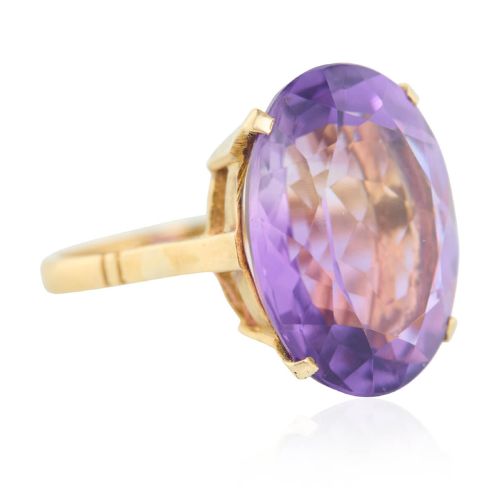
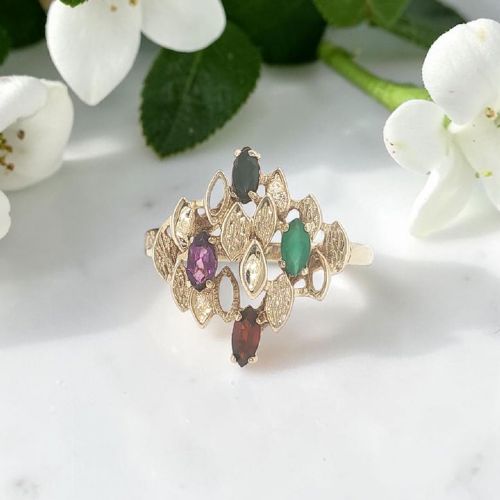
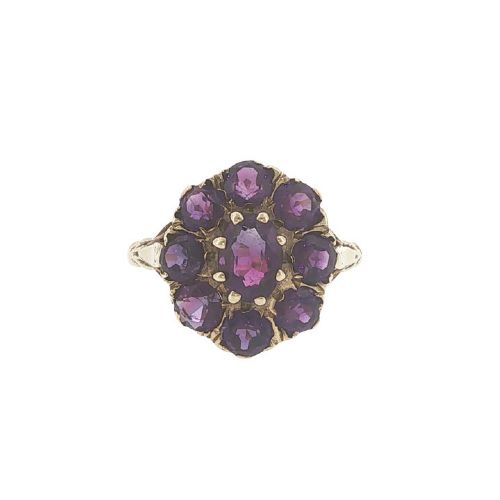
A vintage amethyst ring combines purple quartz with yellow gold, rose gold, or silver mountings in styles ranging from mid-century solitaire designs to cluster and cocktail formations. These pieces appear frequently with emerald, rectangular, or oval cuts, often accompanied by accent diamonds, pearls, or white spinel.
The selections span mid-century periods, particularly the nineteen-fifties and nineteen-sixties, alongside revivals of Victorian and Edwardian aesthetics. Buyers encounter both simple solitaire settings and more ornate modernist, brutalist, or cluster arrangements.
Solitaire and cluster designs dominate the choices, utilising nine-carat yellow gold or eighteen-carat gold foundations. Many examples feature substantial central stones held securely within traditional claw settings or heavy bezels.
Materials and construction
Goldsmiths utilised nine-carat yellow gold, nine-carat rose gold, and eighteen-carat gold to mount the quartz stones, frequently pairing the central purple gem with small diamonds, pearls, or white spinel accents. Silver also appears in modernist Scandinavian workshop pieces.
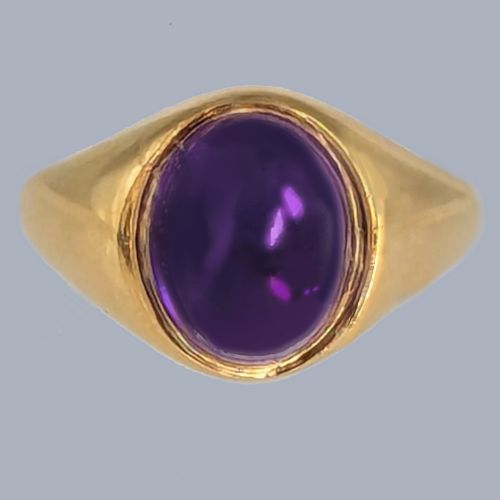
Stones receive varied cuts, including emerald, rectangular, cabochon, and oval shapes, secured by metal claws, bezels, or cluster arrangements. Hallmarks stamped into the metal bands provide clear indicators of assay offices such as Birmingham and specific dates of manufacture.
Some mid-century designers turned solid gold into jagged, molten-looking landscapes that treat a purple quartz like a treasured pebble found on a wild shore.
Markers of distinction
Superior examples distinguish themselves through the saturation and clarity of the quartz, alongside the weight and purity of the gold mount. Heavier eighteen-carat gold settings and substantial stone carat weights elevate the standing of a piece.
Design complexity also defines the upper tier, where intricate cluster work, accompanying diamonds, or distinct modernist and brutalist craftsmanship replace simpler mass-produced bands. Clear hallmarks and maker attribution further strengthen the provenance of finer rings.
Cropp & Farr·Niels Erik From
The Vintage Amethyst Ring Glossary
- Solitaire
- A ring featuring a single prominent gemstone set into the band without surrounding accent stones. This setting highlights the natural colour and cut of the central quartz.
- Cluster ring
- A design where a central stone is surrounded by a tighter grouping of smaller gems, such as diamonds or pearls. This arrangement creates a larger visual presence on the hand.
- Cabochon
- A gemstone shaped and polished with a smooth, convex upper surface rather than faceted edges. This technique is often applied to larger stones to showcase depth.
- Brutalist
- A mid-century design style characterised by textured, sculptural, and heavy metalwork that mimics industrial forms. It departs sharply from traditional smooth bands.
Vintage Amethyst Ring: Frequently Asked Questions
How do I clean a vintage amethyst ring?
Use warm soapy water and a soft cloth to gently remove oils and dirt from the metal and stone. Avoid harsh chemical cleaners or ultrasonic machines which can damage softer gems.
Dry the ring thoroughly with a lint-free cloth before storing it separately to prevent scratching against other items in your jewellery box.
Can I wear my vintage amethyst ring daily?
Amethyst rates seven on the Mohs hardness scale, making it reasonably durable for regular wear. However, care should be taken with larger cocktail rings to avoid striking hard surfaces.
Removing the ring during manual labour, gardening, or sports protects the gold claws and prevents unnecessary abrasion to the stone facets.
How do I identify the period of a ring?
Examine the inner band for hallmarks, sponsor marks, and assay office symbols that indicate the exact year of testing and registration. Stylistic cues such as heavy brutalist texturing or Victorian revival motifs also point to specific decades.
Mid-century pieces often display distinct design signatures from the nineteen-fifties and nineteen-sixties, distinguishing them from older antique items.