
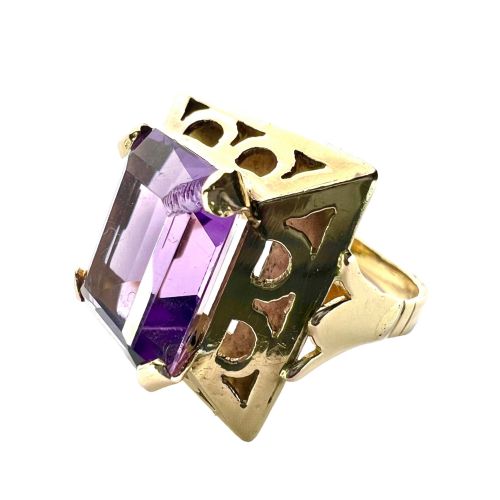


Gold Amethyst Ring
When you search for a gold amethyst ring, you enter a rich lineage of purple quartz jewellery spanning Georgian clusters to mid-century cocktail pieces.

Gold Amethyst Ring
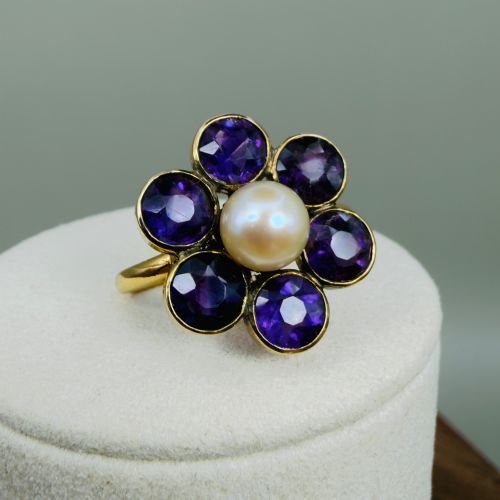
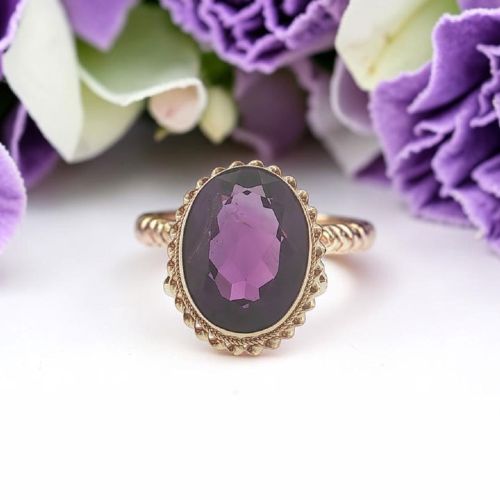
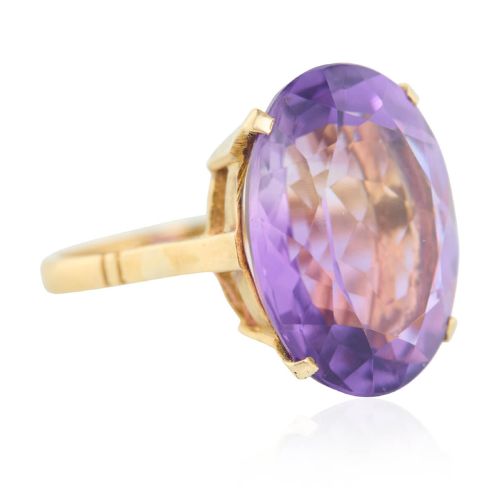
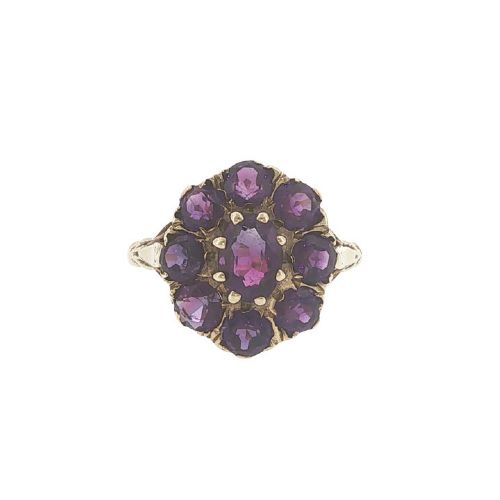
A gold amethyst ring encompasses everything from delicate Victorian pearl-surrounded clusters to substantial mid-century cocktail iterations featuring immense purple stones. When searching this phrase, buyers encounter a diverse spectrum of forms including Georgian mourning pieces, Edwardian halo designs, and bold 1970s brutalist settings.

How they were made
Master jewellers constructed these items predominantly using nine-carat and eighteen-carat yellow, rose, or white gold, housing carefully faceted or cabochon-cut quartz. Stones are secured via traditional claw settings, bezel mounts, or elaborate cluster arrangements supported by secondary gems like diamonds, emeralds, and seed pearls.
Techniques evolved from the detailed wirework and closed-back foils of the Georgian and Victorian eras to the cleaner geometric lines seen in Art Deco and mid-century modern workshops. Hallmarks stamped into the inner bands often record the specific assay office and year of creation, revealing details of British metalworking standards.
Gold Amethyst Ring Retail Price Guide 2026
Typical asking prices for gold amethyst ring among the pieces listed under this phrase on Sellingantiques today, from the lower quarter to the upper quarter. They describe what is for sale here now, not the wider market.
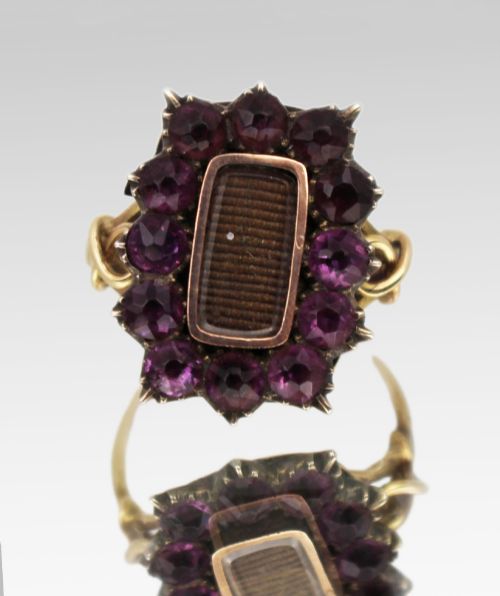
Some Victorian mourners secured eternal remembrance with purple glass before real amethysts became the standard.
What varies in quality
The distinction between ordinary and exceptional examples rests upon the depth of the quartz colour, the clarity of the crystal, and the ambition of the goldsmith's design. Superior stones display a saturated, even purple hue without interrupting inclusions, while lesser specimens may appear pale or cloudy.
Construction weight and setting integrity further separate the tiers, as heavier gold mounts and secure, precise gemstone arrangements demonstrate superior craftsmanship. The integration of high-grade accent diamonds or perfectly matched natural seed pearls elevates a piece far above simpler single-stone alternatives.
The Gold Amethyst Ring Glossary
- Cluster ring
- A design featuring a central gemstone surrounded by a border of smaller stones, typically pearls or diamonds. This arrangement maximises visual impact and was particularly favoured during the Victorian period.
- Solitaire
- A ring set with a single gemstone, allowing the full visual weight of the central crystal to dominate. These appear frequently in mid-century and vintage collections.
- Cocktail ring
- A large, statement ring designed to draw the eye, often featuring oversized stones set in substantial gold bands. They rose to prominence during the mid-twentieth century.
- Mourning ring
- A commemorative piece containing hair, miniature portraits, or dark stones such as amethyst and purple glass, created to memorialise the deceased. Georgian and Victorian examples survive as poignant historical artefacts.
- Cabochon
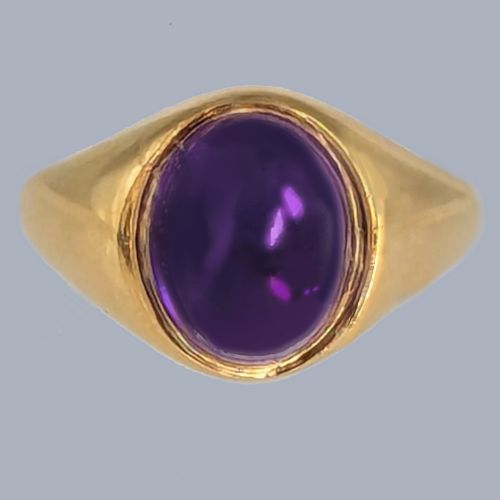
- A gemstone shaped and polished with a smooth, rounded convex surface rather than faceted edges. This cut enhances the rich colour of softer or deeply saturated quartz.
Gold Amethyst Ring: Frequently Asked Questions
How do I date an antique ring?
Dating relies heavily on official hallmarks stamped inside the band, alongside stylistic clues such as stone cuts and setting techniques.
Georgian and Victorian pieces often utilise closed-back foils or hand-carved details, whereas mid-century examples show modern casting methods and distinct maker marks.
Are these natural amethysts?
The vast majority of stones listed utilise natural quartz, though historical paste or glass alternatives appear occasionally in specific mourning or costume pieces.
Gemological examination under magnification reveals natural inclusions that distinguish genuine quartz from synthetic or imitation substitutes.
Can I wear my ring daily?
Quartz rates a respectable seven on the Mohs hardness scale, making it durable enough for regular wear with sensible precautions.
Consider removing substantial cocktail or antique cluster rings during heavy manual labour or swimming to protect fragile claw settings and delicate accent pearls.
What is a Suffragette ring?
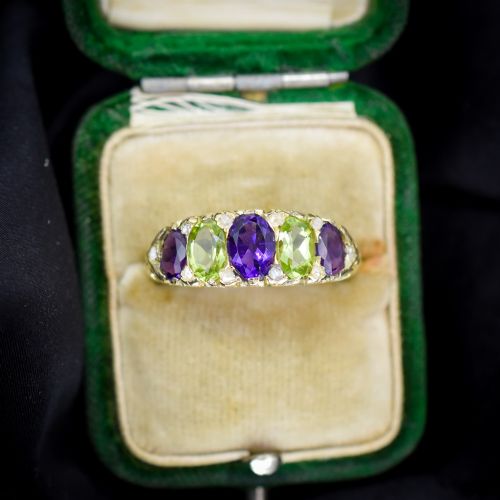
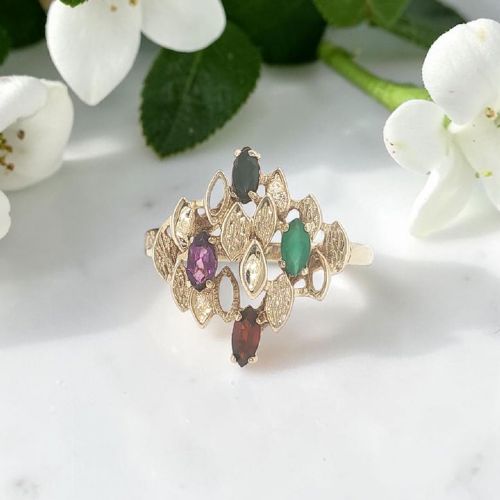
Suffragette jewellery typically combines green, white, and violet stones to symbolise the movement's colours of green for hope, white for purity, and violet for dignity.
Pieces incorporating amethyst alongside peridot and diamonds frequently reflect this specific late nineteenth or early twentieth-century socio-political context.