




Oval Amethyst Ring
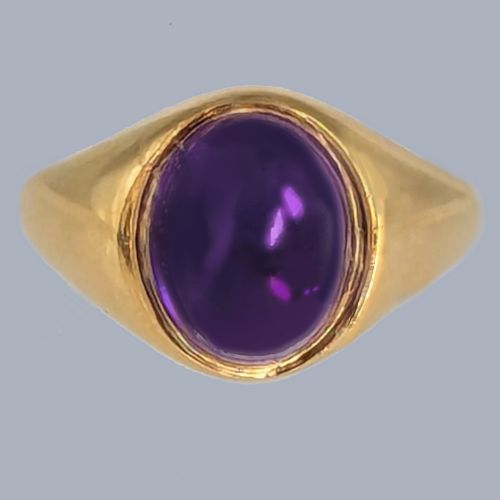
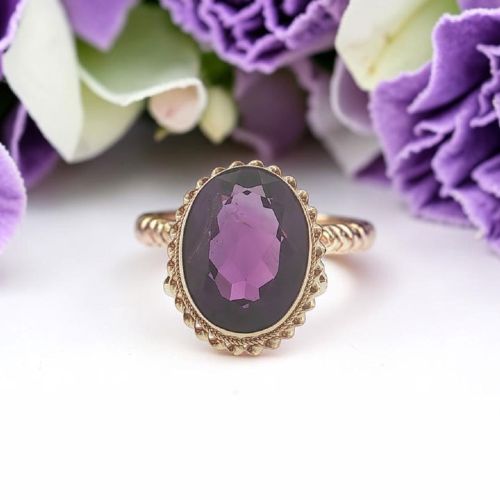
An oval amethyst ring brings deep purple colour and tailored geometry to the hand, ranging from clean geometric solitaires to substantial cluster settings.
Oval Amethyst Ring
An oval amethyst ring encompasses pieces from the 1930 period and later than 1960, taking forms such as cocktail rings, dress rings, solitaire rings, and cluster rings. These items showcase the enduring appeal of purple quartz set into precious metals.
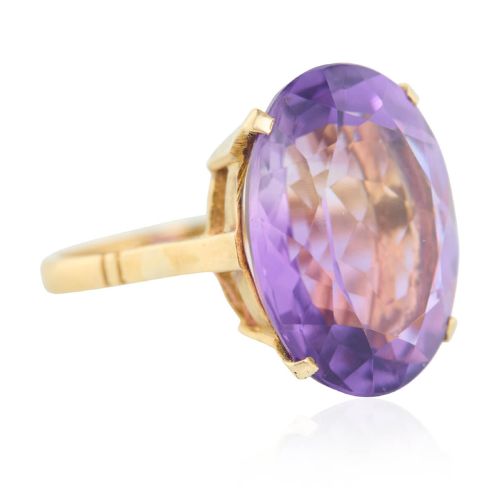
The version most commonly encountered on this page combines a central oval stone with gold or white gold mountings, reflecting styles from the Edwardian era, Art Deco, and the 1970s. Each example demonstrates how lapidaries shaped quartz to catch the light within various bezel and prong configurations.
How they were made
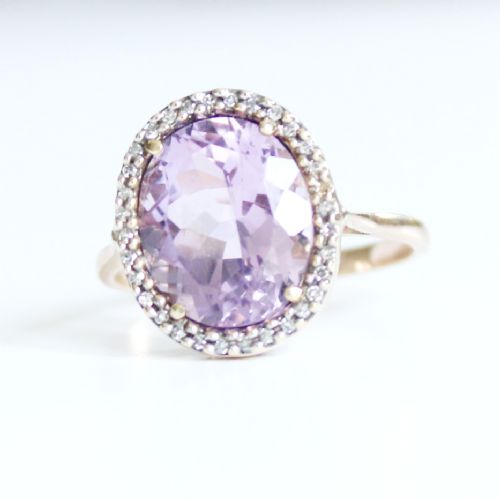
Craftsmen built these mountings primarily using 9ct gold, 18ct white gold, and yellow gold, shaping the metal to support central oval amethysts alongside accents of pearls and diamonds. Metalsmiths utilised casting and hand-working techniques to construct secure settings like halos and clusters.
Stones were cut into oval and faceted forms to maximise brilliance and colour distribution. Goldsmiths then mounted the quartz securely within heavy bands or intricate wirework cages designed to withstand daily wear.
Some former owners clearly graduated in style, as evidenced by heavy college class rings repurposed to showcase grand purple quartz stones.
What varies in quality
Quality rests in the saturation and clarity of the amethyst itself, alongside the precision of the metalwork in supporting heavier stones. Fine examples balance deep purple hues with crisp facet junctions and substantial gold weight.
The integration of secondary stones, such as pavé diamonds or surrounding pearls, separates standard dress pieces from high-end cocktail rings. Superior construction ensures the central oval quartz sits securely without excessive movement in its bezel or prong architecture.
TIFFANY & CO.
The Oval Amethyst Ring Glossary
- Amethyst
- A purple variety of quartz prized for centuries in jewellery. Its colour ranges from pale lilac to deep violet.
- Solitaire
- A single gemstone set on its own in a ring mounting. This classic format highlights the visual impact of the central stone.
- Cluster ring
- A ring featuring a central stone surrounded by a tighter group of smaller gems. This arrangement magnifies the overall presence on the hand.
- Hallmark
- An official stamp applied to precious metals indicating purity and origin. It provides a reliable guide to the date and maker of the piece.
Oval Amethyst Ring: Frequently Asked Questions
How do I clean an oval amethyst ring?
Clean your jewellery using warm soapy water and a soft brush to remove oils from the stone's pavilion. Avoid harsh ultrasonic cleaners which can damage treated or included quartz.
Dry the piece thoroughly with a lint-free cloth before storing it away from direct sunlight to preserve the purple tone.
Are amethysts durable for daily wear?
Quartz sits at seven on the Mohs hardness scale, making it reasonably resilient for regular use. However, prolonged friction against harder gems can cause surface scratching over time.
Take off your ring during heavy manual tasks to protect both the central oval stone and the surrounding gold work.
What defines an Art Deco amethyst ring?
Art Deco pieces rely on symmetrical lines, geometric motifs, and high-contrast settings involving white gold or platinum. These designs emphasise linear structure rather than flowing floral curves.
The oval amethyst often acts as a sharp focal point anchored by calibre-cut stones or structured diamond halos.
How can I tell a vintage ring from a modern reproduction?
Examine the metal for official hallmarks, maker marks, and the specific wear patterns characteristic of older hand-finished items. Assay office stamps and numeric purity codes offer concrete evidence of age.
Castings from earlier decades often display softer tool marks and heavier gold gauges compared to contemporary mass-produced items.