




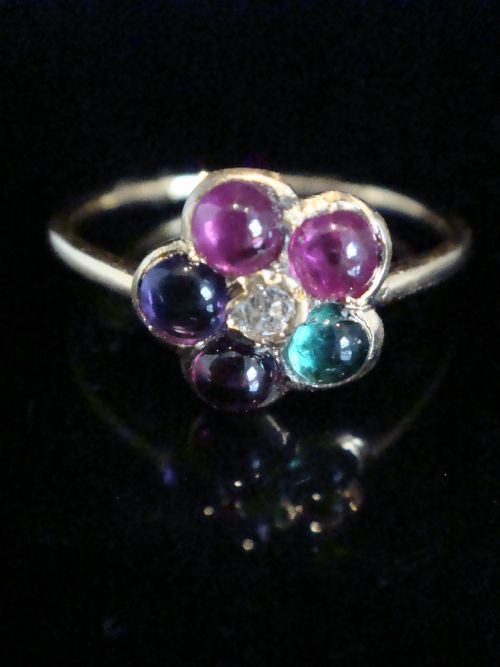

Victorian Amethyst Ring
A victorian amethyst ring brings together deep purple stones and warm gold, offering a tangible piece of nineteenth-century sentiment and craftsmanship.
Victorian Amethyst Ring
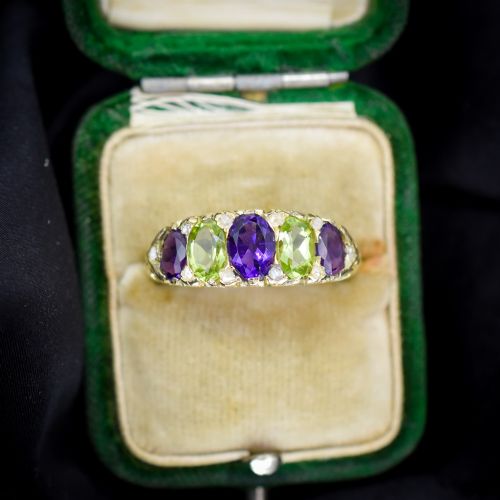
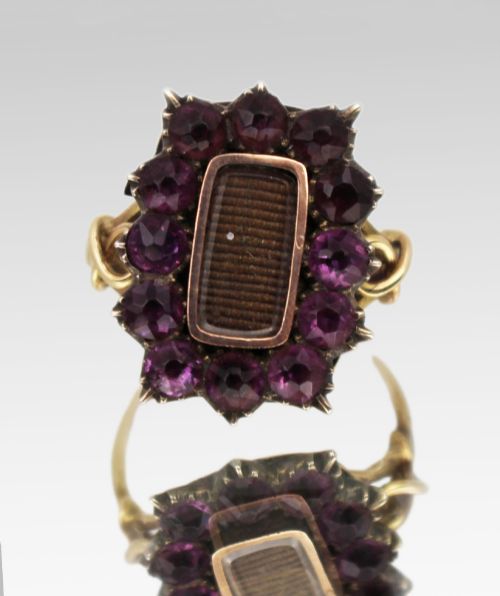
A victorian amethyst ring most commonly appears on this page as a multi-stone cluster or a five-stone setting, often accompanied by seed pearls or diamonds. These pieces frequently incorporate acrostic designs spelling out words like regard or dearest through the arrangement of gemstones.
The materials span different purities of gold, including nine carat, fifteen carat, and eighteen carat yellow and rose gold, alongside silver-topped mountings. While the majority originate from the nineteenth century, variations appear from later revival periods and mid-century interpretations.
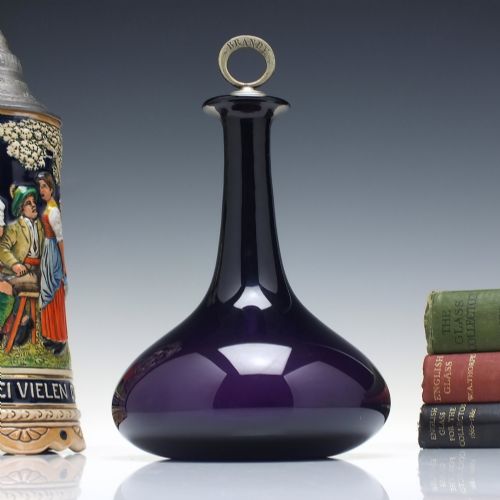
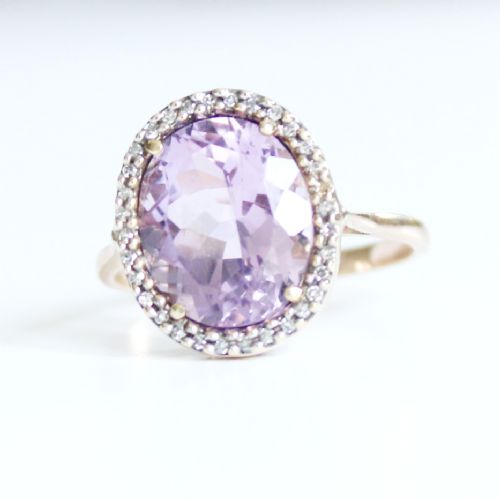
Beyond standard rings, the broader category occasionally encompasses related forms such as decanters and earrings, yet finger rings remain the primary focus for buyers seeking this phrase. The designs range from simple solitaire and trilogy arrangements to ornate halo and floral cluster configurations.
Materials and Technique
Jewellers of the period set deep purple amethysts into hand-wrought gold mountings, frequently combining the stones with natural seed pearls or rose-cut diamonds. The gold alloy employed varies from nine carat up to eighteen carat, displaying characteristic warm yellow and rose hues.
Techniques relied heavily on manual wirework, claw settings, and closed-back foils in earlier examples, shifting towards open-backed settings as the century progressed. Cluster formations utilised concentric circles of smaller gems surrounding a central amethyst, secured by delicate shared collets.
Listings feature nineteenth-century gold mountings paired with amethysts, seed pearls, and diamonds in cluster and multi-stone configurations.
Standards of Execution
The distinction between standard examples and finer work lies in the depth of the amethyst colour, stone saturation, and the precision of the setting. Superior pieces exhibit well-matched seed pearls and crisp claw work that holds each gem securely without excess metal.
The Victorian Amethyst Ring Glossary
- Cluster ring
- A ring design featuring a central gemstone surrounded by a geometric arrangement of smaller stones. This layout maximises sparkle and visual presence on the hand.
- Seed pearl
- A very small, naturally formed saltwater pearl often used in Victorian jewellery to frame larger centre stones. They are typically half-drilled and glued or pegged onto gold findings.
- Cannetille
- An intricate form of goldwork popular in the nineteenth century that resembles fine wire embroidery or lace. It utilises twisted gold threads and tiny granules to create elaborate textured surfaces.
- Trilogy ring
- A setting that holds three stones in a row, traditionally representing the past, present, and future. Amethysts in these rings are often flanked by diamonds.
- Acrostic ring
- A piece where the first letter of each gemstone spells out a sentiment, such as diamond, emerald, amethyst, ruby, emerald, sapphire, and topaz spelling dearest.
Victorian Amethyst Ring: Frequently Asked Questions
How do I identify a genuine period piece?
Examine the construction methods, shank wear, and hallmarks where present to understand the age of the ring. Nineteenth-century pieces often display hand-cut stones and closed or semi-enclosed settings rather than modern cast symmetry.
Compare the gold colour and alloy standards against known Victorian benchmarks, keeping in mind that fifteen carat gold is a strong indicator of nineteenth-century British manufacture.
Are seed pearls durable for daily wear?
Seed pearls are organic and softer than gemstones, requiring careful treatment to avoid moisture damage or abrasion. Rings with pearls need to be removed during manual tasks or washing.
Check the security of each pearl periodically, as historical settings holding small pearls can loosen over decades of gentle use.
What do acrostic spellings mean?
Acrostic rings spell out affectionate words using the first letter of each gemstone in the sequence. Common words include regard and dearest.
These sentimental pieces were often given as tokens of affection, with the amethyst representing sincerity or peace within the coded message.
How should I care for an antique gold ring?
Clean antique gold and amethysts using a soft cloth and warm soapy water, avoiding harsh ultrasonic cleaners that can dislodge pearls or compromise foil backs. Store the ring separately to prevent scratching softer stones.
Have a professional jeweller inspect the claws and settings annually to ensure the amethyst and surrounding gems remain secure in their original mountings.