




Edwardian Amethyst Ring
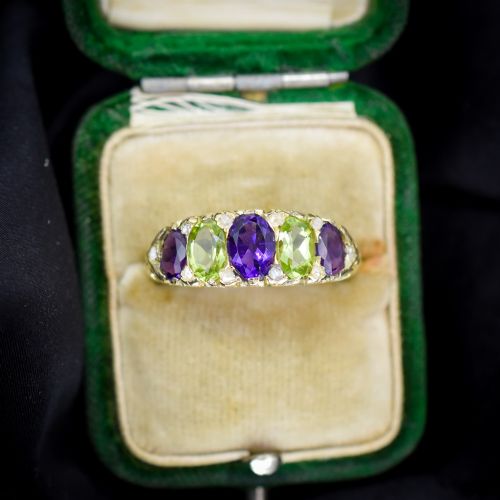
An edwardian amethyst ring brings deep purple stones into polished gold and platinum settings, offering a distinct piece of early twentieth-century jewellery.
Edwardian Amethyst Ring
An edwardian amethyst ring combines the vibrant purple hues of quartz with gold, platinum, or silver settings characteristic of the early twentieth century. These pieces emerge from periods spanning the Edwardian era through to the Art Deco and Art Nouveau movements, reflecting changing aesthetic preferences.
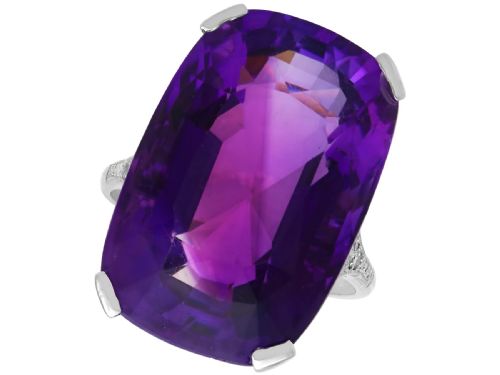
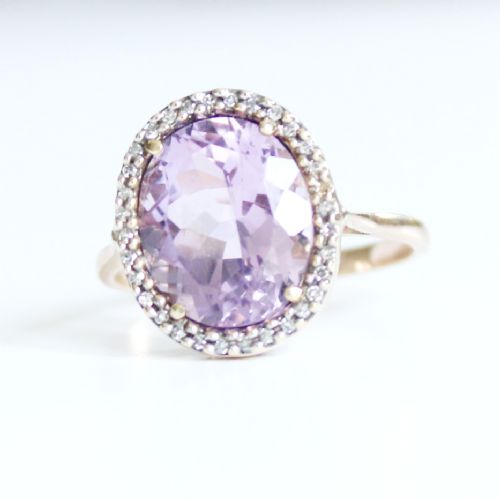
The selections on this page feature central amethysts paired with diamonds in various configurations. Buyers frequently encounter cluster designs, halo arrangements, and target rings alongside substantial cushion cut stones.
Originating from English and continental workshops, these rings showcase the varied goldsmithing techniques of the 1900s to 1930s. The forms range from delicate mountings to large carat statement stones set in platinum.
What varies in quality
The distinction between pieces rests on the carat weight and depth of colour in the amethyst, alongside the quality of accompanying diamonds. Larger cushion cut stones and substantial gold or platinum mountings represent the upper scale of these designs.
Execution of the metalwork and the integration of supporting stones determine the refinement of each ring. Pieces that balance substantial gemstone weights with delicate setting work demonstrate superior craftsmanship.
Edwardian Amethyst Ring Retail Price Guide 2026
Typical asking prices for edwardian amethyst ring among the pieces listed under this phrase on Sellingantiques today, from the lower quarter to the upper quarter. They describe what is for sale here now, not the wider market.
Some rings manage to squeeze twenty-eight carats of purple quartz onto a single finger.
The Edwardian Amethyst Ring Glossary
- Amethyst
- A purple variety of quartz valued for its violet coloration in antique jewellery. It serves as the primary focal stone in these rings.
- Platinum
- A dense, durable white metal utilised in fine jewellery manufacture during the early twentieth century. It provides secure settings for large gemstone arrangements.
- Cluster ring
- A ring design featuring a central stone surrounded by a group of smaller gems. This configuration maximises visual presence.
- Cushion cut
- A gemstone cut with rounded corners and large facets, popular in antique stones. This shape enhances the depth of coloured quartz.
- Halo ring
- A setting style where a central gemstone is encircled by a ring of smaller diamonds. This layout increases the overall brilliance of the piece.
Edwardian Amethyst Ring: Frequently Asked Questions
How do I care for an edwardian amethyst ring?
Clean these rings gently using warm soapy water and a soft brush, avoiding harsh chemical cleaners or ultrasonic machines.
Store them separately in a lined box to prevent softer gold and amethyst stones from scratching against harder diamonds.
Can I wear an edwardian amethyst ring daily?
These antique rings require mindful wear, particularly specimens with larger gemstone settings or softer 9ct gold bands.
Removing the jewellery during manual tasks or heavy physical activity protects the original settings and delicate claw work.
What styles are common in these rings?
The designs incorporate Edwardian cluster and target formats alongside Art Nouveau curves and geometric Art Deco influences.
Amethysts take centre stage, often accented by old cut diamonds set in platinum or yellow and rose gold.
How can I tell the period of a ring?
Dating relies on stylistic markers such as platinum use, transitional diamond cuts, and the characteristic motifs of the early 1900s.
Proportions and mounting techniques align with the manufacturing practices recorded across the Edwardian to Art Deco eras.