


Art Deco Statement Ring
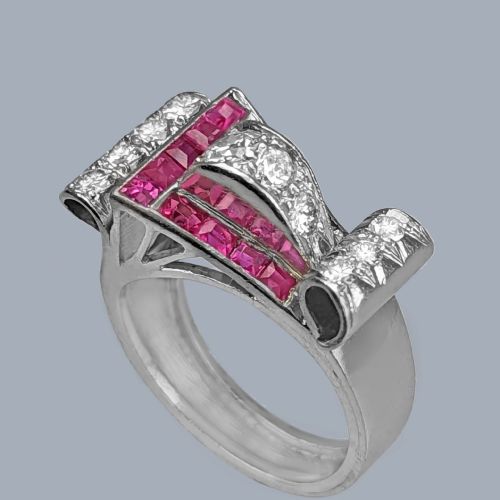
An art deco statement ring brings bold geometric lines and vibrant gemstones together to create an unmissable focal point on the hand.
Art Deco Statement Ring
An art deco statement ring delivers strong geometric presence, often appearing as large cocktail, dress or cluster designs featuring substantial central gemstones. Buyers seeking this aesthetic will find pieces originating principally from the 1920s and 1930s, alongside related Edwardian and retro variations.
The selections span architectural platinum and white gold settings housing sizeable diamonds, amethysts, sapphires and emeralds. Many examples incorporate contrasting dark accents of onyx or enamel to accentuate the angular silhouettes typical of the period.
Materials and construction methods
Goldsmiths utilised platinum and 18ct white gold to achieve strong, slender metalwork that could securely hold large stones without heavy prongs. These durable white metals provided the ideal neutral backdrop for high-contrast combinations of diamonds and deep-coloured gems.
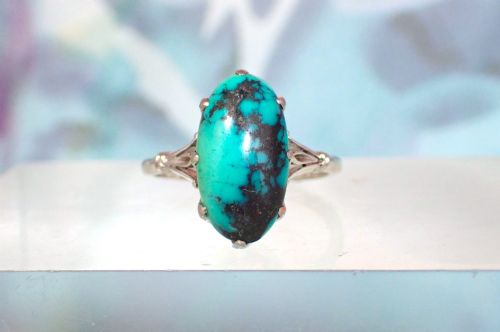
Craftsmen set diamonds in old cut, transitional cut and old mine formats alongside carved or calibrated gemstones like jade, chalcedony and turquoise. Bezel, pave and channel settings disciplined the colourful components into precise symmetrical patterns.
Art Deco Statement Ring Retail Price Guide 2026
Typical asking prices for art deco statement ring among the pieces listed under this phrase on Sellingantiques today, from the lower quarter to the upper quarter. They describe what is for sale here now, not the wider market.
Materials recur across platinum, white gold, yellow gold and silver, framing diverse stones including amethyst, diamond, sapphire, emerald and onyx.
Distinguishing quality across the range
Superior examples display exceptional harmony between the scale of the central stone and the intricate geometry of the surrounding metalwork. Master jewellers balanced high-carat coloured gems like aquamarine, amethyst and sapphire with precise diamond pavé work to maintain structural elegance.
The refinement of the hand- pierced gallery and the crispness of the millegrain edge define the upper tier of execution. Lesser examples rely on sheer stone size alone, whereas finer pieces integrate every gemstone into a cohesive architectural composition.
The Art Deco Statement Ring Glossary
- Platinum
- A dense, durable white metal favoured by jewellers for creating fine, strong settings that securely hold diamonds and delicate gemstone arrangements without heavy prongs.
- Old cut diamond
- A diamond cut by hand before modern machinery, characterised by a smaller table, higher crown and open culet that produces a soft, warm candlelit sparkle.
- Millegrain
- A decorative technique featuring a row of tiny raised metal beads along the edges of a setting, adding a delicate textural border.
- Tank ring
- A bold, chunky ring style developed during the 1940s, taking visual cues from military machinery with heavy stepped gold and platinum volumes.
- Bombe ring
- A ring characterised by a rounded, domed profile that curves outward from the finger, often densely encrusted with diamonds and gemstones.
- Target ring
- A circular cluster ring featuring a distinct central stone encircled by concentric rings of contrasting coloured gemstones or smaller diamonds.
Art Deco Statement Ring: Frequently Asked Questions
How do I wear a statement ring daily?
These prominent cocktail and dress designs demand careful placement during heavy manual tasks to protect large feature stones and delicate platinum claw work.
Pairing them with simple everyday attire allows the intricate geometric metalwork and vibrant gemstones to remain the focal point of an outfit.
What defines the geometric look?
Symmetrical lines, stepped motifs and sharp angles dominate the aesthetic, contrasting heavily with the flowing floral curves of earlier eras.
Craftsmen arranged calibre-cut onyx, rubies and sapphires into rigid chevrons, sunbursts and concentric circles to achieve this architectural silhouette.
How can I date these pieces accurately?
Hallmarks, metal choices and gemstone cuts provide the primary clues, with platinum and white gold dominating the 1920s and 1930s.
Heavier yellow gold and more voluminous tank forms typically indicate a transition into the 1940s and retro periods.
Are coloured gemstones always natural?
The listings feature a wide array of natural materials including Ceylon sapphires, emeralds, tourmalines, amethysts, turquoise and jade alongside diamonds.
Each coloured stone brings its own unique saturation and inclusions, which help distinguish vintage stones from modern lab-grown alternatives.