


9ct Gold Solitaire Ring
A 9ct gold solitaire ring carries a single prominent stone on a lighter gold band, offering daily wearability alongside centuries of varied gemstone tradition.
9ct Gold Solitaire Ring
A 9ct gold solitaire ring focuses the eye upon a single central gemstone mounted securely within a modest metal framework. The phrase encompasses centuries of production, stretching from Georgian examples through Victorian and Edwardian iterations to the geometric lines of the Art Deco era.
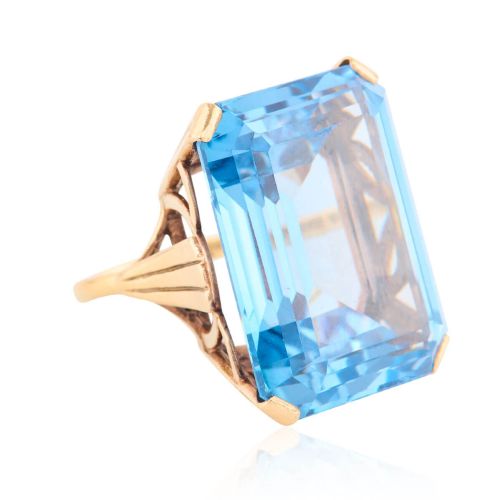
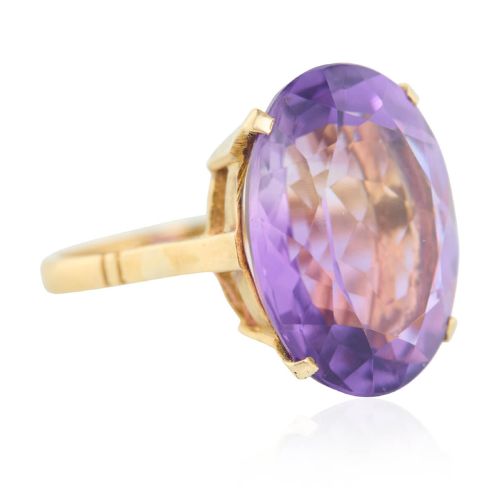
The versions most commonly met on this page date from the early twentieth century, particularly the 1920s, alongside mid-century and later vintage pieces. These rings feature single stones ranging from diamonds and amethysts to opals, zircons, and citrines.
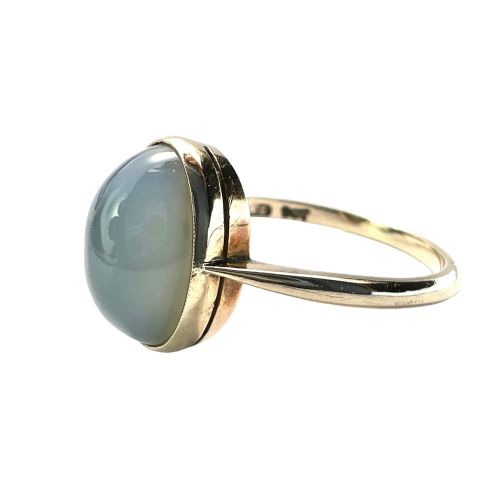
Makers utilised 9ct yellow gold, white gold, and rose gold to support stones shaped in round cuts, emerald cuts, and cabochons. The resulting jewellery serves both as historic engagement tokens and decorative dress accessories.
Materials and Construction
The foundation of every piece rests upon 9ct gold, an alloy chosen for its durable balance of precious metal and strengthening base metals, found in yellow, white, and rose hues. Jewellers mounted the metal into bands and settings designed to highlight one dominant stone.
Gemstones form the visual core, uniting natural diamonds, amethysts, blue zircons, opals, and garnets with occasional glass pastes and synthetic sapphires. Workshops secured these minerals using traditional claws, bezels, and gypsy settings carved directly into the gold band.
9ct Gold Solitaire Ring Retail Price Guide 2026
Typical asking prices for 9ct gold solitaire ring among the pieces listed under this phrase on Sellingantiques today, from the lower quarter to the upper quarter. They describe what is for sale here now, not the wider market.
Distinctions in Execution
The standard of a piece depends heavily upon the integration between the central gemstone and its gold mount, where precise claw work or flush gypsy setting ensures structural longevity. Superior examples maintain crisp proportions in the metalwork without unnecessary bulk.
Gemstone selection dictates much of the character, separating natural stones with clean saturation from treated or synthetic alternatives. The weight and optical clarity of the central gem, whether a substantial amethyst or an early diamond cut, define the presence of the ring upon the hand.
The 9ct Gold Solitaire Ring Glossary
- Solitaire
- A ring design featuring a single central gemstone mounted on the band. This setting draws complete attention to the optical qualities of the main stone.
- Cabochon
- A gemstone shaped and polished with a smooth, rounded surface rather than faceted edges. This cut appears frequently on softer stones like opals, chalcedony, and carnelian.
- Gypsy setting
- A mounting style where the gemstone is set flush into the solid gold band so that the metal surrounds the girdle of the stone. Victorian makers utilised this technique extensively for secure daily wear.
- Old cut
- A term for diamond facet arrangements used before modern brilliant cutting standards emerged. These stones exhibit smaller tables and deeper pavilions that catch candlelight.
9ct Gold Solitaire Ring: Frequently Asked Questions
How do I wear a 9ct gold solitaire ring daily?
The 9ct alloy provides a hardwearing band suitable for regular daily use, though softer stones require care.
Matching the ring with simpler bands prevents friction damage to the central setting over time.
What periods do these rings come from?
The inventory spans from the eighteenth century through the Victorian and Edwardian eras into Art Deco and mid-century modern designs.
Each period brings distinct mount profiles and stone-cutting techniques to the single-stone format.
Are all the stones natural?
The listings include a mixture of natural diamonds, amethysts, opals, zircons, and garnets alongside historical glass pastes and synthetic sapphires.
Examination of the individual description reveals the exact mineral origin for each specific ring.
How do I identify an Art Deco solitaire?
Art Deco examples often display geometric emerald cuts, strong colour contrasts with stones like blue zircon or citrine, and stylised angular settings.
These pieces typically date from the 1920s and 1930s and reflect modernist design shifts.