





Yellow Earthenware Jug
A yellow earthenware jug brings warmth and colour to a room, offering practical service alongside striking nineteenth and twentieth century design.
Yellow Earthenware Jug
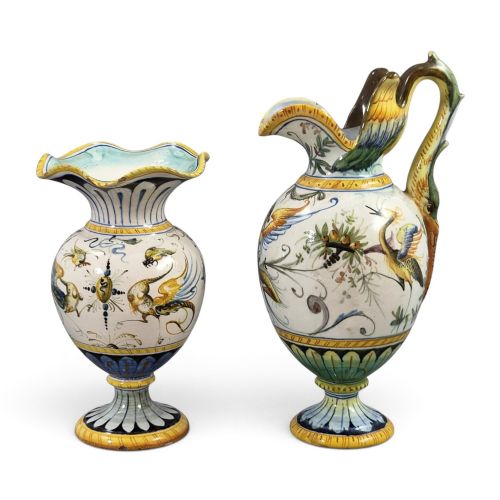
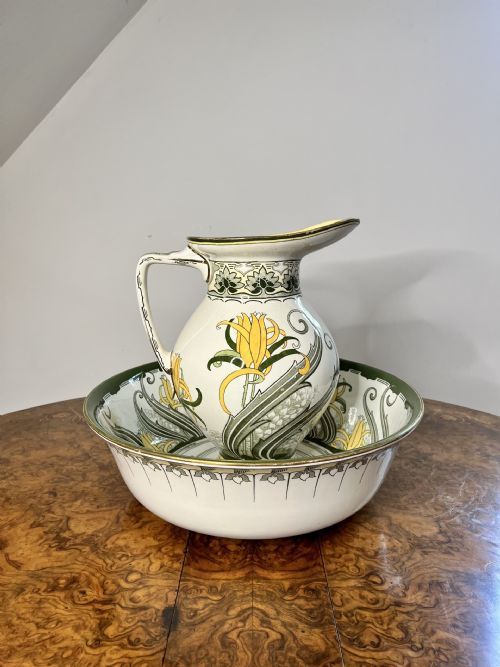
When you search for yellow earthenware jug, you are looking at utilitarian vessels and decorative pitchers spanning the nineteenth century, the Georgian era, and the early twentieth century. These items include robust tavern jugs, majolica ewers, water vessels, and larger jug and bowl sets.
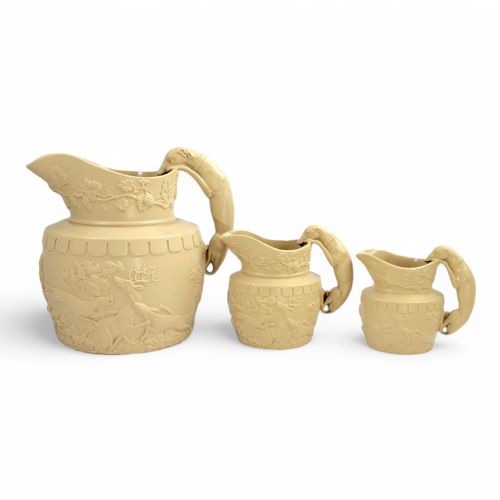
The versions most commonly met on this page range from nineteenth century earthenwares to regency pieces with hound handles, alongside later art deco and pottery amphora forms. They bridge the gap between functional kitchenware and display ceramics.
Makers such as Phillips and Bagster, Cantagalli Florence, Doulon Burslem, and Wedgwood by Keith Murray demonstrate the diverse origins of these objects. Styles stretch from Dutch delftware and renaissance revival to Victorian country and art nouveau.
How they were made
Potters shaped these vessels using earthenware and terracotta bodies, sometimes employing tin glaze or general ceramic glazing to seal the porous clay. Enamel decoration often provided surface pattern on top of the glaze.
Techniques varied from slip-cast or thrown utilitarian forms to moulded figures like toby pepperpots and elaborate majolica ewers. Surface finishes relied on fluid glaze runs and polychrome pigments to create depth.
Yellow Earthenware Jug Retail Price Guide 2026
Typical asking prices for yellow earthenware jug among the pieces listed under this phrase on Sellingantiques today, from the lower quarter to the upper quarter. They describe what is for sale here now, not the wider market.
Some nineteenth century dogs were immortalised not just as doorstops, but as fierce hound handles gripping the side of a yellow ware pitcher.
What varies in quality
The distinction between standard utility ware and top tier examples rests on the crispness of the modelling, particularly on sculptural elements like hound handles or figural forms. Superior pieces exhibit precise hand-painted enamelling and well-preserved glaze surfaces.
Makers' marks and attribution play a significant role in separating ordinary production from notable factory output. The sophistication of the glaze application and the complexity of the pattern define the upper end of the range.
Doulon Burslem·Cantagalli Florence·Phillips and Bagster·Wedgwood by Keith Murray
The Yellow Earthenware Jug Glossary
- Earthenware
- Porous pottery fired at lower temperatures than stoneware, requiring a glaze to hold liquids. It forms the primary body material for these jugs.
- Majolica
- A type of earthenware decorated with opaque tin glazes and colourful metallic oxide pigments. It gained popularity during the nineteenth century revival periods.
- Toby jug
- A pottery jug modelled in the form of a stout, genial person, usually seated and holding a mug of beer or a pipe. Some smaller examples function as pepperpots.
- Polychrome
- Decoration employing multiple distinct colours on a single ceramic surface. This technique appears frequently on delftware and majolica pieces.
- Tin glaze
- A white, opaque glaze containing tin oxide, used as a smooth background for painted enamel decoration. It is characteristic of delftware and faience.
Yellow Earthenware Jug: Frequently Asked Questions
What is a yellow earthenware jug?
A yellow earthenware jug is a ceramic vessel made from porous clay with a yellow body or glaze, produced across the nineteenth and early twentieth centuries. They served functional roles in taverns and households as water or ale pitchers.
These pieces range from simple country pottery to elaborate majolica and regency tableware featuring moulded handles and painted scenes.
How were these jugs used?
Historically, these items functioned primarily for pouring liquids such as water, ale, or cider at the table and in taverns. Larger sets included matching bowls for washing or bedside use.
Over time, many transitioned into decorative roles, displayed on shelves or used as vases for floral arrangements due to their striking colour and form.
How do I date a yellow earthenware jug?
Dating relies on identifying the style, manufacturing technique, and any maker marks or pseudo marks stamped on the base. Regency pieces often feature distinct neoclassical motifs, while art nouveau and art deco examples show later twentieth century lines.
Glaze composition and body weight also provide clues, as nineteenth century earthenware differs noticeably in feel from later ceramic production.
How do I care for antique earthenware?
Antique earthenware should be washed by hand in lukewarm water using mild soap, avoiding harsh detergents or soaking. The porous nature of the ceramic body means old glaze cracks can absorb water if left submerged.
Display them away from direct sunlight and sudden temperature shifts to protect the glaze and enamel decorations from fading or crazing.