



Green Ceramic Saucer
A green ceramic saucer brings quiet colour and tactile history to a table, offering small-scale elegance from centuries of ceramic craft.
Green Ceramic Saucer
A green ceramic saucer represents a focused category of antique tableware, taking forms such as teacups and saucers, coffee cups and saucers, decorative dishes, and plates. These pieces emerge from periods spanning the eighteenth century, the Georgian era, the Regency era, the nineteenth century, the nineteen-hundreds, and the Art Deco period of nineteen-thirty.
Buyers encountering this selection will most frequently find items associated with British factories like Worcester, Davenport, Minton, Spode, and Wedgwood, alongside Chinese export wares and pieces created in Qing Dynasty and Imperial styles. The forms range from functional tea and coffee saucers to cabinet trios, decorative dishes, and hand-painted plates.
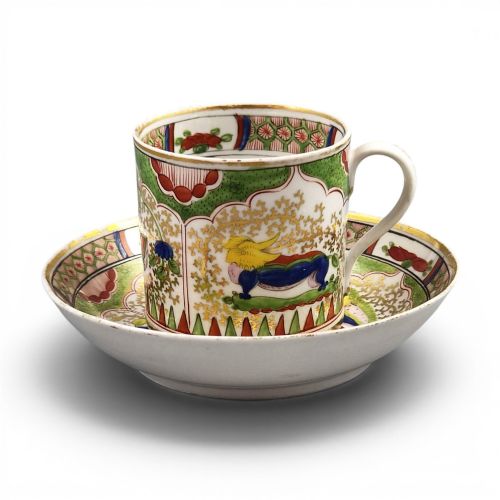
The aesthetic diversity within this search phrase reflects both domestic British ceramic innovation and East Asian design influences. Makers applied green grounds, celadon glazes, and famille rose enamel palettes to porcelain, soft-paste porcelain, and bone china, often accenting the pieces with gold leaf and gilt work.
How they were made
Potters shaped these saucers from soft-paste porcelain, standard porcelain, or bone china, forming bodies that could support delicate glazes and detailed overglaze enamels. The material composition dictated the translucency and weight of the vessel, with bone china and soft-paste porcelain offering distinct structural qualities.
Glazing and decoration defined the surface, utilising celadon glazes, green enamel grounds, and polychrome hand-painted pigments. Artisans applied gold leaf and gilt highlights by hand, firing the pieces multiple times to fuse the metallic accents and enamel colours to the ceramic body.
Green Ceramic Saucer Retail Price Guide 2026
Typical asking prices for green ceramic saucer among the pieces listed under this phrase on Sellingantiques today, from the lower quarter to the upper quarter. They describe what is for sale here now, not the wider market.
One nineteenth-century pattern carries the delightful historical factory title 'Crazy Cow' alongside 'Bengal Tiger'.
What varies in quality
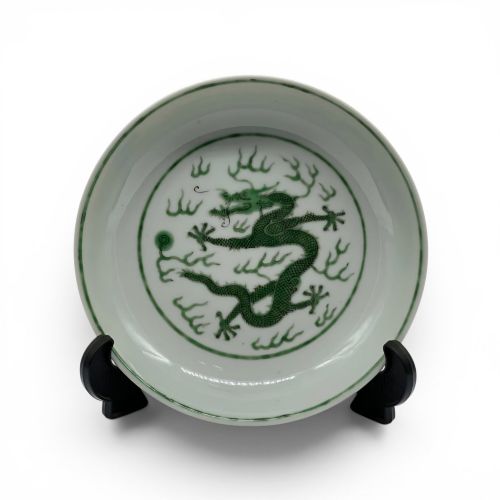
Quality separates standard production wares from exceptional cabinet pieces through the precision of the hand-painting and the execution of specialised motifs like the dragon in compartments or spotted fruit patterns. Superior examples display crisp brushwork, balanced composition within borders, and meticulous application of gold leaf.
The refinement of the ceramic body and the depth of the glaze, whether a transparent celadon or a saturated green ground, determine the visual merit of the piece. Finer items maintain smooth glaze surfaces without firing blemishes, paired with well-proportioned forms characteristic of their respective periods.
Worcester·Davenport·Minton·Spode·Wedgwood·Keith Murray
The Green Ceramic Saucer Glossary
- Soft-paste porcelain
- A ceramic composition containing glass frit and white clay, fired at lower temperatures than hard paste. It produces a warm, slightly creamy body frequently found in eighteenth-century English wares.
- Celadon glaze
- A jade-green ceramic glaze originating in China, prized for its subtle tone and thick, translucent quality. It is achieved through iron oxide in a reduction kiln atmosphere.
- Bone china
- A type of porcelain incorporating bone ash, developed in England to increase strength and whiteness. It allows for thinner vessel walls while maintaining durability.
- Famille rose
- A palette of opaque enamel colours introduced in Chinese ceramics, dominated by pink and rose shades alongside greens and yellows. It appears on export porcelain from the Qing dynasty onwards.
- Cabinet trio
- A matched set consisting of a teacup, a coffee cup, and a saucer, intended for display in a cabinet rather than everyday use. These sets showcase the finest decorative work of a factory.
Green Ceramic Saucer: Frequently Asked Questions
How do I date an antique green ceramic saucer?
Dating relies on examining the paste, glaze characteristics, and factory marks where present on the underside. Stylistic cues such as Regency shapes or Art Deco geometric lines provide further chronological context.
Comparing the decorative motifs, such as Chinese export designs or transfer-printed dragon patterns, against documented factory output helps narrow the decade of production.
Can I use these antique saucers for daily tea?
Using antique saucers daily exposes fragile historic glazes, soft-paste bodies, and delicate gold leaf to thermal shock and mechanical wear. Most collectors prefer to handle them gently or keep them on display.
If used occasionally, hand washing in lukewarm water without harsh detergents prevents damage to the overglaze enamels and gilt details.
What is the difference between porcelain and bone china saucers?
Porcelain typically refers to hard-paste or soft-paste ceramic bodies fired at high temperatures to achieve vitrification and translucency. Bone china incorporates animal bone ash into the paste mixture, which strengthens the body.
This addition allowed English factories to throw thinner, more refined vessels with a bright white background that held green enamels and gilt highlights securely.
Why do some saucers feature Chinese Qing Dynasty styles?
European porcelain factories in the eighteenth and nineteenth centuries frequently copied Chinese export porcelain motifs to satisfy Western demand for Eastern aesthetics. Dragon patterns and celadon glazes were particularly admired and reinterpreted by English makers.
These pieces reflect the profound influence of global trade and cross-cultural design exchange on ceramic production.