



X Frame Centre Table
An x frame centre table brings architectural presence to a room, offering a freestanding piece designed to anchor a space with its distinct intersecting stretcher design.
X Frame Centre Table
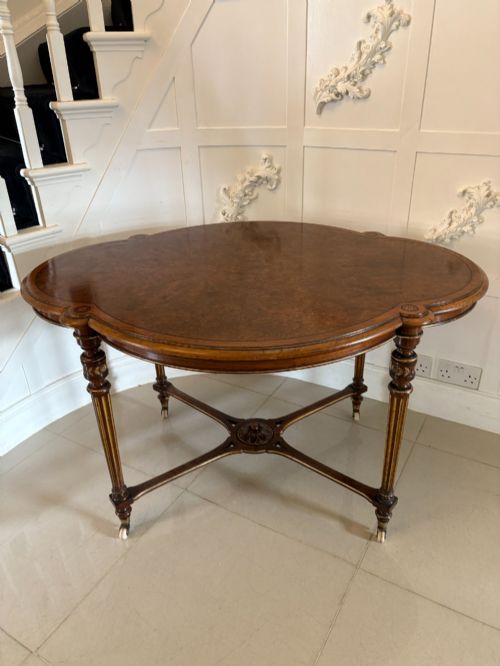
An x frame centre table is a striking freestanding piece of furniture designed to sit proudly in the middle of a room rather than against a wall. The selection encompasses various interpretations ranging from Victorian mahogany octagonal designs and Edwardian satinwood pieces to earlier eighteenth-century marquetry examples.
Buyers will encounter diverse forms including large carved oak tables, occasional walnut tables, and elm cross base centre tables alongside related seating such as centre stools. The periods span from the eighteenth century through the nineteenth century and into the early twentieth century, including Edwardian and 1930s pieces.
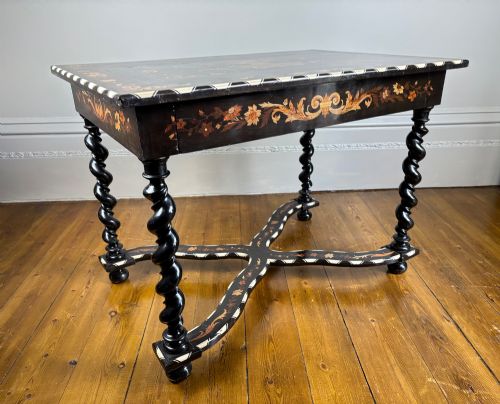
These tables serve both decorative and functional purposes, often featuring intricate woodwork such as bone inlay, oyster veneer, or ebonised marquetry. The intersecting cross base construction provides both structural stability and a distinct geometric profile that defines the category.
How they were made
Cabinet makers utilised dense hardwoods such as mahogany, oak, walnut, and satinwood, often embellishing surfaces with intricate marquetry and contrasting veneers like oyster cuts. Bone inlay was also employed to create striking geometric or floral patterns against dark ebonised wood grounds.
Structural integrity relied on precise joinery for the characteristic cross or x frame base, sometimes reinforced with brass or iron elements. Carved ornamentation was executed by hand, displaying the deep relief and textural detail typical of Victorian Gothic Revival, Sheraton Revival, and Dutch Baroque styles.
X Frame Centre Table Retail Price Guide 2026
Typical asking prices for x frame centre table among the pieces listed under this phrase on Sellingantiques today, from the lower quarter to the upper quarter. They describe what is for sale here now, not the wider market.
Some nineteenth-century makers could not resist adding bone inlay, ensuring your table comes with permanent skeletal accessories built right into the woodwork.
What varies in quality
The standard of carving and inlay work distinguishes finer examples from simpler production, with crisp hand-cut marquetry and deeply articulated timber relief showing superior craftsmanship. Material selection also dictates worth, as dense figured mahogany, rich walnut, and pristine bone inlay elevate the visual weight of the piece.
Integrity of construction matters greatly, particularly regarding the stability of the cross base joints and whether components remain original or show later reconfigurements. Finer proportions and sophisticated stylistic revivals, such as Sheraton or Neoclassical interpretations, reflect a higher design ambition.
The X Frame Centre Table Glossary
- Marquetry
- Decorative veneer work where small pieces of wood, bone, or other materials are fitted together to form pictorial or geometric designs. This technique creates elaborate patterned surfaces across table tops.
- Oyster Veneer
- Small circular or oval slices cut transversely from small branches or roots, arranged to resemble the pattern of oyster shells. It creates a distinctive rippled grain effect on furniture surfaces.
- Cross Base
- A structural support formed by two members intersecting in an X shape, providing stability and visual interest beneath the table top. This form underpins the distinctive silhouette of these pieces.
- Ebonised Wood
- Timber treated with a dark stain or finish to imitate expensive ebony wood. It provided a dramatic contrast for bone inlay and marquetry details in nineteenth-century pieces.
X Frame Centre Table: Frequently Asked Questions
Where should I place an x frame centre table?
These pieces are designed to be viewed from all sides, making them ideal for the middle of a principal room, a spacious hallway, or a library where they can anchor the layout.
Ensure there is adequate clearance around the table for movement, as the protruding cross base requires sufficient floor space to be appreciated fully without obstructing pathways.
How do I care for antique wood surfaces?
Maintain the timber by keeping it away from direct sunlight and sudden temperature fluctuations, which can cause wood to dry out and veneers to lift.
Apply a quality beeswax periodically and buff gently with a soft cloth to nourish the grain and preserve the historic patina without using harsh modern chemical polishes.
Are these tables sturdy enough for daily use?
The intersecting cross frame construction provides inherent structural rigidity, making these tables well-suited for everyday placement in living spaces or libraries.
Heavier items can safely rest upon the top, though care should be taken with antique surfaces to avoid moisture rings or deep scratches by using appropriate coasters or mats.
How can I tell the period of a table?
Examine the timber species, construction methods, and decorative motifs, noting that eighteenth-century examples often feature complex marquetry while Victorian pieces favour robust carved mahogany or walnut.
Stylistic revivals during the Edwardian era, such as Sheraton Revival satinwood, borrow earlier motifs but exhibit distinct finishing techniques and lighter proportions typical of the twentieth-century turn.