
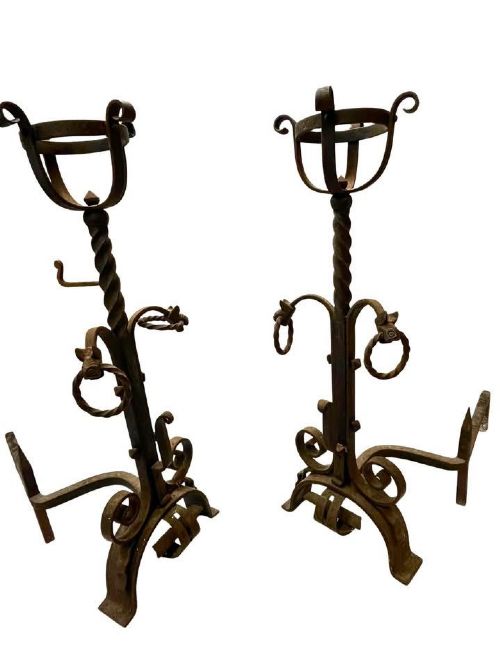


Wrought Iron Fire Logs
Wrought iron fire logs are substantial hearth metalwork designed to hold fuel securely, bringing both historic utility and texture to an open fire.
Wrought Iron Fire Logs
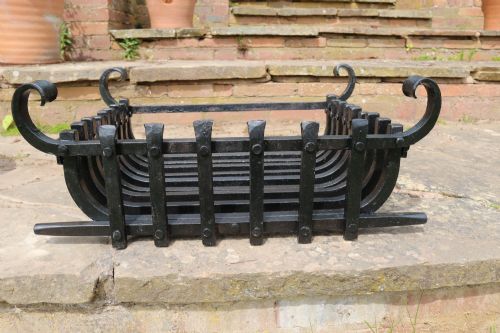
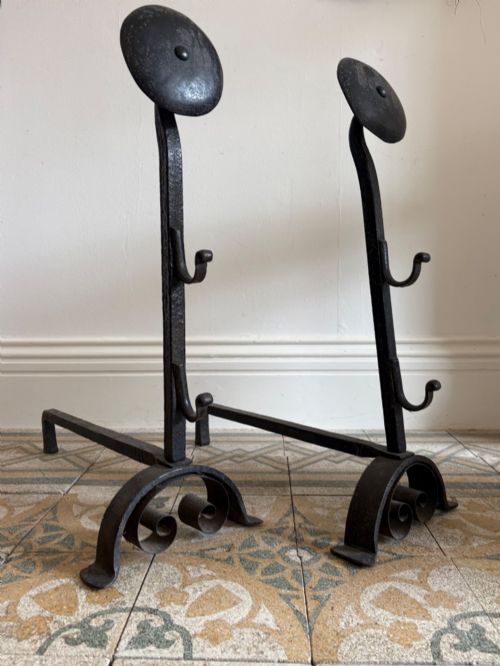
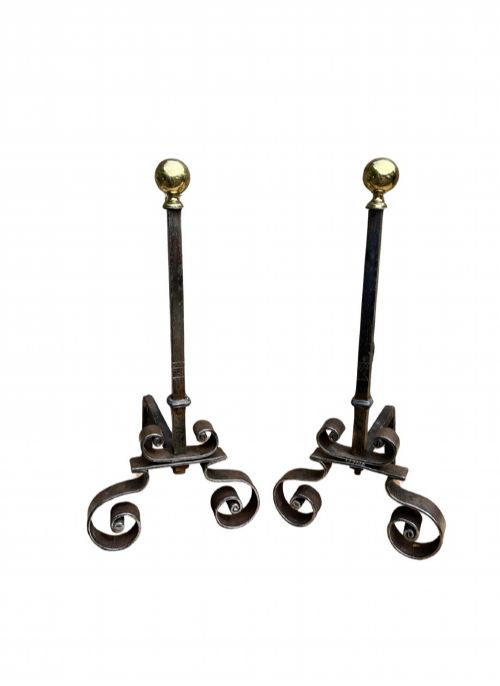
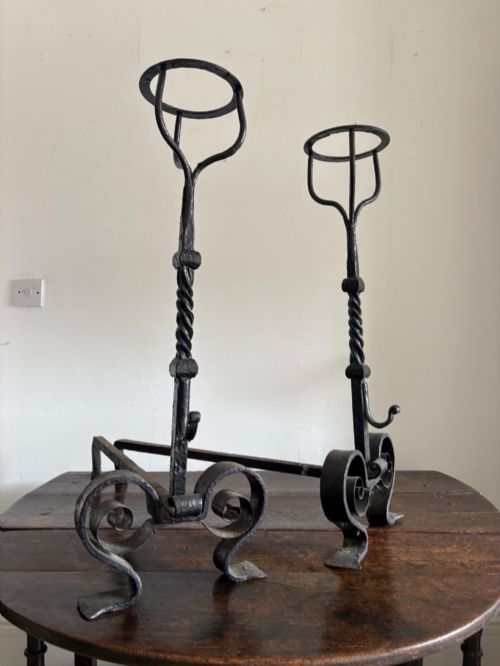
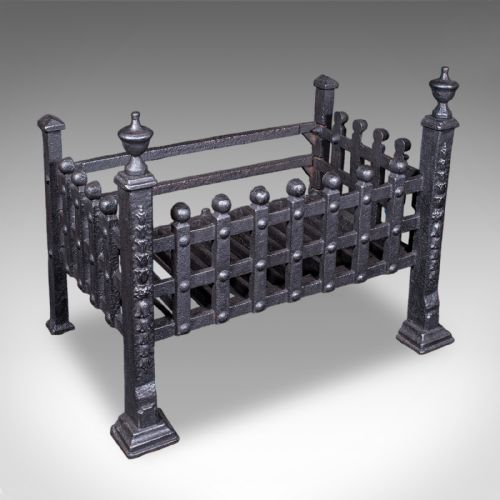
Wrought iron fire logs take several distinct forms on this page, including andirons, fire baskets, grates, and log keepers that date from the nineteenth and early twentieth centuries. Buyers frequently encounter Victorian and Arts and Crafts examples designed to sit within open fireplaces.
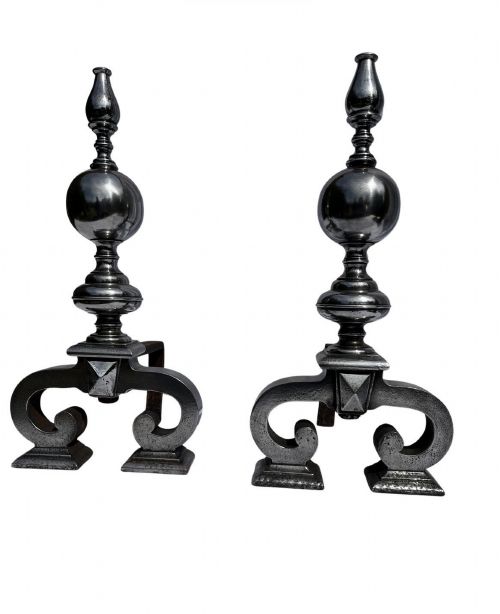
The selection includes pairs of fire dogs alongside larger hearth sets incorporating fire backs and grates. Pieces span periods from the Georgian era through to the 1930s, reflecting changing domestic heating arrangements.
Origin and style vary from English Gothic Revival to French Provincial pieces. The core utility remains holding wood fuel or supporting fire irons within the hearth.
Materials and construction methods
Makers utilised hand-forged wrought iron and cast iron for the primary structural elements of these hearth pieces. The manipulation of hot metal allowed smiths to shape robust bars and scrolls suited to intense heat.
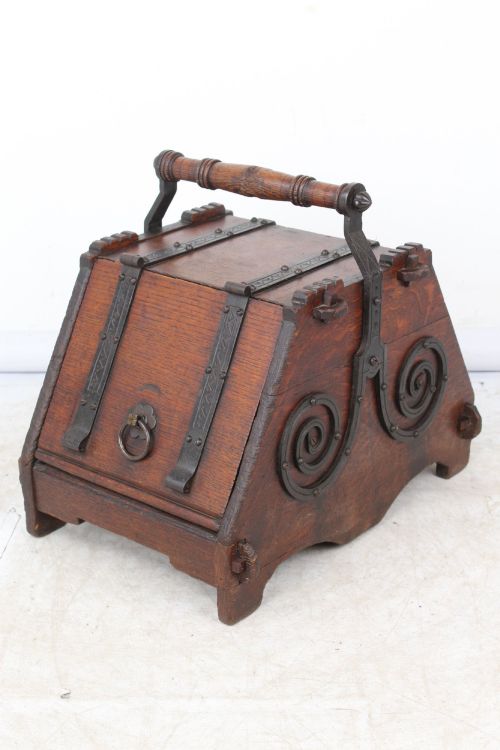
Secondary materials such as brass, copper, and oak appear on specific components like log bins, buckets, and decorative mounts. These mixed media pieces combine heavy iron frames with polished non-ferrous metals or timber.
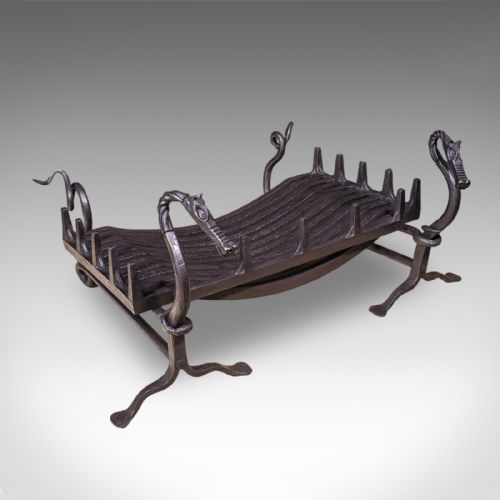
A dragon motif finds its way into the fireside set, reminding us that hearth accessories could breathe mythological life into a Victorian parlour.
Assessing quality in hearth metalwork
Weight and gauge of metal separate heavy structural pieces from lighter items, with monumental pairs and thick hand-forged bars demonstrating superior substance. The integrity of the blacksmith's joinery dictates how well the iron withstands thermal stress.
Refinement of surface finish and decorative detail distinguish standard utilitarian items from artistic commissions. Pieces incorporating hand-hammered textures or integrated motifs show higher craftsmanship than plain cast equivalents.
Christopher Dresser
The Wrought Iron Fire Logs Glossary
- Andiron
- A horizontal support raised on legs, used to hold logs above the hearth floor so air can circulate underneath. These often appear in decorative pairs flanking a fire basket.
- Fire basket
- A metal grate designed to contain fuel within an open fireplace. They frequently incorporate back plates and mounting points for andirons.
- Log layer
- A specialised fireside container or rack built to store wood fuel near the hearth. Examples use combinations of wrought iron and oak.
- Gothic Revival
- A nineteenth-century design style drawing on medieval architectural motifs. Pieces in this taste often feature pointed arches and heavy ironwork.
- Arts and Crafts
- A movement prioritising traditional handcraft methods and visible forging marks over industrial mass production. Items from this period emphasise honest construction.
Wrought Iron Fire Logs: Frequently Asked Questions
How do I use wrought iron fire logs?
These pieces serve as structural supports or containers for wood fuel within an open hearth. They elevate logs to improve airflow and protect the fireplace masonry.
Heavier andirons and baskets remain stable under large logs while smaller decorative sets suit display or lighter fires.
What periods do these pieces date from?
The listings span the nineteenth and early twentieth centuries, covering Georgian, Victorian, Edwardian, and 1930s periods. Stylistic cues like Gothic Revival details help indicate the era of manufacture.
Hand-forged examples often share characteristics with Arts and Crafts production from around nineteen hundred.
Are these items made of solid iron?
Most items combine wrought iron, cast iron, and forged iron elements for structural strength. Some pieces incorporate copper, brass, or oak for secondary components like buckets and bins.
Weight varies significantly from standard fire irons to monumental pairs of andirons.
How do I clean wrought iron hearth pieces?
Maintenance typically involves brushing away ash and soot with a soft dry tool after the metal cools completely. Avoid harsh chemical cleaners that strip the historic finish.
Light applications of suitable oil help protect exposed iron surfaces from moisture.