
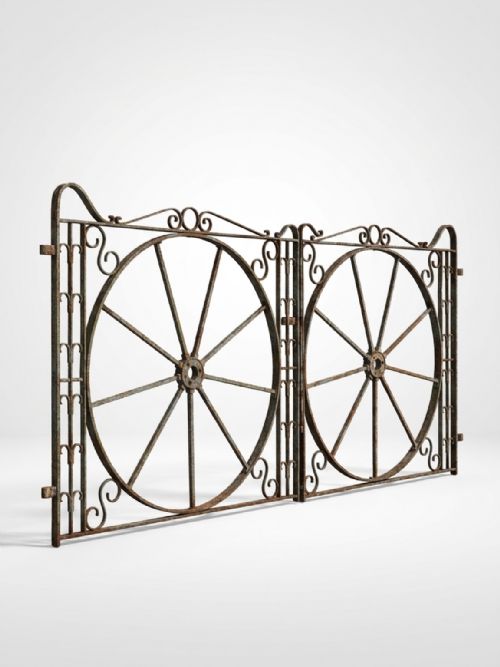
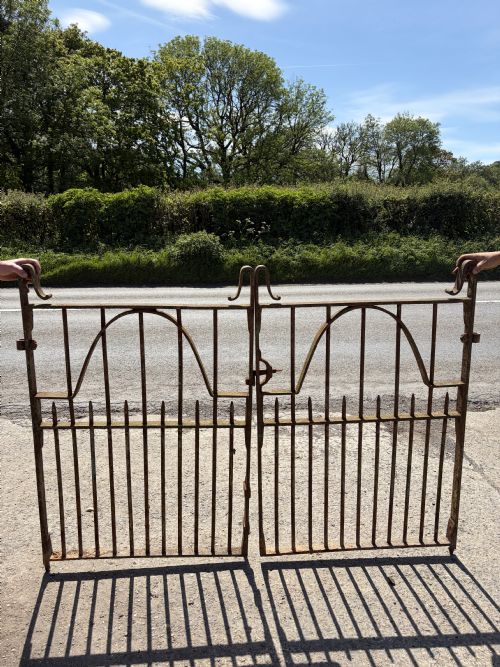


Wrought Iron Driveway Gates
These wrought iron driveway gates are substantial architectural fixtures that bring secure definition and period character to an entrance.
Wrought Iron Driveway Gates
Wrought iron driveway gates form the primary physical boundary for estate entrances, taking the form of tall pairs designed to swing open for vehicular access. When you search for wrought iron driveway gates, you find heavy architectural pieces intended to define a property line while maintaining a sense of openness through metalwork.
The versions most commonly met on this page span the 19th century and Victorian periods, often designated as estate gates or strapwork examples. They appear as matched pairs or monumental single barriers, sometimes incorporating cast iron elements alongside the primary wrought iron construction.
Alongside standard driveway gates, the selection includes related architectural salvage such as individual panels and garden gates. These pieces reflect specific historical contexts, ranging from country estate designs to simpler Victorian forms.
How they were made
These pieces are constructed primarily from wrought iron and cast iron, utilised together in the heavier estate examples to balance structural rigidity with decorative detail. Blacksmiths shaped the iron through forging and strapwork techniques to create robust frames and scrolling patterns.
The manufacturing process relies on traditional metalworking methods where individual iron straps and bars are joined to form rigid panels. Some examples incorporate supplementary materials such as copper and glass, particularly in associated lighting items found within the wider architectural salvage.
The listings on this site feature wrought iron alongside cast iron, copper, and glass across the 18th, 19th, and early 20th centuries.
What varies in quality
The distinction between standard examples and the finest pieces lies in the heft of the ironwork and the complexity of the strapwork. Monumental estate gates display superior weight and more ambitious scale, whereas utility panels show simpler construction.
Quality also rests in the integrity of the original forge work and the survival of matched pairs in uncompromised condition. Pieces that retain their original structural balance without heavy modern replacement metal command greater architectural interest.
The Wrought Iron Driveway Gates Glossary
- Wrought iron
- A tough, malleable form of iron containing slag inclusions, traditionally worked by hand on an anvil. It resists corrosion better than modern steel and shows a fibrous grain when fractured.
- Strapwork
- A decorative motif formed of flat, intersecting bands or straps of metal resembling leather straps. In these gates, it provides both structural bracing and visual rhythm.
- Cast iron
- Iron poured in a molten state into a mould to take the shape of the cavity. It is harder and more brittle than wrought iron, often used for decorative finials or base plates.
- Architectural salvage
- Building elements and fixtures rescued from structures slated for demolition or alteration. These items are preserved for reuse in historic restoration or landscape design.
Wrought Iron Driveway Gates: Frequently Asked Questions
How heavy are these estate gates?
These gates possess substantial weight due to their solid iron construction and large dimensions, often spanning eight to twelve feet.
Professional handling and heavy-duty fixings are essential for hanging them safely on brick piers or stone posts.
Can these antique gates still be automated?
Many of these sturdy iron structures can be adapted for modern electric openers with appropriate professional engineering.
Mounting automated arms requires careful consideration of the historic strapwork and the weight of the individual leaves.
How do I identify a Victorian gate?
Victorian examples typically display heavier section iron, characteristic strapwork patterns, and robust hand-forged joinery.
Proportions tend to be grander, reflecting the architecture of 19th-century country estates and grand townhouses.
What maintenance do old iron gates need?
Historic ironwork requires periodic inspection for surface rust and regular application of protective exterior metal paint.
Keeping the hinges lubricated and clearing vegetation from the base prevents moisture accumulation and preserves the metal.