
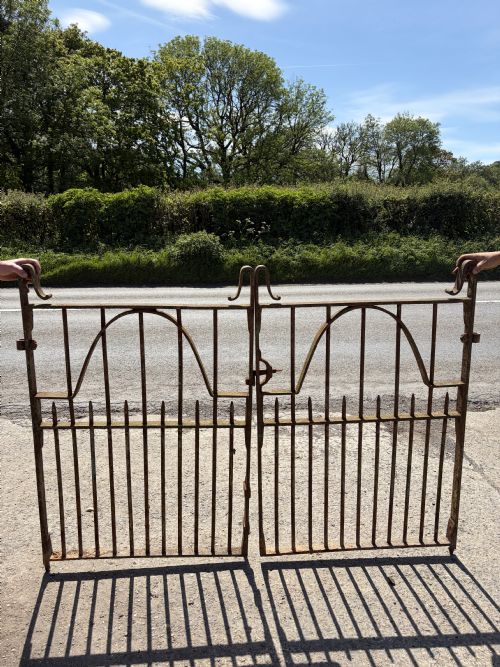
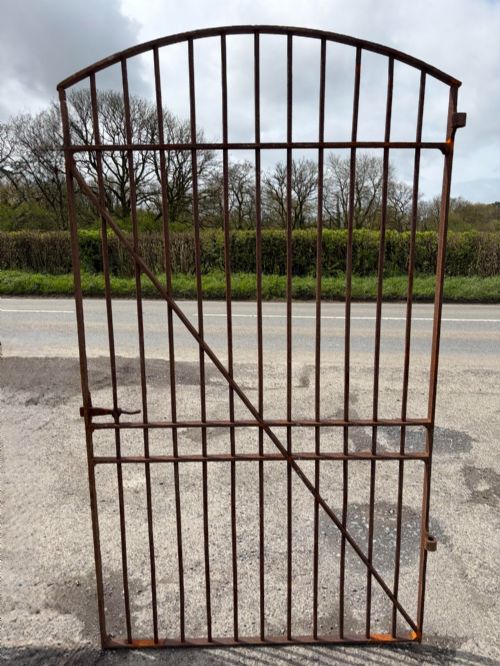
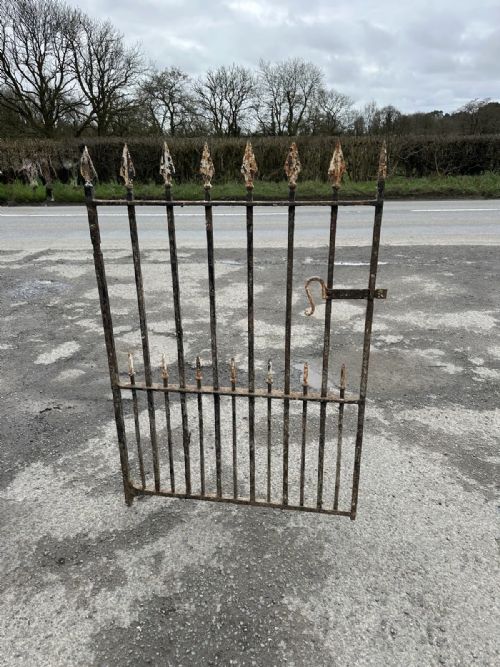


Victorian Metal Garden Gates
Victorian metal garden gates bring architectural structure and enduring boundary definition to outdoor spaces, combining robust utility with period craftsmanship.
Victorian Metal Garden Gates
Victorian metal garden gates provide solid boundaries and entrances for pathways, yards and wider properties. When searching for victorian metal garden gates, buyers encounter robust single entries, paired carriage entrances and specialised forms such as kissing gates.
Most examples found on this page date from the nineteenth century, including pieces spanning the Victorian era, the year nineteen hundred and the Edwardian period. Forms range from domestic garden gates to tall estate gates and strapwork designs.
Makers utilised both individual garden contexts and grander estate settings for these pieces, incorporating architectural salvage elements and decorative details like trident motifs. The selection encompasses simpler pedestrian access as well as substantial iron panels.
How they were made
Makers constructed these pieces principally using wrought iron and cast iron, often combining both metals within a single structure. Riveted joints and strapwork techniques provide the structural integrity required for heavy outdoor use.
Some nineteenth century designs include a kissing gate, built so only one person can squeeze through at a time.
What varies in quality
Quality rests on the sophistication of the metalwork, distinguishing standard utility boundaries from ambitious architectural commissions. Heavier gauge ironwork, complex strapwork and refined blacksmithing indicate higher grade production.
The integrity of the original joints, whether riveted or forged, dictates the structural survival of the piece. Superior examples retain their original proportions and decorative details without excessive pitting or heavy replacement metal.
The Victorian Metal Garden Gates Glossary
- Wrought iron
- A tough, malleable form of iron easily forged by a blacksmith into decorative and structural bars. It resists shock and corrosion better than modern steel.
- Cast iron
- Iron poured into a mould to create intricate components and heavier structural frames. It offers rigidity and complex detail work.
- Strapwork
- Flat strips of metal riveted or joined in geometric or strap-like patterns. This technique reinforces large gates while adding visual rhythm.
- Kissing gate
- A small gate that swings within an enclosure, allowing one person to pass at a time. It prevents livestock from escaping while granting pedestrian access.
- Architectural salvage
- Building elements rescued from older structures for reuse in new settings. These pieces retain historical character and original patination.
Victorian Metal Garden Gates: Frequently Asked Questions
How do I hang a heavy iron gate?
Hanging requires substantial brick piers or stone pillars capable of taking significant lateral weight. Proper alignment of the hinge pivots ensures the heavy frame swings without dragging.
Professional installation typically involves adjustable anchor bolts set deep into masonry. This prevents the weight of the metal from sagging over time.
Are pairs harder to install than single gates?
Pairs demand absolute precision in mounting both hanging posts so the central latch meets cleanly. Any movement in the ground foundations affects the alignment of both leaves.
Single gates require only one swing axis, making ground settlement easier to manage. Paired gates need careful consideration of clearance across the driveway or path.
How do I maintain historic ironwork outdoors?
Maintenance involves inspecting the protective paint layer and treating any surface rust promptly. Applying suitable exterior metal paint protects the iron from ongoing moisture damage.
Moving parts such as hinges and latches benefit from occasional light lubrication. Keeping vegetation clear of the lower rails prevents moisture retention against the metal.
Can I resize an antique metal gate?
Altering the width or height of period ironwork compromises the original proportions and structural symmetry. Cutting through riveted strapwork or cast sections disrupts the maker's intended design.
Finding a piece that matches the exact opening dimensions avoids damaging the historic fabric. Adjusting the hanging posts is often preferable to cutting the gate itself.