




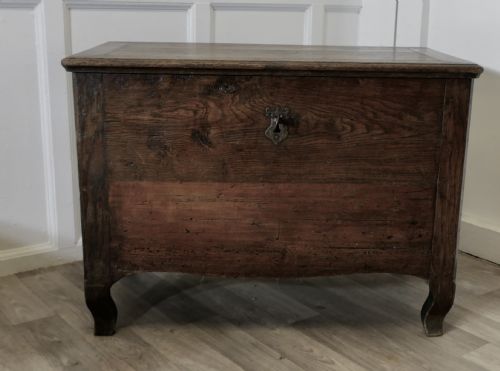
Wrought Iron Coffer
A wrought iron coffer brings heavy metal banding and timber construction together into a robust storage piece that secures valuables with historic character.

Wrought Iron Coffer
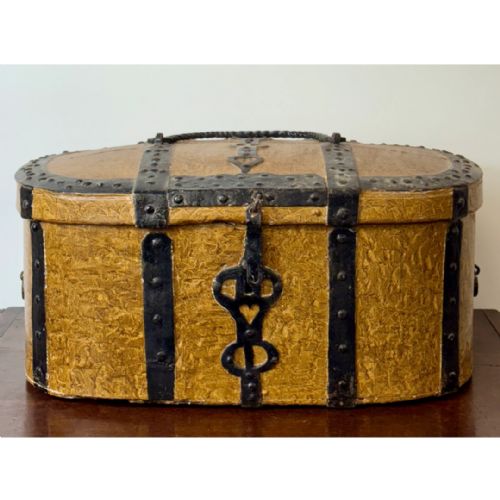
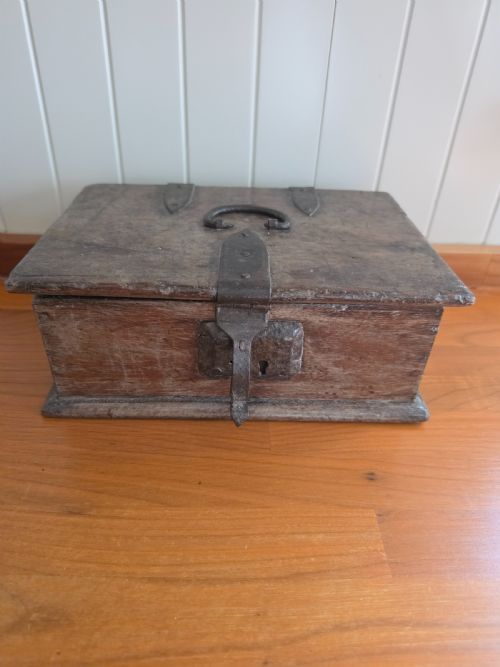
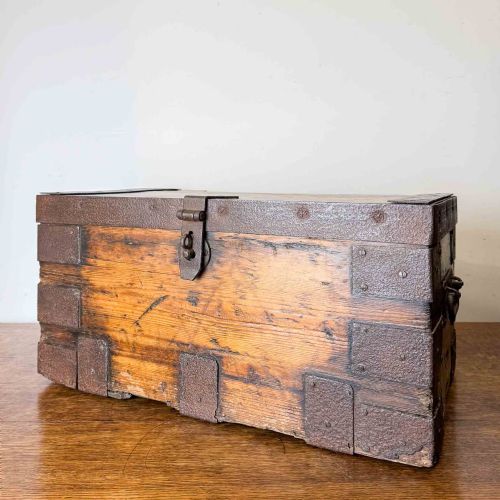
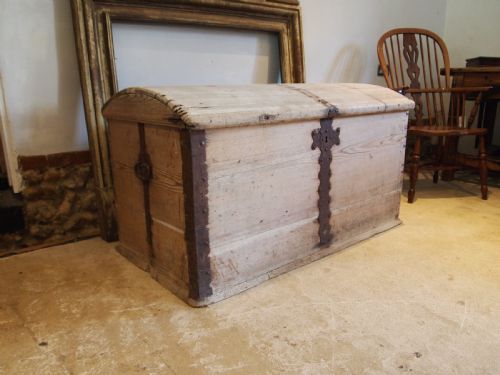
When you examine a wrought iron coffer, you look at a secure storage container constructed from sturdy timber and reinforced with external metal straps, bands, or locking mechanisms. These pieces range from early travelling strongboxes and Armada chests to painted domestic marriage chests and folk art trunks.
The versions most commonly met on this page originate from Scandinavian, Spanish, and English workshops spanning the sixteenth century through to the Victorian era. They appear in forms as varied as dome-top coffers, pine marriage chests, and iron-bound elm strongboxes.
How they were made
Carpenters built the primary bodies using native timbers such as oak, pine, elm, walnut, and scrub pine, joining the boards with dovetail or pegged joints. Blacksmiths then forged heavy iron straps, hinges, and hasps by hand, securing them across the wood to reinforce the structure against forced entry.
Many surfaces received layers of decorative paintwork, particularly in Scandinavian folk art pieces featuring hand-painted motifs, while others relied on the natural grain of walnut or oak paired with exposed metalwork.
Wrought Iron Coffer Retail Price Guide 2026
Typical asking prices for wrought iron coffer among the pieces listed under this phrase on Sellingantiques today, from the lower quarter to the upper quarter. They describe what is for sale here now, not the wider market.
Current listings feature pieces spanning the 16th century through to the 1920s, utilising oak, pine, elm, walnut, and painted finishes.
What varies in quality
The distinction between standard utility boxes and superior examples rests in the complexity of the internal locking mechanism and the integrity of the forged ironwork. Elaborate multi-bolt locks engaging the entire lid interior separate high-status strongboxes from simple pin-hinged chests.
Hand-painted surface decoration that survives in original condition elevates a piece beyond plain timber utility, while the weight and thickness of the hand-beaten iron straps indicate the original purpose and investment of the maker.
The Wrought Iron Coffer Glossary
- Armada chest
- A heavy iron strongbox disguised as a regular wooden chest, fitted with complex internal locking mechanisms operated by a single key. These chests were produced across Europe from the sixteenth century onwards.
- Strongbox
- A secure container constructed for holding currency, documents, or valuables, typically reinforced with heavy iron bands and complex locking plates. They often feature side carrying handles for transport.
- Marriage chest
- A painted or carved wooden box commissioned to mark a wedding, frequently bearing initials, dates, or symbolic motifs. Scandinavian examples often display vibrant folk art decoration.
- Dome top
- A curved lid construction on a coffer or trunk designed to shed water and provide additional interior headroom. This shape appears frequently on eighteenth-century Scandinavian painted trunks.
- Hasp
- A slotted metal plate that fastens over a staple and is secured with a pin or padlock. On these pieces, hasps form a primary part of the exterior security hardware.
Wrought Iron Coffer: Frequently Asked Questions
What is an Armada chest?
An Armada chest is a heavy iron-bound strongbox designed in the sixteenth or seventeenth century, featuring an intricate locking mechanism beneath the lid. Despite the popular naval nickname, these containers served primarily as secure strongboxes for domestic and institutional valuables.
They are distinguished by their all-metal construction or heavy external iron strapping over timber cores, often hiding the keyhole beneath a false escutcheon.
How do I date an iron bound box?
Dating relies on observing the construction methods of both the timber boards and the iron hardware. Hand-forged straps with irregular hammer marks and dovetail joints fastened with wooden pegs point toward earlier centuries.
Later Victorian and early twentieth-century examples typically show machine-cut elements and more uniform cast iron components rather than individually beaten straps.
Were these chests used for travel?
Many smaller strongboxes and coffers were manufactured specifically for transport, evidenced by sturdy iron carrying handles mounted on the side panels. Travellers used them to secure coinage, documents, and personal valuables on long journeys.
Larger marriage chests and stationary coffers remained in one place within a household, serving as primary furniture for storing textiles and linens.
How should I care for painted wood?
Painted Scandinavian and Spanish surfaces require stable indoor humidity away from direct sunlight to prevent the pigments from fading or the timber from splitting. Dust them gently with a dry, soft cloth without applying modern liquid polishes.
Wax can sometimes be used on unpainted wood sections, but original folk art paint layers demand a cautious approach to preserve the historic pigment.