

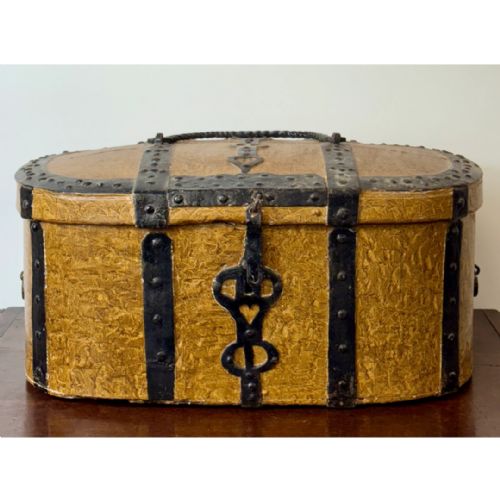
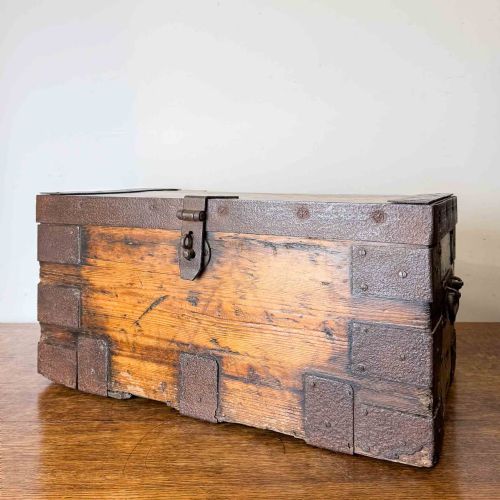


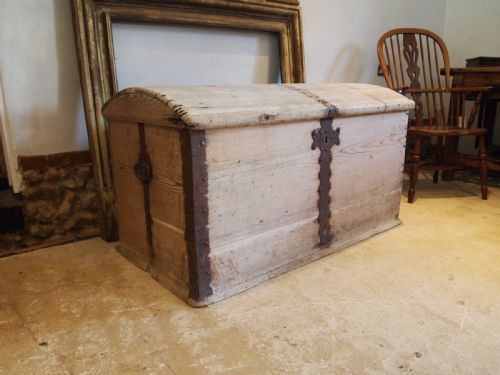


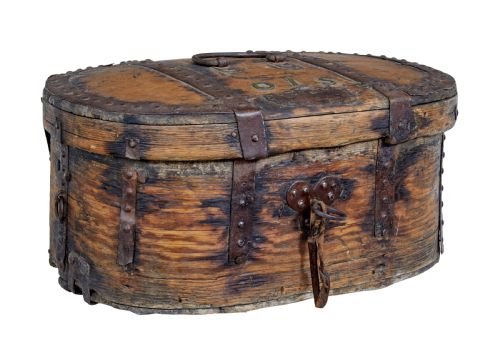
Wrought Iron Bound Trunk
These wrought iron bound trunk examples are sturdy storage pieces built for security, offering robust construction and rustic character.

Wrought Iron Bound Trunk
When you search for a wrought iron bound trunk, you are looking at utilitarian storage pieces and strongboxes built to secure valuables and documents. These items combine wooden bodies with heavy metal reinforcement.
You are most likely to meet pieces from the eighteenth and nineteenth centuries, including Scandinavian folk art boxes and regional country furniture. Forms range from large marriage chests to compact elm and pine strongboxes.
The regional variety spans from Swedish Baroque oak boxes to French elm cannonball boxes and Indian iron bound trunks. These objects served practical transport and storage needs in domestic settings.
How they were made
Maker construction relies on durable domestic timbers such as pine, elm, oak, and occasionally painted surfaces. Wood panels are joined to form heavy chests and boxes.
Wrought iron and cast iron components reinforce the structures, providing corner brackets, strap hinges, carrying hoops, and working locks with iron hasps.
Wrought Iron Bound Trunk Retail Price Guide 2026
Typical asking prices for wrought iron bound trunk among the pieces listed under this phrase on Sellingantiques today, from the lower quarter to the upper quarter. They describe what is for sale here now, not the wider market.
Listings for this phrase include pine, elm, oak, and iron, spanning the eighteenth and nineteenth centuries.
What varies in quality
The sophistication of the ironwork and the quality of the timber preparation separate standard utility boxes from finer regional examples. Hand-forged straps and original painted decoration indicate higher workshop input.
Survival of original locking mechanisms, side lifting handles, and interior fittings alter the desirability of individual trunks.
The Wrought Iron Bound Trunk Glossary
- Strongbox
- A heavily reinforced box designed for securing valuables, typically fitted with robust iron straps and a secure lock.
- Marriage chest
- A celebratory storage chest commissioned for a wedding, frequently decorated with dates, initials, or regional folk art motifs.
- Baroque
- An ornate design period spanning the seventeenth and eighteenth centuries, visible in Scandinavian pieces through carved or panelled details.
- Hasps
- A slotted metal plate that fastens over a staple and is secured with a pin or padlock.
Wrought Iron Bound Trunk: Frequently Asked Questions
What were wrought iron bound trunks used for?
These pieces served as secure containers for transporting and storing money, documents, and valuable household possessions. Their robust metal strapping protected the contents during travel.
Over time, many transitioned into static domestic furniture used for linens and blankets within the home.
How do I care for a wooden and iron trunk?
Keep the piece in a stable environment away from direct heat sources and dampness to protect the timber and metal components. Regular gentle dusting preserves both painted and bare wood surfaces.
Avoid harsh chemical cleaners on the ironwork and timber to maintain the natural aged finish.
How can I tell the age of a trunk?
Dating relies on examining construction methods, timber species, and the style of the ironwork hinges and locks. Eighteenth-century examples often feature hand-forged straps and regional folk art painting.
Later nineteenth-century pieces display different industrial manufacturing techniques and standardised iron components.
Where were these trunks made?
The listings show origins across various European regions, particularly Scandinavia and France, alongside pieces from India. Local workshops utilised native timbers like pine, elm, and oak.
Each regional school applied distinct decorative painting styles and ironworking traditions to the basic box form.