



Writing Desk with Superstructure
A writing desk with superstructure offers compact tiered storage above a working surface, combining practicality with nineteenth-century cabinetmaking.
Writing Desk with Superstructure
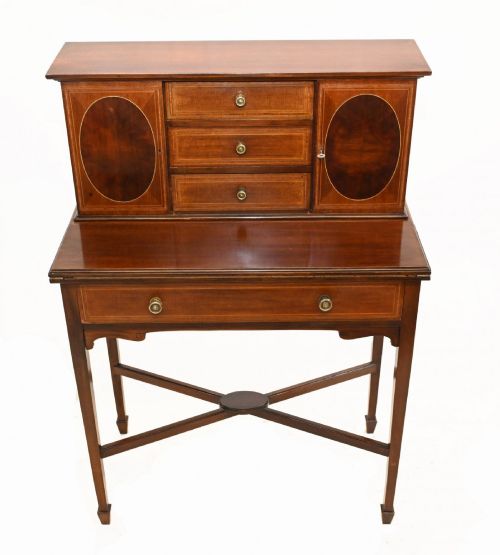
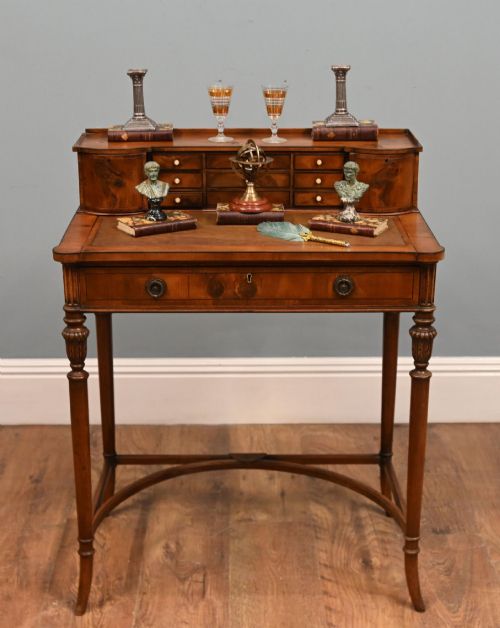
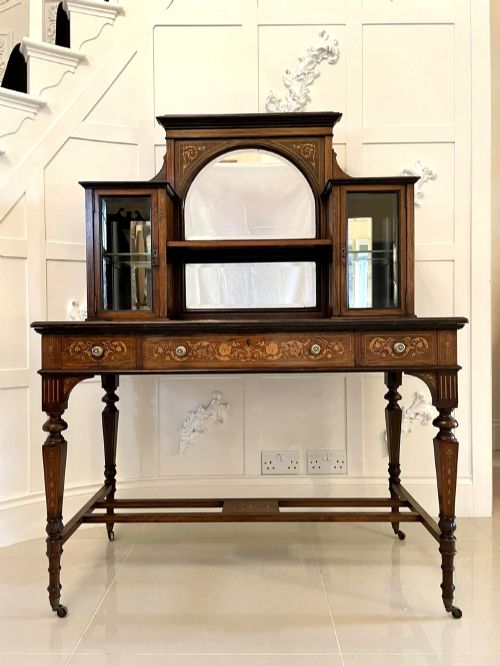
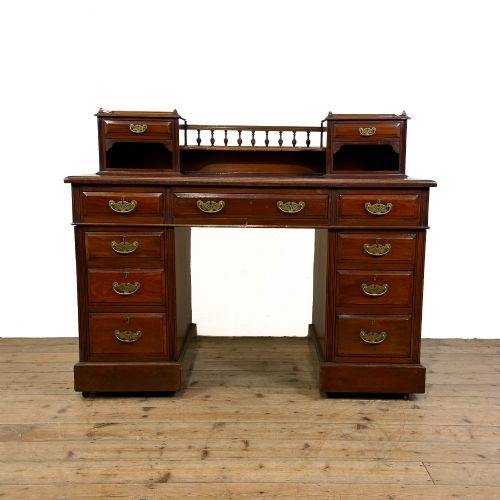
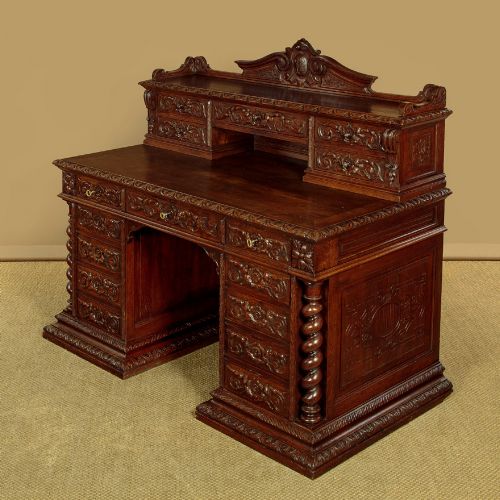
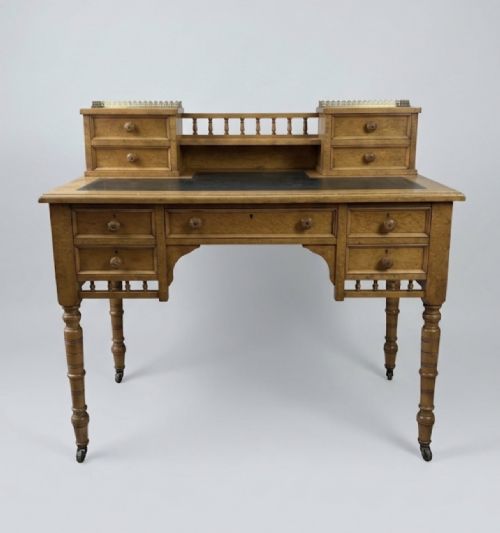
A writing desk with superstructure combines a primary flat working surface with an elevated tier of small drawers, pigeonholes, or a mirrored cabinet at the rear. These pieces originate predominantly from the Victorian era and the surrounding decades of the nineteenth and early twentieth centuries, spanning diverse stylistic revivals.
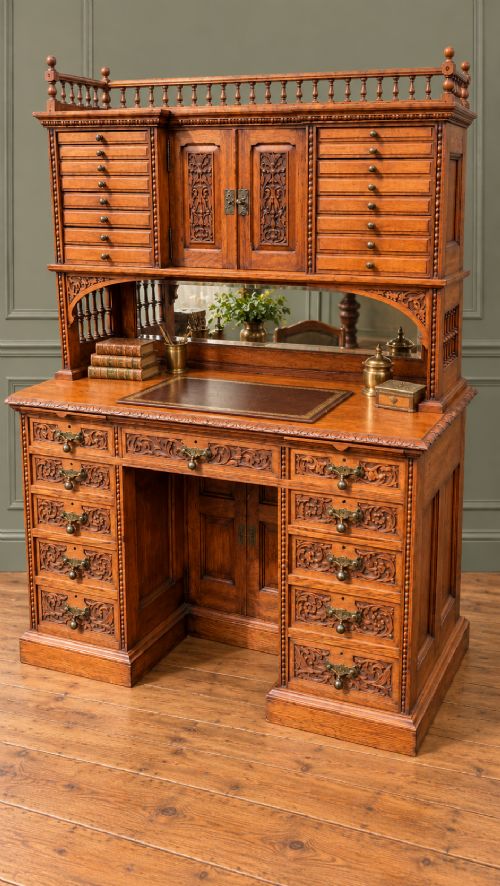
The format ranges from delicate ladies writing tables in satinwood or mahogany to substantial pedestal desks in oak and burr walnut. Many examples incorporate specific traditional forms such as the bureau de dame or the Dickens desk.
Most pieces on this page utilise traditional timber construction, featuring built-in compartments designed for correspondence and stationery organisation above the primary writing area.
Materials and Construction
Makers utilised dense hardwoods including mahogany, oak, and walnut, frequently applying decorative veneers such as burr walnut, pollard oak, and birds-eye maple to the primary exterior surfaces. Secondary timbers appear in drawer linings and internal dividers.
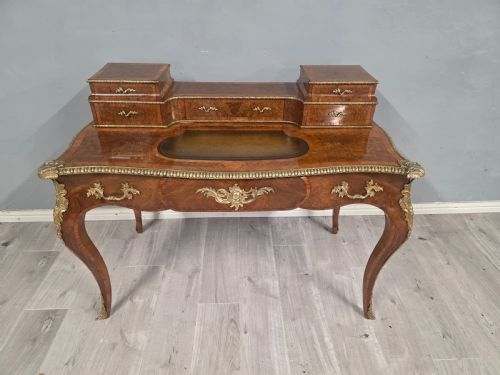
Details such as brass gallery rails, ormolu mounts, and leather writing inserts complement the woodwork. Cabinets within the superstructure incorporate glazed doors, hand-painted decoration, or fitted mirrored panels alongside small pigeonholes and letter drawers.
Writing Desk with Superstructure Retail Price Guide 2026
Typical asking prices for writing desk with superstructure among the pieces listed under this phrase on Sellingantiques today, from the lower quarter to the upper quarter. They describe what is for sale here now, not the wider market.
Listings feature pedestal desks, bureau de dame formats, and ladies writing tables executed in mahogany, oak, walnut, and satinwood.
Factors of Quality
Quality rests upon the selection of timber veneers and the intricacy of the internal superstructure arrangement. Pieces demonstrating superior craftsmanship feature finely figured burr walnut, satinwood, or pollard oak matched evenly across drawers and doors.
Hardware selection and structural joinery differentiate standard production from pieces bearing maker attribution or specialist carving. Original brass fittings, well-executed hand-painting, and integrated secondary cabinetry indicate higher manufacturing standards.
Hobbs & Co.·Thomas Turner·Howard & Son·James Lamb, Manchester
The Writing Desk with Superstructure Glossary
- Superstructure
- An elevated tier of small drawers, pigeonholes, shelves, or a cabinet positioned at the rear of a desk top. This addition provides segmented storage for stationery without increasing the floor footprint of the furniture.
- Pedestal desk
- A heavy freestanding writing table supported by two banks of drawers reaching down to the floor. These forms often feature panelled sides and central kneeholes.
- Bureau de dame
- A feminine desk form, frequently French in origin, featuring a sloped writing flap or fitted upper cabinet. These pieces commonly utilise decorative veneers and gilt-metal mounts.
- Dickens desk
- A large partner or single-sided pedestal desk featuring twin pedestals and a high superstructure fitted with drawers and pigeonholes facing the seated writer. This arrangement creates a semi-enclosed workspace.
- Ormolu
- Gilt bronze mounted onto furniture as decorative enrichment. The technique involves applying a gold amalgam to bronze.
Writing Desk with Superstructure: Frequently Asked Questions
What is a writing desk with superstructure?
A writing desk with superstructure combines a standard writing surface with an elevated upper section containing small drawers, pigeonholes, or cabinets. This format provides dedicated storage for stationery and correspondence directly above the work area.
Such pieces emerge predominantly from nineteenth-century British and continental workshops, reflecting the period demand for organised domestic study spaces.
How do I identify a Victorian desk?
Victorian desks are identified through timber choices, construction methods, and stylistic markers characteristic of the mid to late nineteenth century. Common woods include solid mahogany, oak, and burr walnut veneers.
Details like dovetail joints on drawers and the presence of nineteenth-century hardware help distinguish these pieces from later revival furniture.
What is a bureau de dame?
A bureau de dame is a traditional ladies writing desk featuring a refined silhouette, often incorporating curved woodwork and delicate decorative veneers. These pieces frequently include a small superstructure or sloped writing flap.
Originating in France and adopted across nineteenth-century Europe, they were designed for private correspondence in drawing rooms.
How do I care for antique wood desks?
Antique desks require placement away from direct sunlight and heat sources to prevent timber from splitting and veneers from lifting. Maintaining stable indoor humidity preserves the structural integrity of the wood.
Periodic application of appropriate wax polish protects the finish and maintains the lustre of mahogany, oak, and walnut surfaces.