

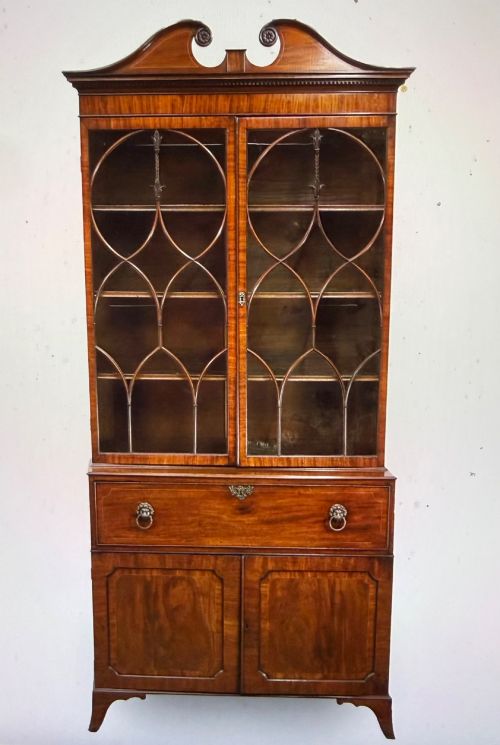
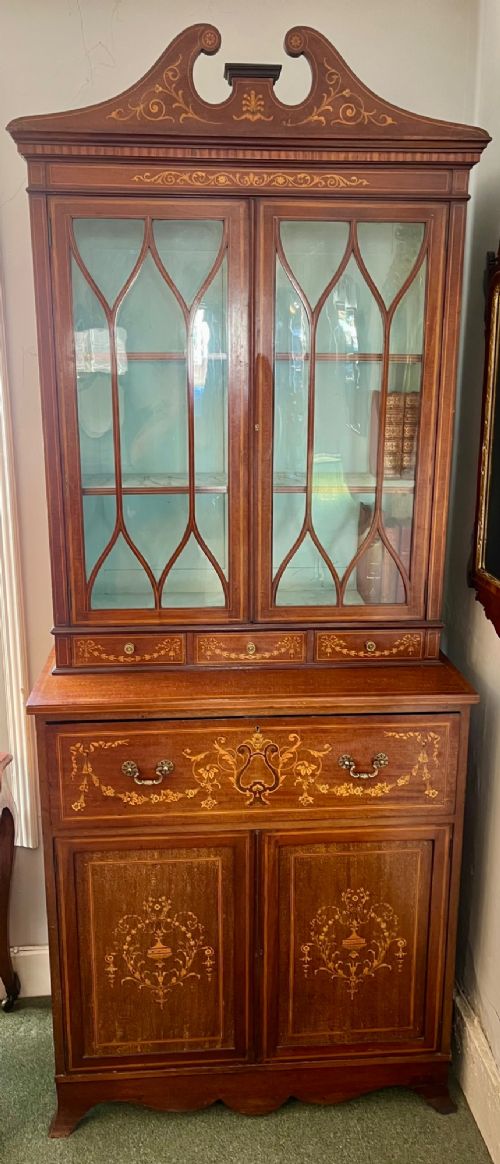
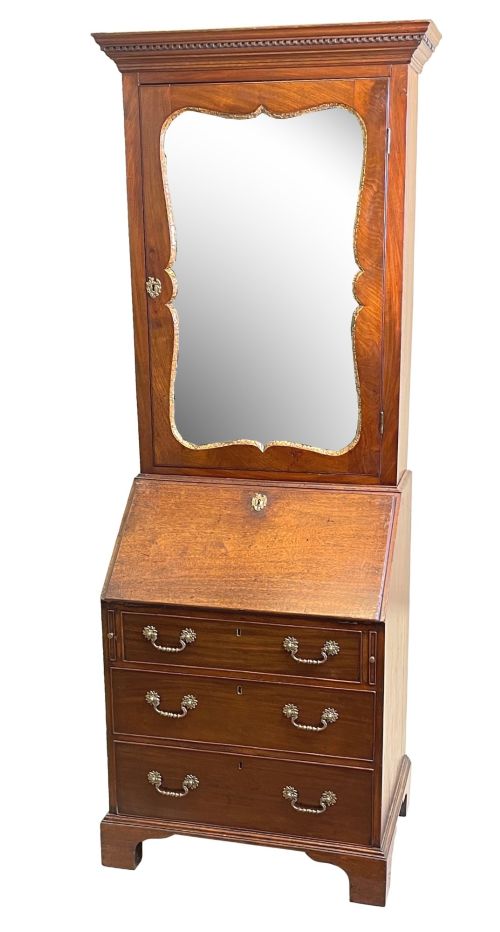
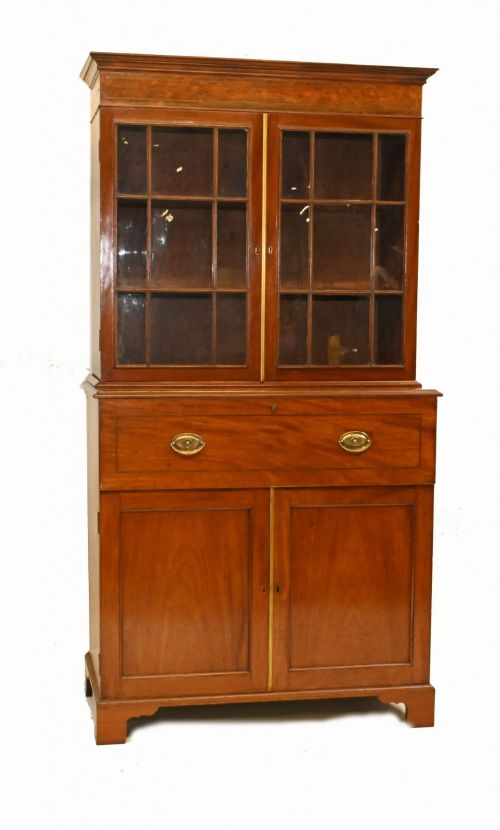
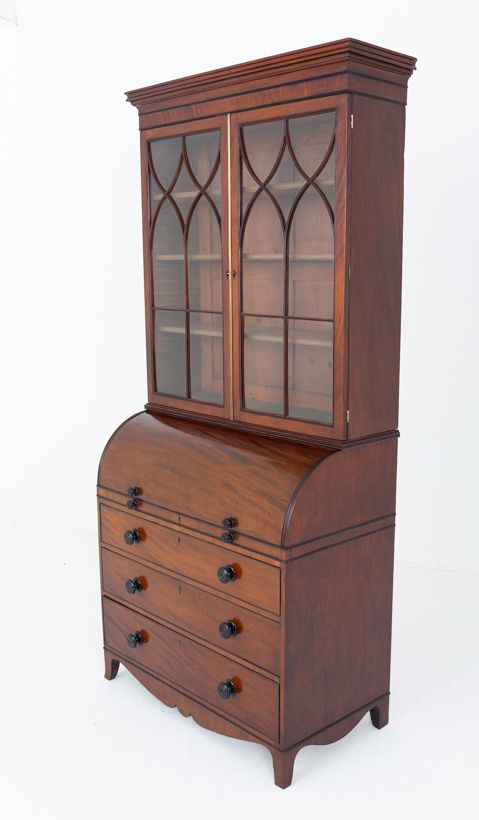
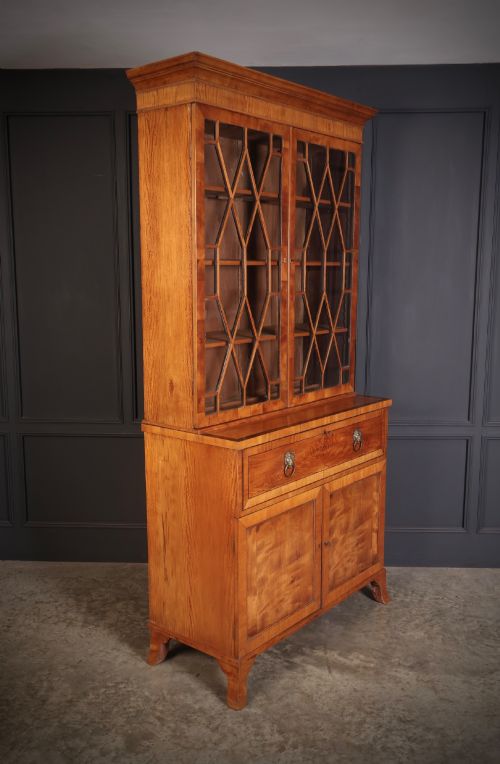
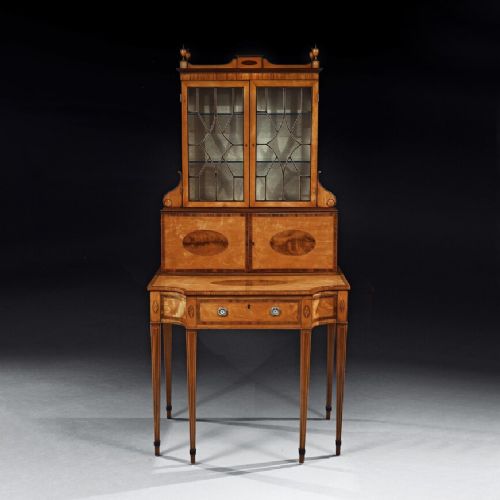
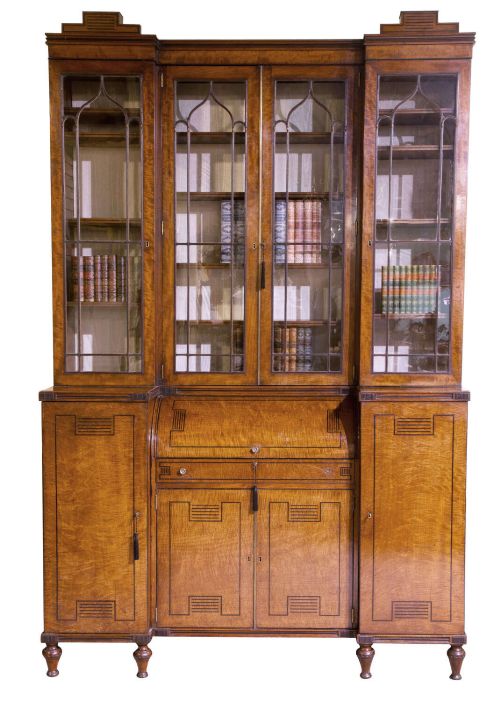
Writing Cabinet Bookcase
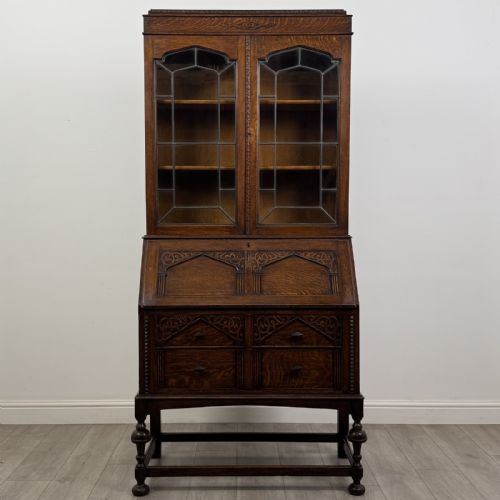
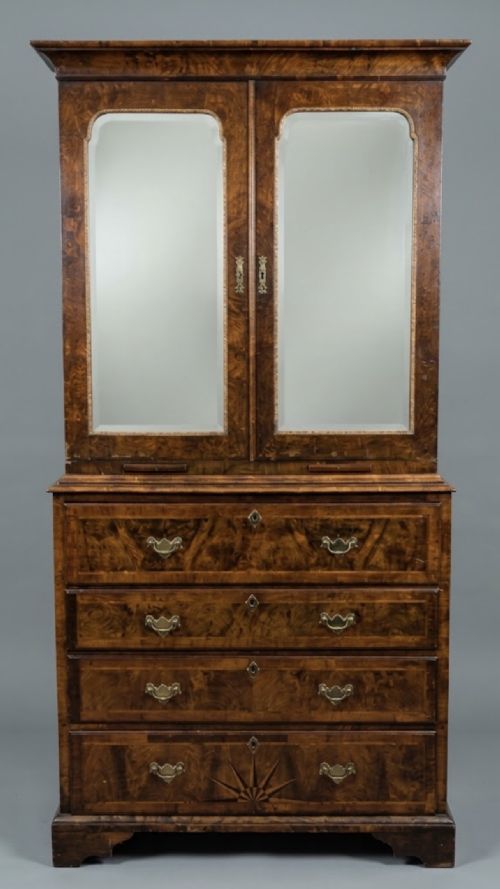
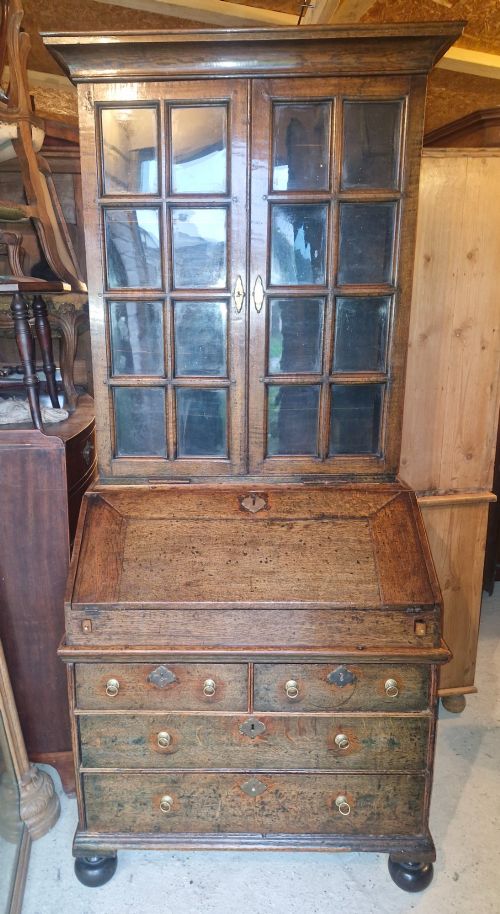
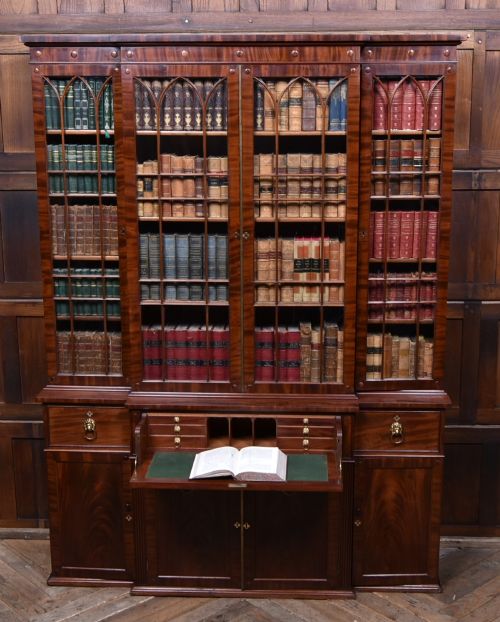
A writing cabinet bookcase combines a fall-front desk and a shelved upper library in one piece, offering concealed storage for letters alongside visible display space for books.
Writing Cabinet Bookcase
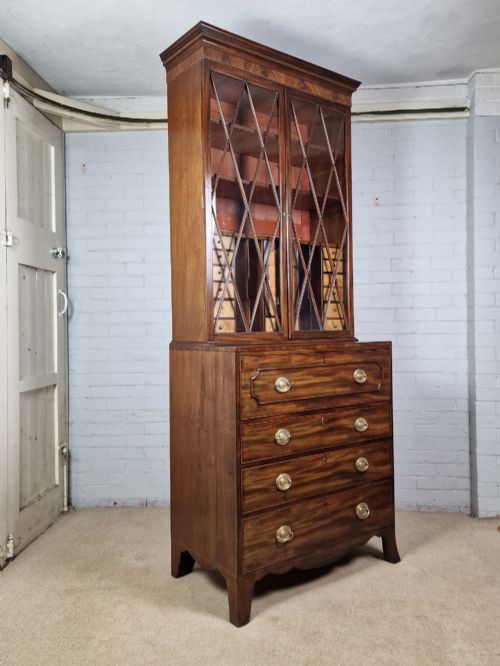
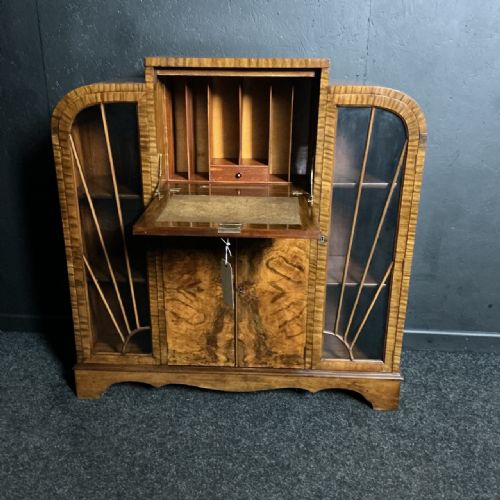
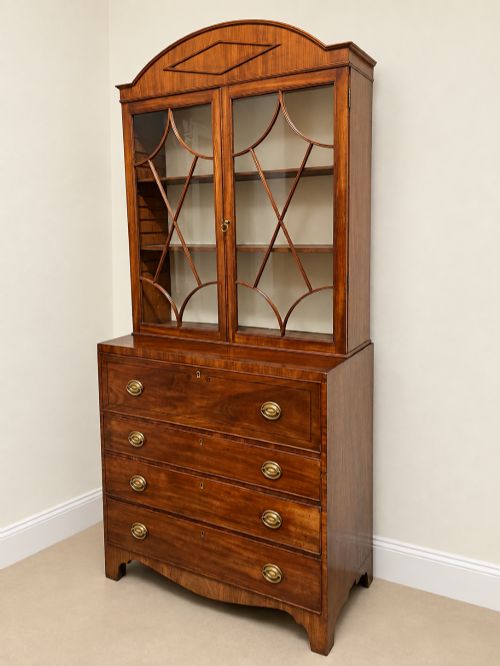
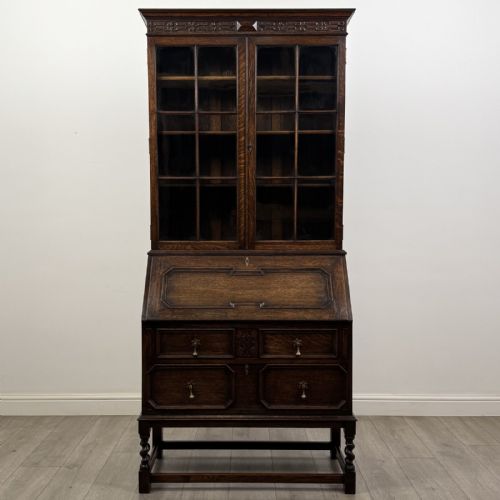
When you search for a writing cabinet bookcase, you encounter tall dual-purpose furniture designed for domestic study and storage, spanning centuries from the seventeenth century through the Edwardian era. These pieces pair an enclosed upper section with glazed or solid doors for volumes, positioned above a lower cabinet fitted with a sloping fall-front desk or a pull-out secretaire drawer.
The versions most commonly met on this page date from the Georgian and Regency periods, rendered in substantial timbers such as mahogany and walnut, alongside later revivals from the Edwardian period and the early twentieth century. Variations include double-dome tops, compact proportions, and fitted internal pigeonholes intended for correspondence and ledgers.
Materials and Construction
Cabinet makers constructed these pieces using dense hardwoods like mahogany and oak for the primary frame, often applying figured walnut, burr walnut, or satinwood veneers to the exterior surfaces. Marquetry inlay, ebony stringing, and featherbanding decorate the drawer fronts and cabinet doors of examples from the eighteenth century onwards.
Upper compartments feature glazed doors, frequently divided into individual panes by wooden astragal bars, while lower desk sections rely on hinged fall-fronts supported by wooden lopers or locking drawers to create a writing surface. Brass hardware, including drop handles and escutcheons, secures the doors and internal drawers.
Writing Cabinet Bookcase Retail Price Guide 2026
Typical asking prices for writing cabinet bookcase among the pieces listed under this phrase on Sellingantiques today, from the lower quarter to the upper quarter. They describe what is for sale here now, not the wider market.
Listings span eight distinct periods, from seventeenth-century oak examples to twentieth-century revivals in mahogany, walnut, and satinwood.
Evaluating Craftsmanship
The standard of a writing cabinet bookcase rests upon the choice of timber and the precision of its veneers, where highly figured burr walnut or flame mahogany indicates superior workshop selection. Finer pieces demonstrate careful grain matching across large surfaces and intricate interior joinery within the fitted writing compartments.
Construction details such as hand-cut dovetailing on internal drawers, original brasses, and the delicacy of astragal glazing bars distinguish higher-grade examples from later commercial reproductions. Proportion and scale also dictate quality, with narrower, neat forms commanding greater attention than heavier, bulky constructions.
E Gomme·Edwards & Roberts·Gillows
The Writing Cabinet Bookcase Glossary
- Bureau bookcase
- A piece of furniture combining a sloping fall-front writing desk with an upper shelving unit for books. This form became popular in domestic interiors during the late seventeenth century.
- Secretaire bookcase
- A cabinet featuring a pull-out drawer with a drop-down front that conceals a writing surface and small drawers, topped by a bookcase. This mechanism provides a flat desk surface without a sloping exterior lid.
- Astragal glazed
- Glass cabinet doors divided into smaller panes by narrow wooden bars, known as astragals. These bars create geometric patterns across the bookcase front.
- Featherbanding
- A decorative inlay technique using small pieces of veneer cut diagonally to form a herringbone pattern around the perimeter of drawer fronts or panels.
- Fallback
- A hinged writing flap that pulls down to form a horizontal desk surface. It is typically supported by internal wooden arms called lopers.
Writing Cabinet Bookcase: Frequently Asked Questions
How do I use a writing cabinet bookcase today?
The lower desk section provides a concealed surface for laptop work or letter writing, while the upper shelves hold books or display objects.
Internal pigeonholes and small drawers organise stationery and modern correspondence supplies.
Where should I place a bureau bookcase?
These tall pieces require a sturdy wall with sufficient clearance for doors to open fully and the writing flap to drop down.
Keep them away from direct sunlight and heat sources to protect sensitive wood veneers and antique glass.
How do I tell an 18th-century piece apart from a later revival?
Examine the construction of internal drawer linings, timber shrinkage, and hand-cut dovetails to determine the age of the woodwork.
Eighteenth-century examples often feature native oak secondary woods and distinct patination that differs from twentieth-century manufacturing methods.
What is the difference between a bureau and a secretaire?
A bureau uses a sloping diagonal flap that pulls down to reveal the desk interior.
A secretaire utilises a horizontal drawer front that drops forward to create a writing surface while maintaining the appearance of a standard drawer chest.