





Woven Wool Flatweave Carpet
When you choose a woven wool flatweave carpet, you bring home a textile that combines structural warp-and-weft design with traditional tribal artistry.
Woven Wool Flatweave Carpet
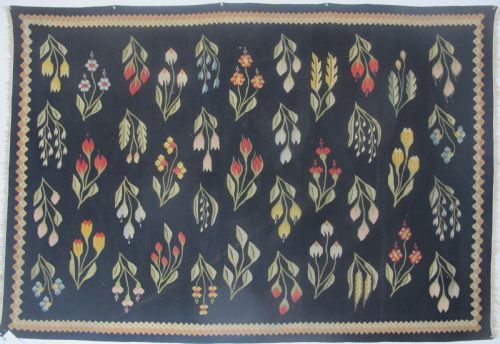
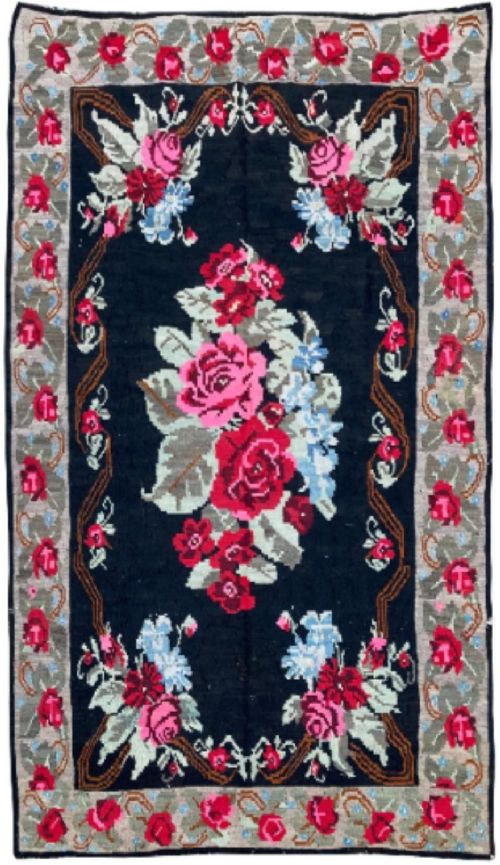
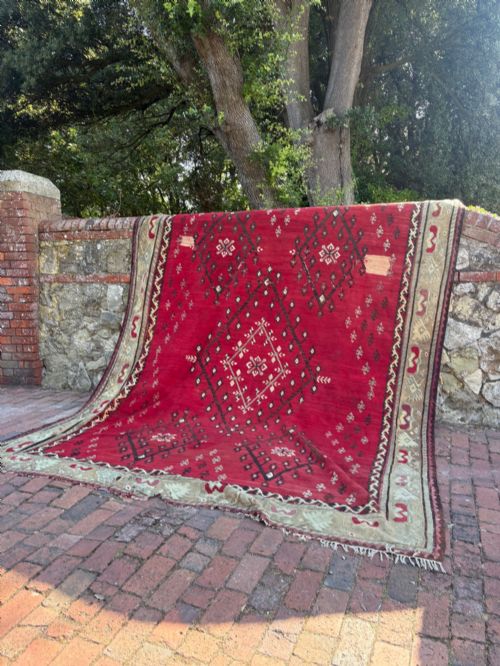
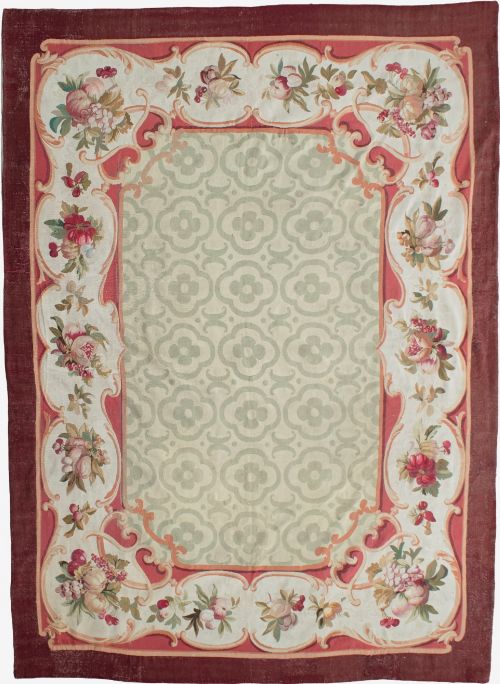
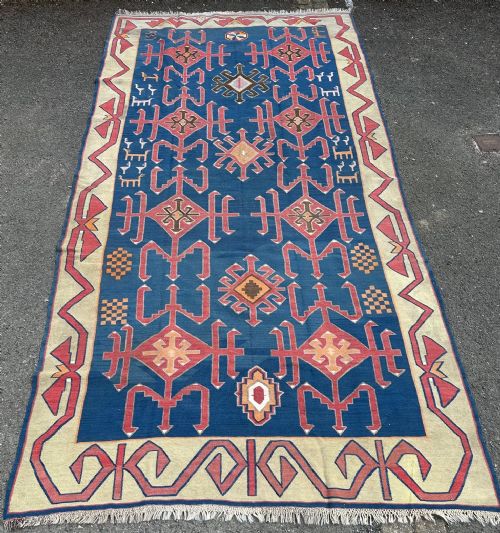
A woven wool flatweave carpet encompasses a diverse group of floor coverings and utility textiles created without a pile, relying instead on interlocking or supplementary weft threads to build geometric and floral patterns. When searching for a woven wool flatweave carpet, buyers encounter regional pieces originating from Caucasus, Anatolia, Persia, Central Asia, and Eastern Europe.
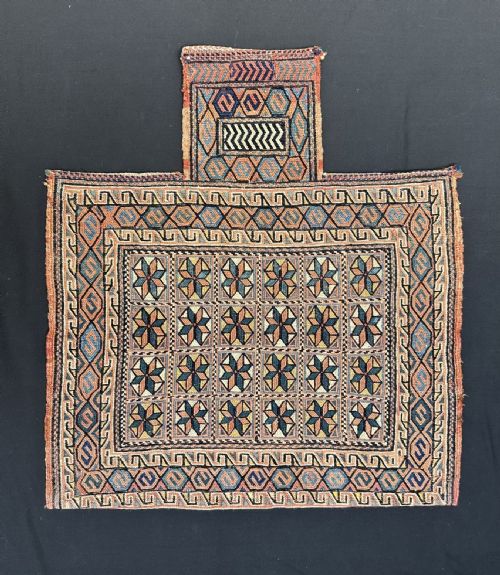
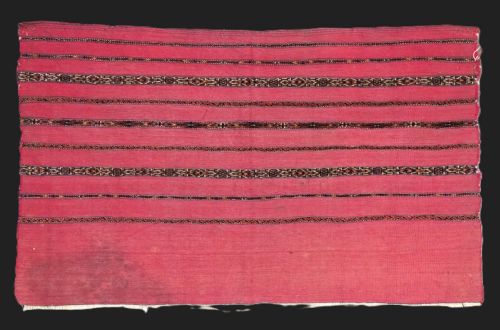
The selections span functional household items such as large room-size carpets, narrow runners, storage bags, and eating cloths produced by nomadic tribes and village weavers. These textiles date primarily from the nineteenth and early twentieth centuries, capturing the distinct aesthetic traditions of groups including the Qashqai, Yomut, Baluch, and Shahsavan.
Most examples meet on this page as kilims, soumaks, or tapestry-woven panels, reflecting the specific weaving methods prevalent in their respective geographic origins. Buyers select these items to introduce graphic motifs, texture, and historical depth to contemporary interiors.
Materials and construction methods
The foundation and surface of these textiles rely predominantly on wool, frequently paired with cotton for structural support in specific regional types. Artisans utilised hand-spun wool alongside natural dyes to build the robust surfaces observed across the inventory.
Weavers employed flat-weaving techniques where the coloured weft threads are beaten tightly against the warp, hiding the vertical threads entirely and creating crisp, geometric pattern boundaries. Certain pieces incorporate supplementary weft-wrapping or slit-tapestry construction to achieve intricate graphic arrangements.
The listings span nineteenth and early twentieth-century production, incorporating wool, cotton, and natural dyes across diverse regional styles.
Factors of quality and execution
Quality in these flatweaves stems from the density of the weave, the precision of the geometric or floral layout, and the harmonious integration of natural dye palettes. Finer examples display tight tension and meticulously executed slit-tapestry joins that maintain structural integrity across large expanses.
The condition of the wool, the retention of original borders, and the depth of colour variation resulting from natural dye lots further differentiate standard utility pieces from exceptional collector examples. Structural survival without compromising the integrity of the flat-woven fabric marks the upper echelon of these textiles.
The Woven Wool Flatweave Carpet Glossary
- Kilim
- A flat-woven carpet or rug produced by tightly interweaving warp and weft strands without creating a pile. This technique results in a lightweight, reversible textile featuring sharp geometric motifs.
- Soumak
- A brocade-like flat-weave technique where decorative weft threads are wrapped around the warp threads before continuing across the row. This method adds structural thickness and texture to the reverse side.
- Warp
- The stationary vertical threads stretched onto a loom that form the foundational skeleton of the textile. All weft threads pass over and under these parallel lines.
- Weft
- The horizontal threads passed through the warp to build the visible design and colour of the carpet. In flatweaves, these threads carry the full weight of the pattern.
- Sofreh
- A woven spread or cloth traditionally used for eating, kneading dough, or ritual meals. These items typically feature banded flat-weave designs created by nomadic groups.
Woven Wool Flatweave Carpet: Frequently Asked Questions
How do I clean a flatweave carpet?
Gentle regular vacuuming without a rotating brush roll prevents dust accumulation within the flat-woven wool fibres. Professional textile cleaning tailored to antique vegetable-dyed wool remains the safest method for addressing deeper soil.
Water saturation and harsh chemical detergents should be avoided to protect the natural dyes and prevent dye migration across the light and dark sections.
Can I use these rugs on stairs?
Narrow runner formats and sturdy flat-woven structures suit high-traffic hallway placements when paired with a quality underlay. The absence of a pile means they sit flat against steps without crushing.
Foot traffic will cause gradual wear, so rotating the placement periodically helps distribute the pressure evenly across the length of the textile.
What is the difference between a kilim and a carpet?
Traditional knotted carpets feature a raised pile created by individual yarn knots tied to the warp foundation. Flatweave carpets lack this pile entirely, relying instead on interlocked weft threads that produce a flat, tapestry-like surface.
This structural difference affects both the weight and flexibility of the textile, making flatweaves easier to fold, hang, or move.
How do I secure a rug on a wood floor?
A breathable, rubberised mesh underlay designed for antique rugs keeps the flatweave firmly anchored in place. This layer prevents slipping and stops the rug from bunching under foot traffic.
An appropriate underlay also allows air circulation beneath the wool fibres, protecting both the floor finish and the textile from moisture accumulation.