




Woven Wool Corridor Rug
A woven wool corridor rug brings texture and history to narrow passages, connecting rooms with traditional craft and deep indigo or madder tones.
Woven Wool Corridor Rug
A woven wool corridor rug provides a durable floor covering specifically proportioned for narrow hallways, galleries, and passage spaces in older properties. These pieces span production from the late nineteenth century into the early twentieth century, originating primarily from Persian, Caucasian, and Turkish workshops and tribal groups.
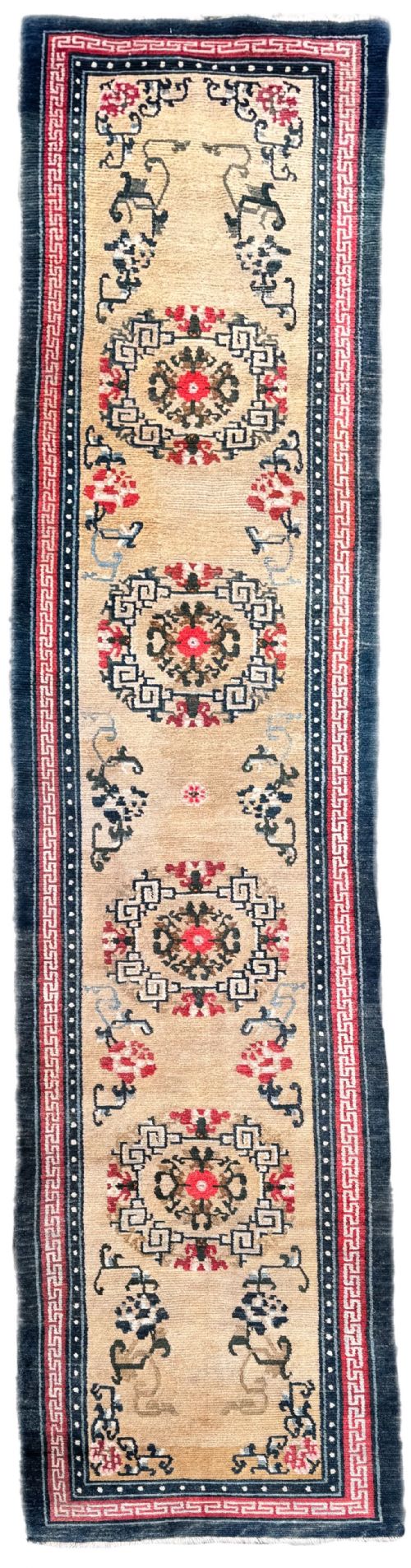
The format typically presents as an elongated rectangle, designed to fit spatial dimensions where standard carpets fail. Pieces on this page draw on traditions from regions such as Heriz, Bidjar, Kurdish districts, and the Caucasus, showing distinct local weaving habits.
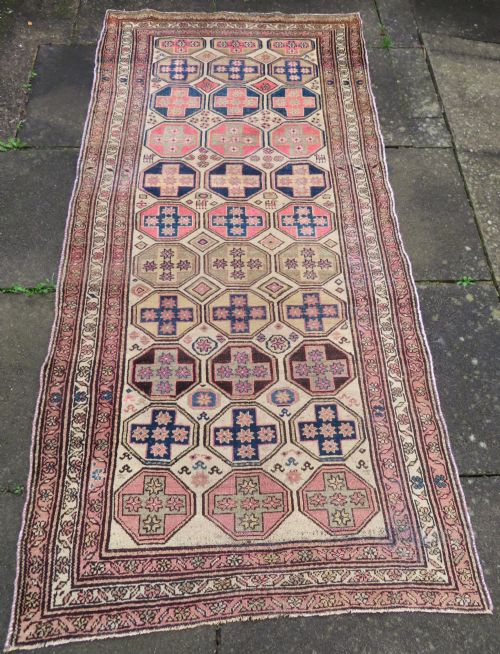
Buyers encounter formats ranging from room-sized kelleh carpets to exceptionally long, narrow runners stretching over seven metres. Such pieces combine utility with distinct regional medallion, shrub, or geometric designs handed down through generations of weavers.
Materials and construction
Construction relies on natural materials, predominantly wool and hand-spun wool piled onto cotton or wool foundations. Hand-spinning imparts slight variations in thickness and texture to the yarn, absorbing dye unevenly to create rich tonal depth across the surface.
Weavers tied dense knots onto warp and weft threads, finishing the edges with sturdy selvages to withstand centuries of foot traffic in busy corridors. Natural dyestuffs derived from plants and minerals provide the palette, yielding stable hues that age gracefully.
One remarkably narrow Moroccan Berber runner measures over four and a half metres long but spans a mere sixty-four centimetres across.
Judging quality in antique runners
Quality rests on the integrity of the wool, the precision of the knotting, and the stability of the foundation. Tighter knot counts and heavier wool piles ensure longevity in high-wear corridor environments, preserving the clarity of the underlying geometric or floral design.
Artistic execution distinguishes standard village output from superior tribal or workshop pieces. The handling of natural dyes, balance of proportion, and originality of border motifs separate routine utility textiles from collectable examples.
The Woven Wool Corridor Rug Glossary
- Kelleh
- A large format rug or carpet of extended proportions, narrower than a standard room carpet but broader than a runner. These rugs often served specific reception or corridor spaces in larger houses.
- Kilim
- A flat-woven textile produced without a pile by tightly interweaving warp and weft strands. These pieces function well in hallways due to their low profile.
- Warp
- The vertical threads stretched tightly on the loom that form the structural foundation of the rug. The exposed fringe at either end of a finished runner consists of these remaining threads.
- Weft
- The horizontal threads passed across and interlaced through the warp to secure the knots in place. Together with the warp, they create the grid that holds the wool pile.
- Medallion
- A central ornamental design motif placed in the field of the rug. These geometric or floral centerpieces often anchor the repeating patterns of tribal corridor carpets.
Woven Wool Corridor Rug: Frequently Asked Questions
How do I choose the right length for a hallway?
Measure the clear floor space of your corridor while leaving equal borders of bare floorboards exposed around the perimeter. This framing lets the proportions of the runner breathe within the passage.
Keep in mind that very long runners require straight corridors, whereas slightly shorter formats adapt better to hallways with doors opening near corners.
Are these antique runners durable enough for daily foot traffic?
Traditional village and tribal rugs were built for heavy domestic use on stone or wood floors. The density of hand-spun wool pile absorbs friction effectively.
Using a quality underlay beneath the runner prevents slip, cushions the foundation threads, and extends the working life of the textile significantly.
How do I identify a Kurdish tribal runner?
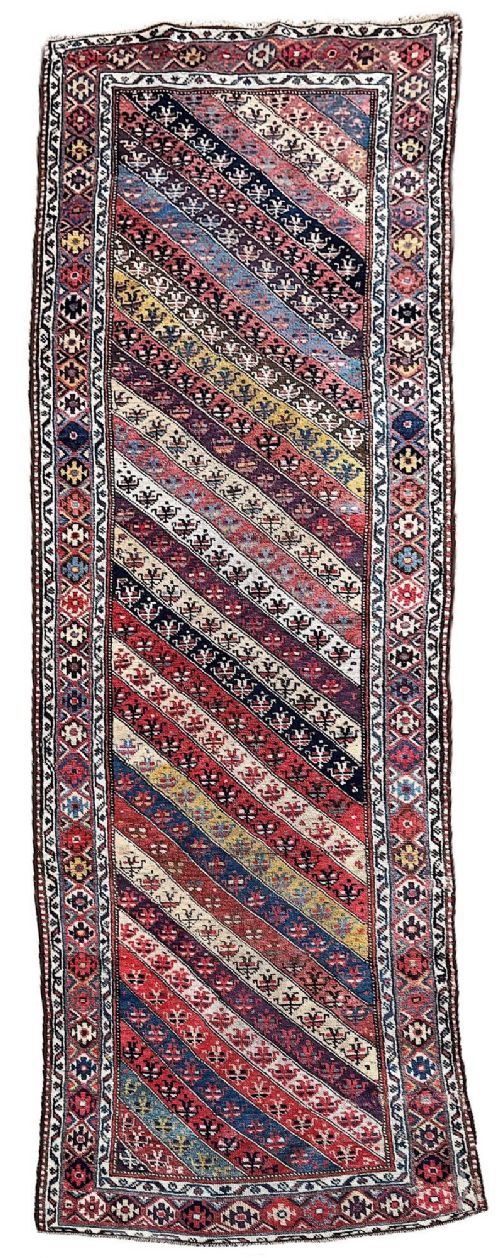
Kurdish pieces typically display robust, heavy structures with geometric latch-hook medallions or dense all-over shrub patterns. The wool is often thick and resilient.
Palette choices lean toward saturated indigo blues and earthy reds, reflecting the harsh mountain environments where these weavers lived and worked.
What is the difference between a runner and a kelleh?
Runners feature extreme length relative to their narrow width, suiting straight hallways and corridors. Kelleh formats are considerably broader while maintaining an elongated shape.
Kelleh carpets were traditionally laid along the longer sides of large reception rooms rather than narrow passage spaces.