



Woven Tribal Floor Mat
A woven tribal floor mat brings centuries of nomadic artistry and geometric storytelling directly into your living space.
Woven Tribal Floor Mat
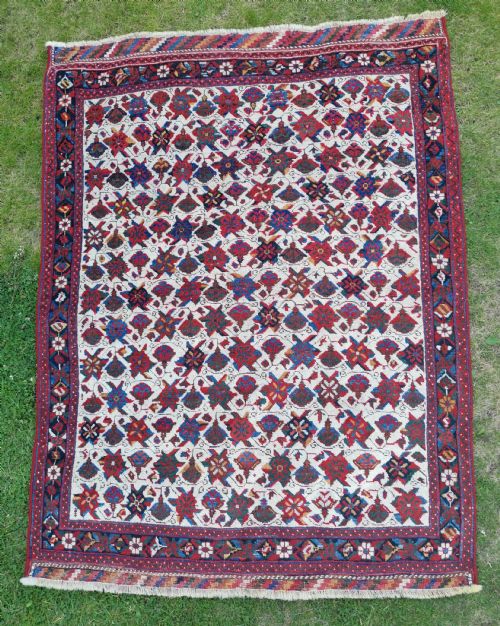
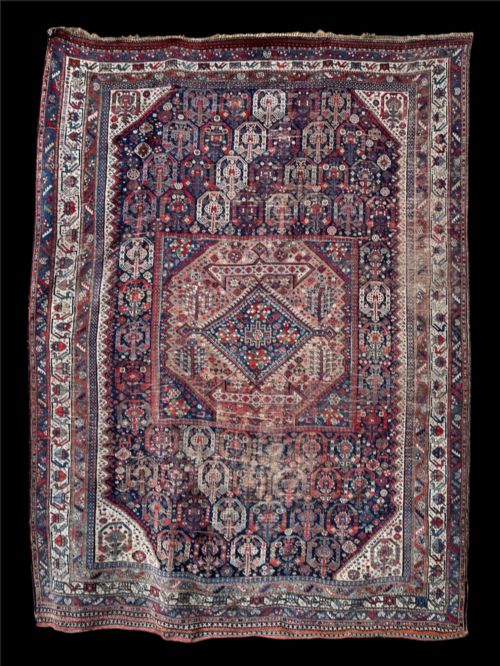
A woven tribal floor mat encompasses hand-knotted and flat-woven nomadic textiles originating from Persia, Central Asia, Anatolia, and the Caucasus. These utilitarian floor coverings include everything from large main carpets and village runners down to smaller saddlebags and prayer rugs. When browsing this selection, buyers frequently encounter pieces attributed to specific tribal confederations such as the Yomut, Baluch, Khamseh, and Afshar.
The aesthetic vocabulary relies heavily on repeating geometric motifs, medallion patterns, and stylised animal or plant forms handed down through generations. Dating spans from the late nineteenth century through to the early decades of the twentieth century, capturing a period when traditional village weaving still predominated. Forms range from compact hearth rugs to substantial room-sized carpets designed for nomadic or village dwellings.
Materials and Construction
Makers constructed these textiles using locally sourced wool for the pile and foundation, often supplemented by cotton for warp and weft threads in specific regional traditions. The yarn was spun by hand and dyed using natural colour sources to achieve rich, enduring palettes that mellow gracefully over decades. Weavers utilised upright looms, employing symmetrical or asymmetrical knotting techniques alongside flat-weaving methods such as soumak and kilim construction.
Structural integrity depended on tight packing of the knots and secure selvedges finished along the sides to prevent fraying. Specialised variations like the Soumak technique created raised surface patterns without cutting yarn, while prayer rugs incorporated architectural mihrab niches worked in dense wool pile.
One unexpected nineteenth-century Qashqai rug depicts the ancient architectural columns of Persepolis woven directly into its nomadic wool field.
Evaluating Quality and Execution
Superior examples distinguish themselves through the precision of the knotting, the complexity of the design layout, and the depth achieved by natural dyes. Finer execution shows in the crispness of geometric outlines and the harmonious balance of secondary borders surrounding the main field.
The choice of materials and the integrity of the surviving pile or flat-weave structure dictate the overall grade of the piece. Master weavers achieved exceptional results through meticulous preparation of wool and careful control over dye saturation, resulting in textiles that retain their graphic impact after a century of use.
The Woven Tribal Floor Mat Glossary
- Gul
- A repeating octagonal or medallion motif frequently found in Turkmen and Baluch tribal carpets. It often served as an identifying emblem for specific clans or nomadic groups.
- Kilim
- A flat-woven carpet produced without a pile by tightly interweaving warp and weft strands. This technique creates a lightweight textile with identical patterns visible on both sides.
- Soumak
- A flat-weaving technique where coloured weft threads are wrapped around the warp threads in a herringbone pattern. This method adds structural weight and distinct surface texture.
- Heratti
- A repeating floral pattern composed of a central rosette enclosed by a diamond lattice and flanked by curved leaves. It appears across numerous Persian and village carpet traditions.
Woven Tribal Floor Mat: Frequently Asked Questions
Can I place these mats in high-traffic areas?
Sturdy wool construction and dense knotting allow many tribal rugs to withstand everyday movement in hallways and living spaces. Using a breathable, high-grade underlay prevents slipping and cushions the foundation against floor friction.
Delicate flat-weaves or prayer rugs with low pile benefit from placement in lower-traffic zones to minimise wear. Rotating the textile periodically ensures even exposure to foot traffic and sunlight.
How are different tribal regions identified?
Specific design vocabulary, colour combinations, and structural weaving techniques point directly to the producing tribe or region. Yomut carpets feature distinct gul motifs, while Baluch pieces often incorporate deep indigo grounds and camel hair accents.
Edge finishes, selvedge wraps, and border arrangements provide further clues for attribution. Comparing knot counts and material choices helps separate village workshops from nomadic productions.
What does natural dye mean for these rugs?
Natural dyes derive from plant, insect, and mineral sources gathered locally by weavers before the widespread adoption of synthetic alternatives. These colorants interact uniquely with wool fibres over time, producing subtle tonal variations known as abrash.
Instead of fading uniformly, natural colours develop a soft patina that enhances the graphic clarity of geometric patterns. This chemical interaction ensures the palette remains harmonious as the textile ages.