


Handwoven Luri Rug
A handwoven luri rug brings the nomadic artistry of western Persia into your home through geometric motifs and tribal textiles.
Handwoven Luri Rug
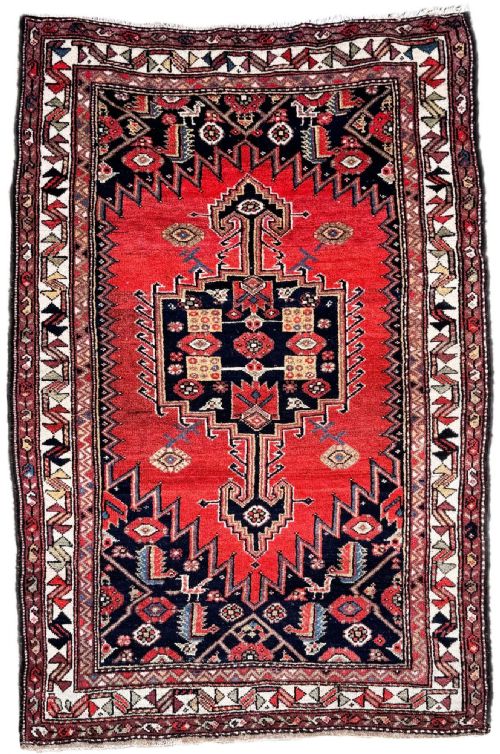
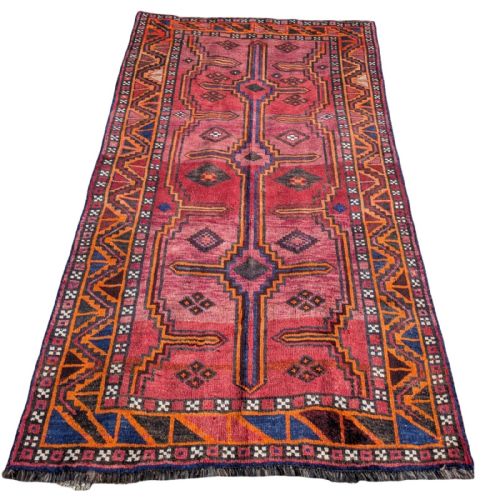
A handwoven luri rug represents the nomadic textile traditions of the Lur tribes originating from Luristan in western Persia. These pieces include area rugs, larger carpets, runners, and utility items such as half saddle-bags and wheat-sacks known as tacheh.
You will most frequently encounter antique area rugs and carpets produced from the late nineteenth century through the early twentieth century. These flatweaves and pile-woven floor coverings often share design interests with neighbouring Qashqai and Khamseh groups.
How they were made
Traditional production relies entirely on wool, utilising hand-spun wool for both the foundation warps and the thick surface pile. This spinning method produces varied yarn thicknesses that absorb dye unevenly, giving the finished textile a subtle textural depth.
Nomadic weavers employed natural dyes to colour the fleece, creating rich tones that mellow gracefully over decades of exposure and use. The structures range from standard pile carpets to utilitarian double-faced saddle bags and storage sacks.
Some surviving wheat-sacks still carry the dust of western Persia in their heavy woollen folds.
What varies in quality
The standard of a handwoven luri rug rests upon the quality of the wool and the tightness of the knotting or weave. Finer pieces demonstrate greater control over the tribal geometry while retaining the characteristic spontaneity of nomadic production.
Design complexity also marks out superior examples, particularly those featuring detailed tree of life compositions or pictorial elements such as birds and flowers. Condition plays a role, with intact borders and original side-cordings elevating the standing of older pieces.
The Handwoven Luri Rug Glossary
- Kelleh
- A large format rug or narrow carpet traditionally proportioned for specific room dimensions. These elongated formats are well suited for hallways and spacious interiors.
- Tacheh
- A traditional tribal wheat-sack or storage bag woven by nomadic groups in western Persia. They often display intricate flatwoven or pile techniques used for carrying provisions.
- Luristan
- A mountainous region in western Persia historically inhabited by the Luri tribes. This geographic area shaped the distinct nomadic textile traditions seen in these rugs.
- Saddle-bag
- A utilitarian double-pouch woven for transport on pack animals during tribal migrations. Surviving examples are often separated into individual half-bags or preserved intact.
- Tree of Life
- A symbolic motif depicting a branching plant rising from the earth, representing eternal life and paradise. Weavers rendered this design in various stylised forms across tribal carpets.
Handwoven Luri Rug: Frequently Asked Questions
How do I identify a luri rug?
Look for the characteristic geometric motifs, nomadic tribal designs, and structural connections to Luristan in western Persia.
Many examples share visual affinities with Qashqai and Khamseh weaving traditions.
How should I clean my rug?
Gentle surface cleaning and professional specialist care suited to antique wool textiles will preserve the natural dyes and hand-spun fibres.
Avoid harsh chemical treatments that can strip the lanolin from the wool.
What is a tacheh?
A tacheh is a traditional wheat-sack or storage container woven by Luri and Bakhtiari tribes for holding provisions.
These functional pieces demonstrate the same decorative woolwork and natural dyeing techniques found in larger floor rugs.