
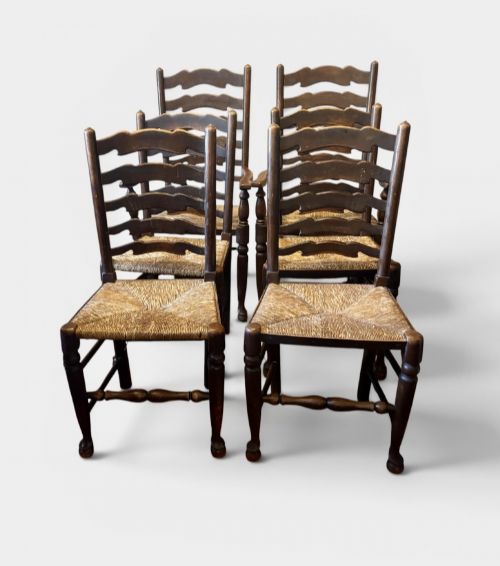


Woven Seat Country Chair
A woven seat country chair brings tactile texture and honest regional carpentry directly into domestic spaces.
Woven Seat Country Chair
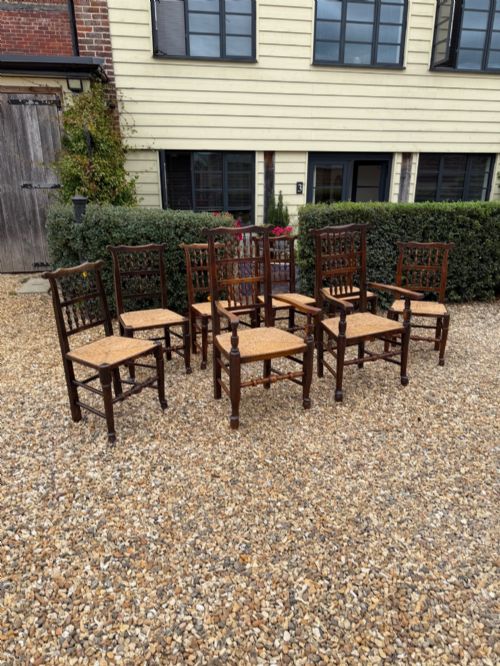
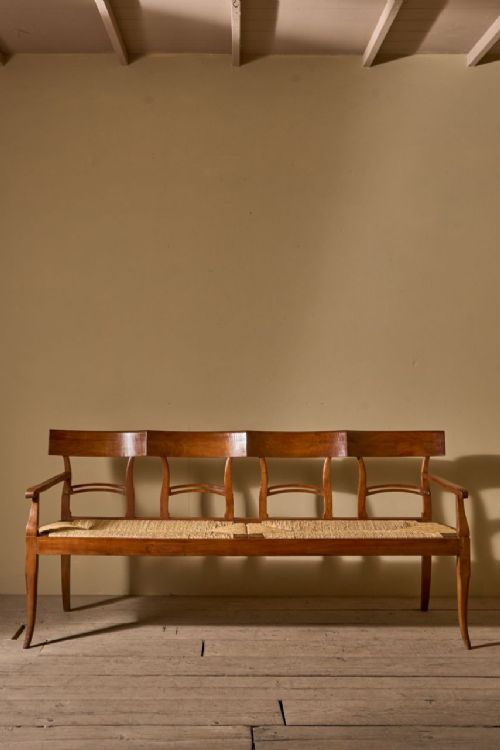
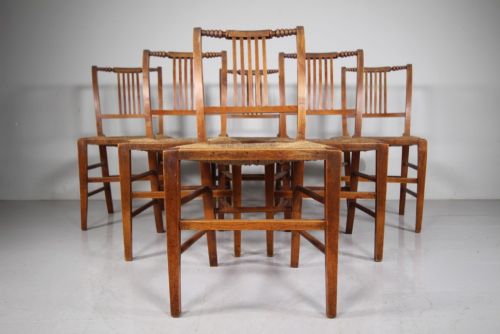
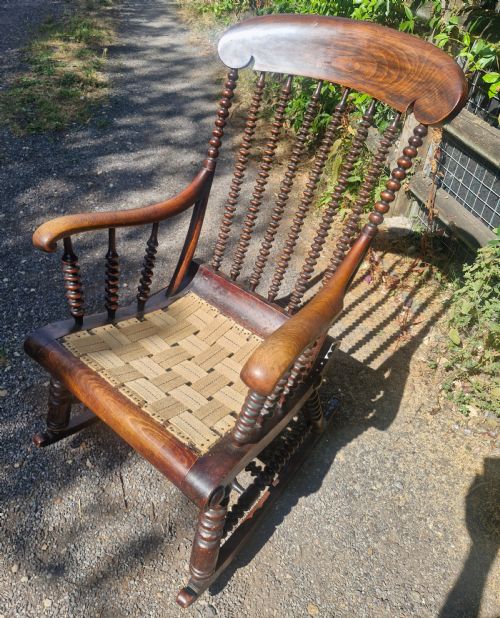
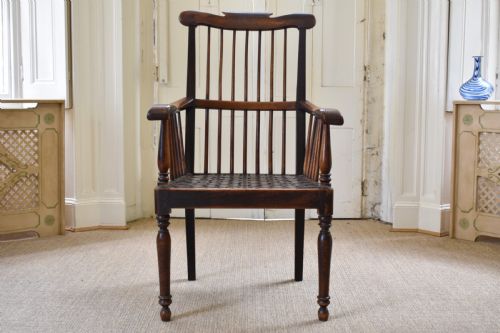
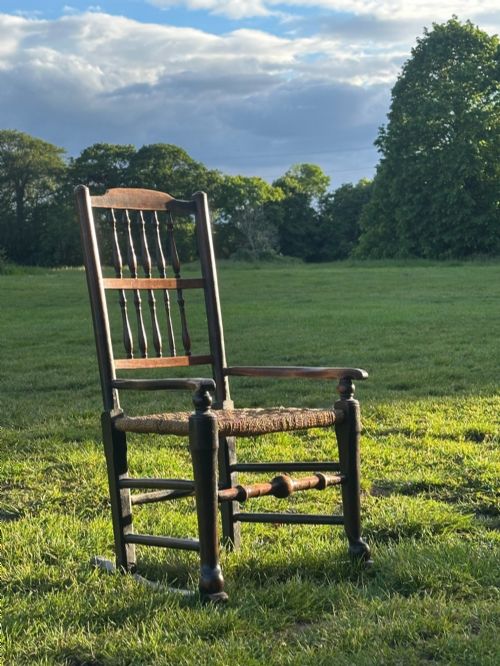
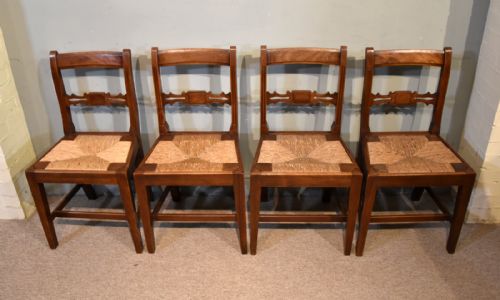
When buyers search for a woven seat country chair, they encounter seating fashioned from local timbers with plant-fibre woven pads. These pieces range from simple single chairs to sets of dining chairs and rocking chairs.
The most common examples on this page date from the eighteenth century through to the early twentieth century, spanning English, French, and Irish vernacular traditions.
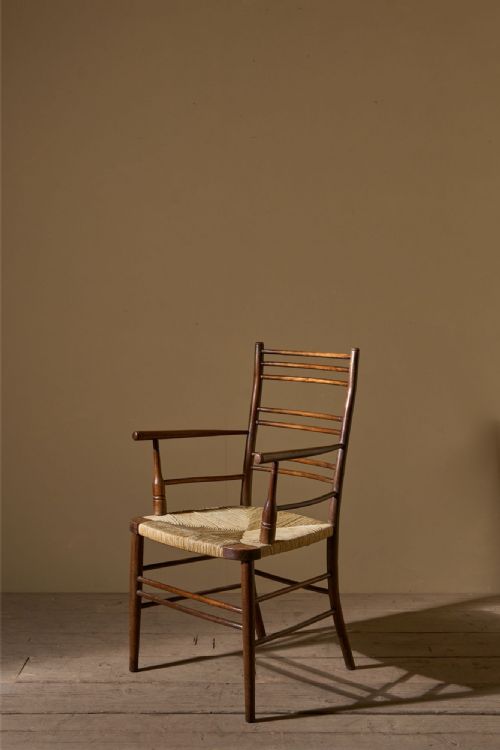
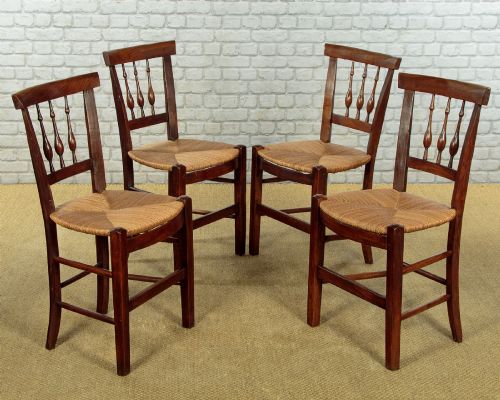
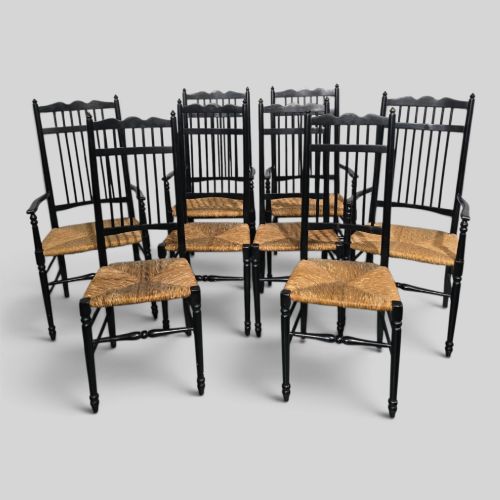
Forms include ladderbacks, spindlebacks, and armchairs produced by regional makers or later Arts and Crafts firms.
How they were made
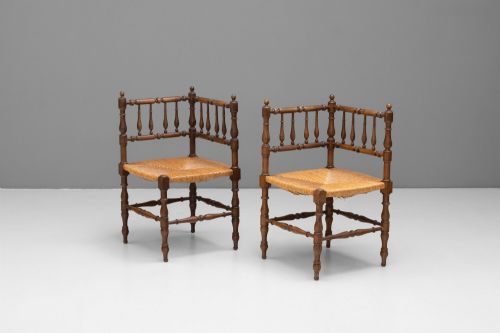
Constructed primarily using native hardwoods such as elm, ash, oak, fruitwood, and laburnum, these chairs rely on traditional jointing techniques. Turnery and bending shape the frames of ladderbacks and spindlebacks.
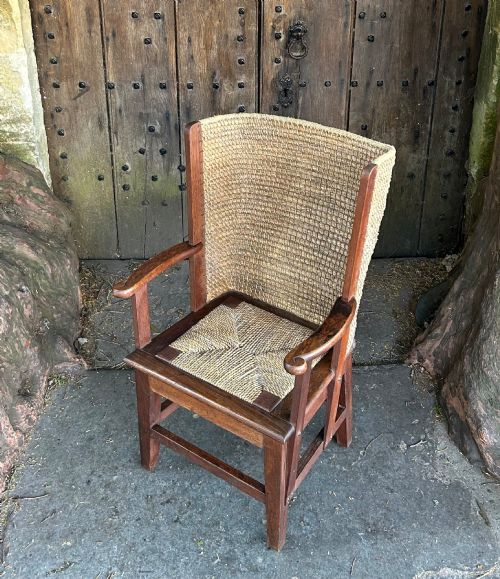
Seats are tightly woven using natural materials including rush, straw, and súgán, wrapped around the wooden rails to create a durable, supportive surface for daily sitting.
Periods represented span from the eighteenth century through Victorian farmhouse iterations to early twentieth-century Arts and Crafts movements.
What varies in quality
Quality rests in the selection and seasoning of the timber, where well-figured elm or clean fruitwood yields a more handsome frame. The tightness and regularity of the rush or straw weaving also define the standard of the piece.
Proportion and structural integrity separate everyday utility work from finer regional craftsmanship, especially in retained original surfaces and balanced turnery.
Morris and Co·Liberty and Co·Dryad of Leicester·Howard and Sons·Edward Gardener
The Woven Seat Country Chair Glossary
- Rush
- A marsh plant used for seating material. It is twisted into cords and hand-woven to form resilient chair pads.
- Ladderback
- A chair style featuring horizontal slats between the rear upright posts. This form allows for lightweight yet sturdy construction.
- Súgán
- An Irish term for twisted straw or hay rope. It serves as a traditional seating material for vernacular chairs.
- Spindleback
- A chair design incorporating vertical turned wooden rods in the backrest. This construction lightens the visual weight of the frame.
- Vernacular
- Objects built by regional craftsmen to local traditions rather than strict academic design. These pieces prioritise practical function and local materials.
Woven Seat Country Chair: Frequently Asked Questions
How do I care for a rush seat?
Keep rush seating away from damp environments and direct heat sources to prevent the natural fibres from becoming brittle.
Clean gently with a dry brush and apply occasional light moisture only if recommended for the specific material.
Are these chairs comfortable for daily use?
Most country chairs are designed with ergonomic considerations appropriate to their era, offering supportive ladderbacks and resilient woven pads.
Adding a loose cushion can adjust the height and comfort for modern sitting habits.
How can I tell the age of a country chair?
Examine the tool marks, timber shrinkage, and construction joints to understand the period of manufacture. Hand-turned spindles and native wood combinations often point to regional eighteenth or nineteenth-century workshops.
Later Arts and Crafts interpretations generally display documented maker labels or distinct stylistic revivals.