

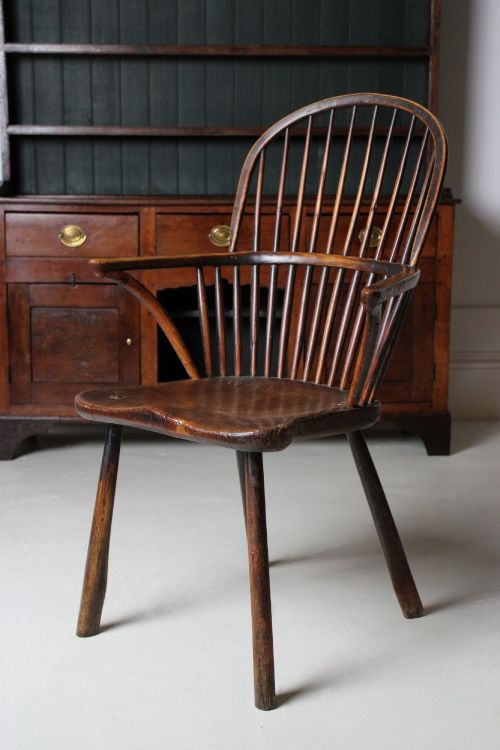
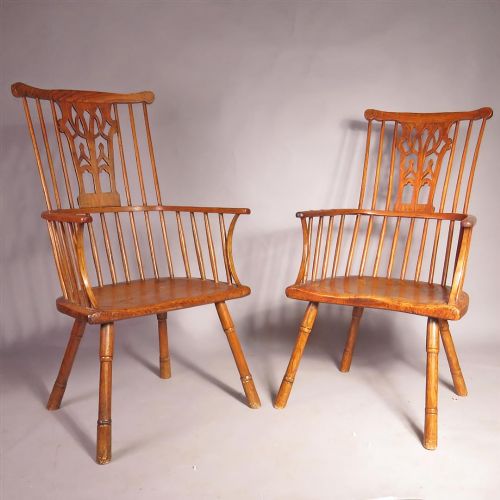
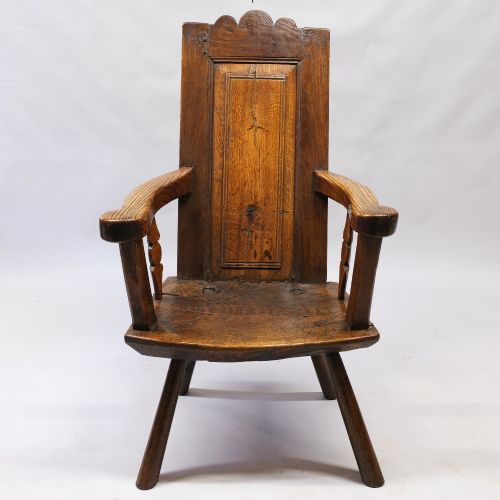
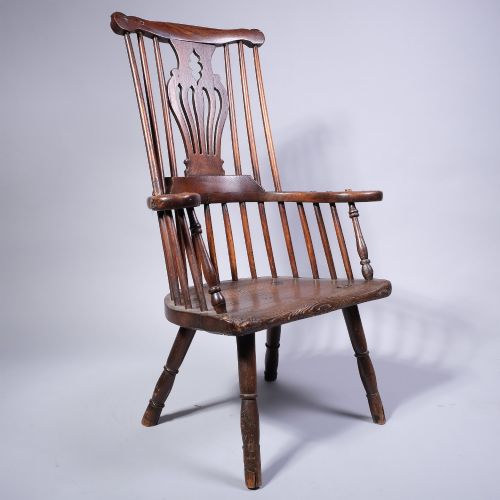
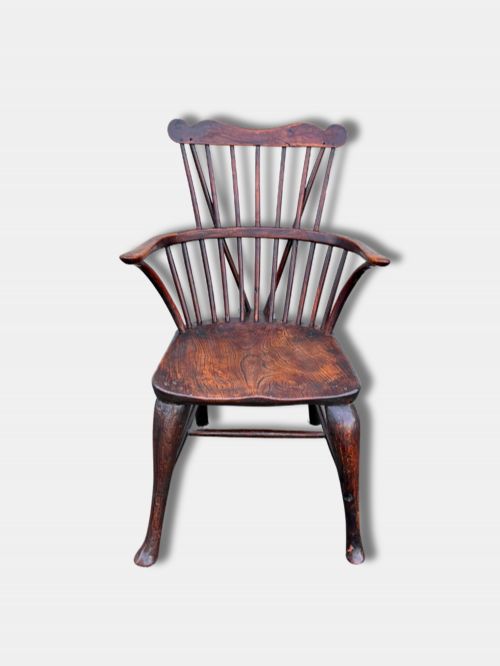
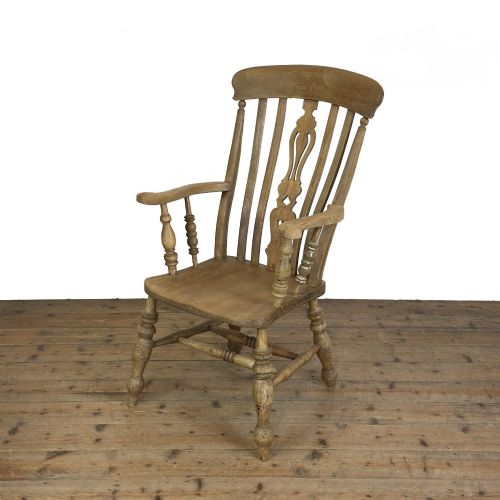
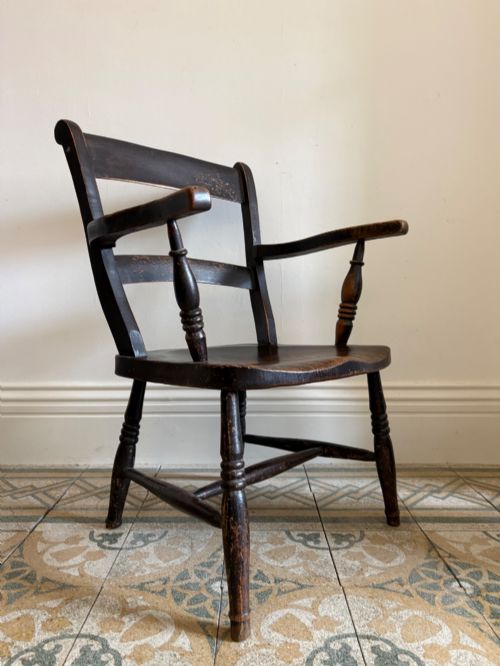
Vernacular Elm Armchair
A vernacular elm armchair brings honest regional craftsmanship and tactile timber warmth into a modern room.
Vernacular Elm Armchair
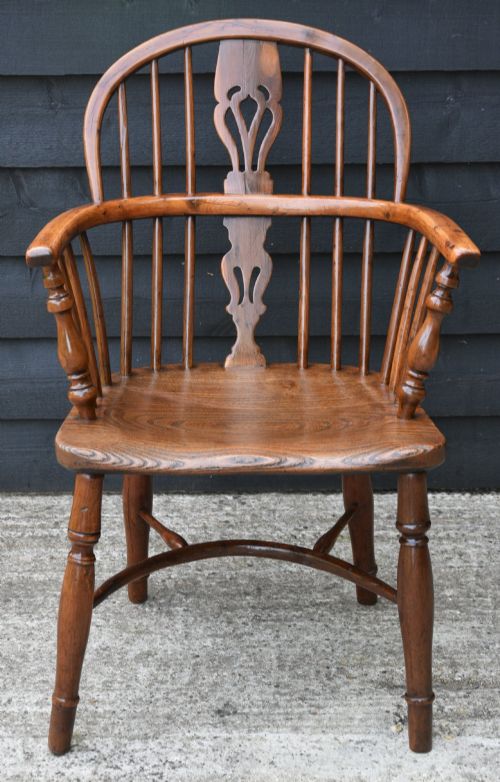
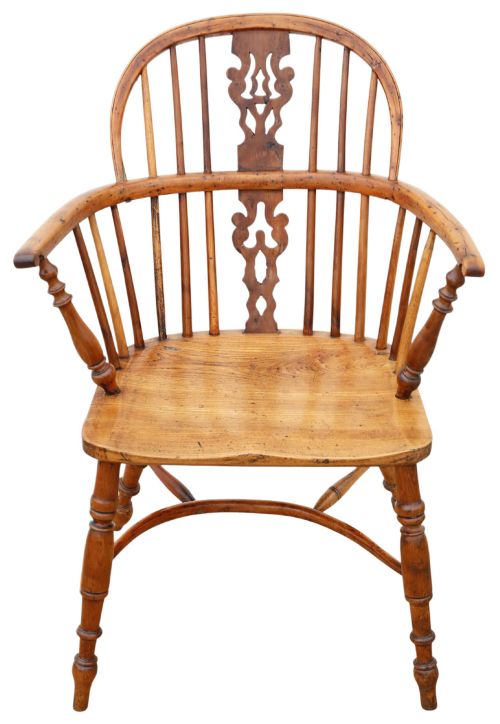
A vernacular elm armchair represents the practical domestic seating traditions of British country makers working across the eighteenth and nineteenth centuries. These pieces combine local timbers with functional regional designs that evolved for everyday use in farmhouses and cottages.
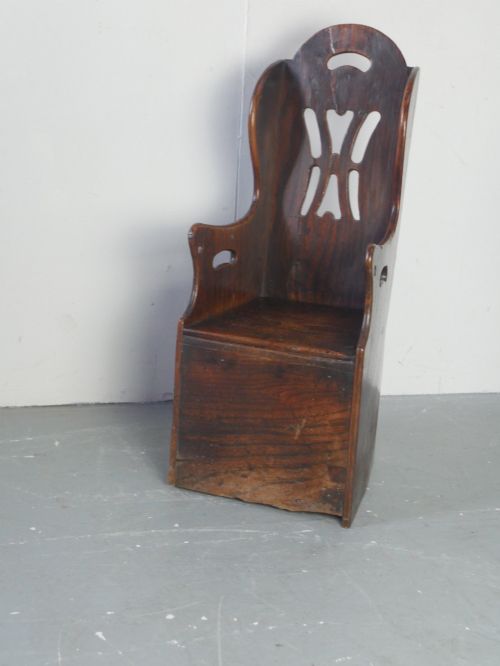
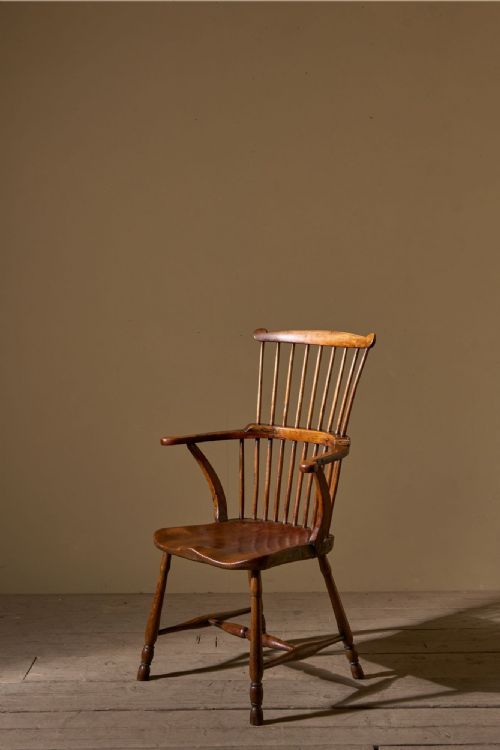
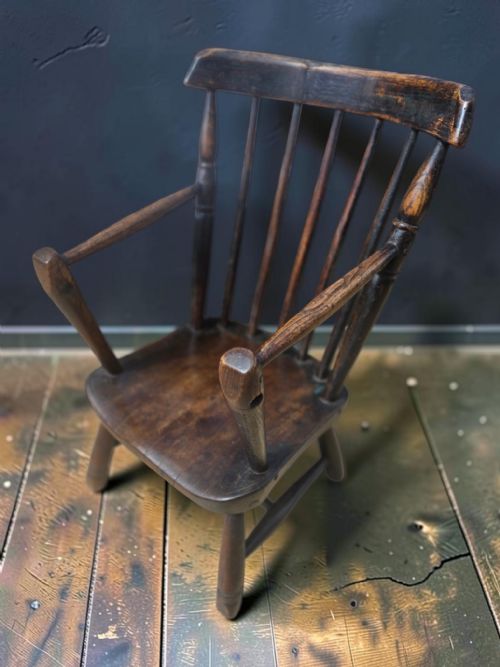
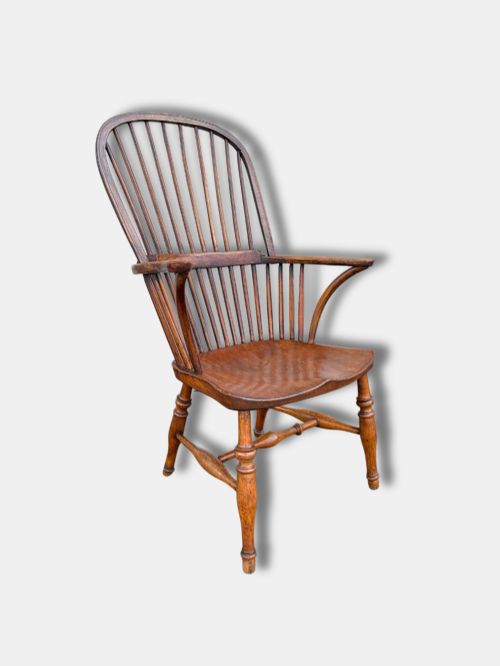
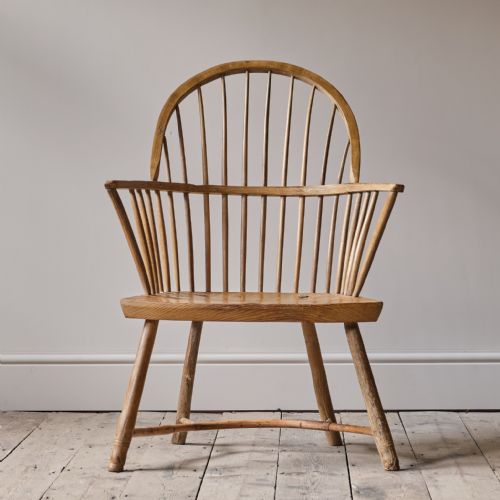
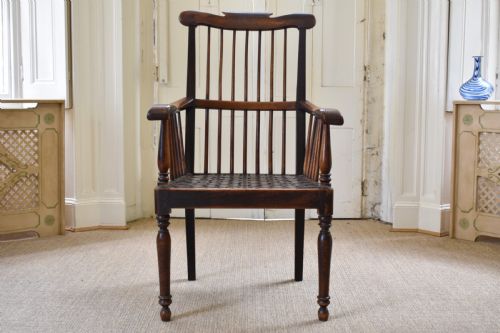
The versions most commonly met on this page date from the Georgian and Victorian periods, taking forms such as Windsor chairs, stickbacks, and comb backs. They range from sturdy adult armchairs down to smaller child's chairs and high chairs.
Makers utilised native woods available in their immediate surroundings, resulting in regional variations from the Thames Valley to the West Country and Wales. Each seat reflects the straightforward utility demanded by rural households of the era.
Materials and Construction
The construction relies on contrasting native timbers, pairing durable elm seats with ash, yew, beech, or laburnum for the spindles, legs, and bentwood bows. Elm was chosen for the solid seat plank because its interlocking grain resisted splitting when driven with heavy legs and spindles.
Makers shaped the components using traditional bodging and woodworking techniques, turning uprights on pole lathes and steam-bending flexible wood for comb backs and hoop backs. Seats were deeply saddled by hand with adzes and scorps to provide comfortable contours for the sitter.
Joints were typically secured using wedged tenons and through-wedging, creating rigid frames without the need for complex metal fixings. Secondary woods like fruitwood or oak often appear alongside rush for woven seating elements.
Listings feature examples spanning the eighteenth and nineteenth centuries, including Georgian and Victorian periods, constructed primarily from elm, ash, yew, and beech.
Factors of Quality
Quality in these rural chairs rests on the harmony of the timber selection and the boldness of the turning. Better examples display rich figuring in the elm seat and well-chosen yew or ash for the spindle work, showing considered design rather than hurried utility.
Proportion and structural balance dictate the visual success of the piece, particularly in the sweep of the arm bow and the rake of the legs. Chairs that retain their original timber surfaces and patination without excessive intervention demonstrate superior longevity and historical integrity.
Fred Walker Rockley
The Vernacular Elm Armchair Glossary
- Comb back
- A Windsor chair style featuring a horizontal crest rail supported by vertical spindles, resembling the teeth of a comb. This construction offers robust back support.
- Windsor chair
- A chair built with a solid wooden seat into which the legs and back spindles are separately inserted. They are celebrated for their sturdy, pegged frame construction.
- Stickback
- A chair design where turned or cleft vertical spindles form the back rest without a solid central splat. It is a common format in vernacular country seating.
- Yew
- A durable, highly figured native timber prized for its rich colour and decorative grain. Makers utilised it for high-status Windsor chair bows and arm components.
- Bodging
- The traditional craft of green woodturning carried out in woodland workshops. Bodgers produced standardised chair parts ready for final assembly.
Vernacular Elm Armchair: Frequently Asked Questions
What is a vernacular elm armchair?
A vernacular elm armchair is a traditional country seat made by regional woodworkers using native British timber. These chairs were built for practical domestic use rather than following formal metropolitan fashions.
They showcase regional building styles from areas like the Thames Valley and West Country, combining solid elm seats with bentwood and spindle components.
How do I identify an 18th-century chair?
Eighteenth-century examples often feature comb backs, panel backs, or primitive stickback designs constructed entirely with hand-cleaved and turned native woods. The patination on the elm seat usually shows deep wear accumulated over generations of daily domestic service.
Construction details like through-wedged legs and simpler tool marks help distinguish these earlier pieces from later nineteenth-century adaptations.
Where were these chairs made?
These chairs originated in rural workshops across the British countryside, with distinct regional traits emerging from locations such as Wales, the Thames Valley, and the West Country. Local woodsmen and bodgers utilised whatever suitable timber grew nearby, including ash, beech, yew, and laburnum.
This localized production resulted in diverse forms tailored to the specific traditions of each rural community.
How should I live with one?
Living with a country chair involves placing it in a stable environment away from direct heat sources and dramatic humidity shifts, which can affect old timber and rush. Allowing the piece routine breathing space lets its historic character anchor a modern interior.
They function well as desk chairs, fireside seats, or decorative accents in living spaces.