

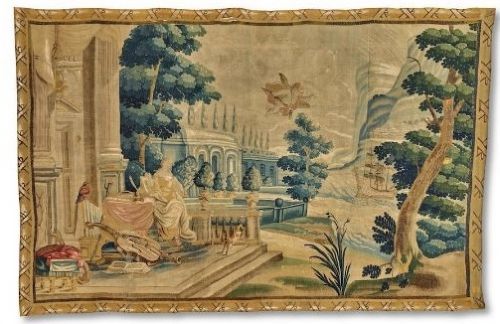


Woven Landscape Wall Hanging
A woven landscape wall hanging brings centuries of textile artistry indoors, offering rich foliage, mythological scenes and historic verdure to transform a bare wall.
Woven Landscape Wall Hanging
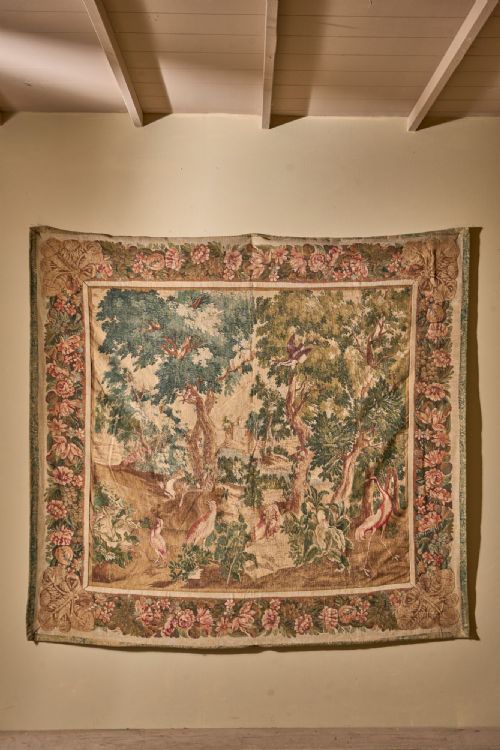
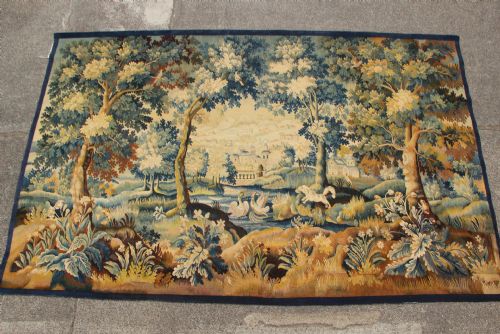
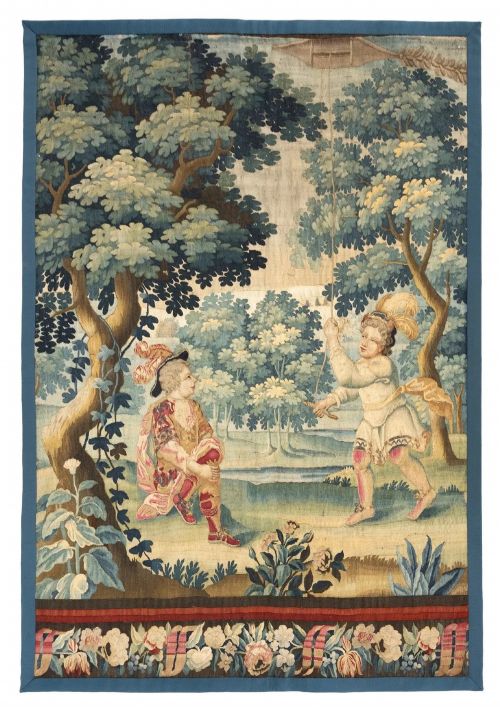
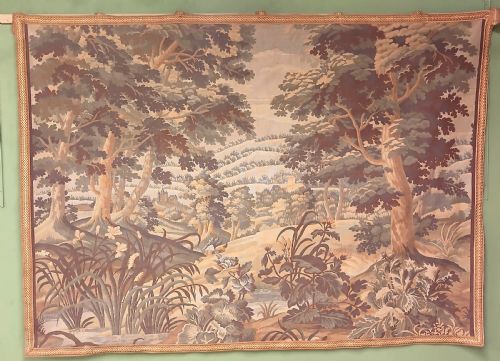
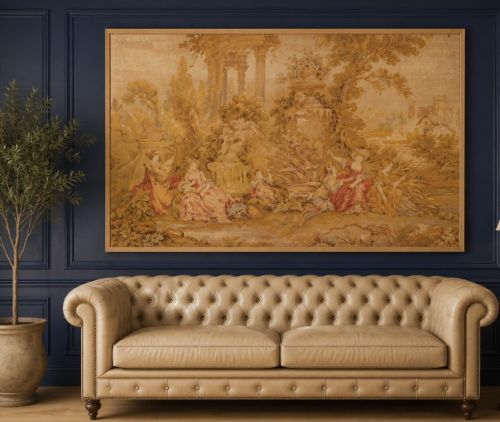
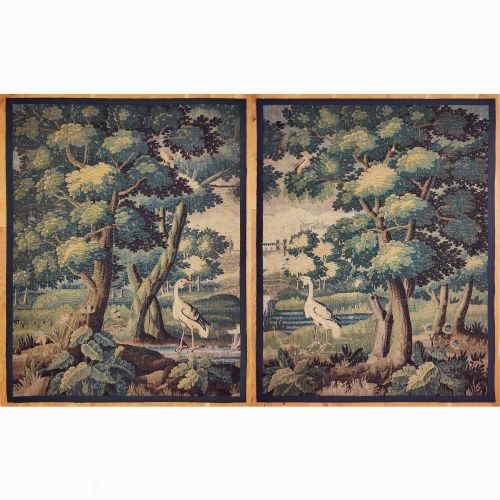
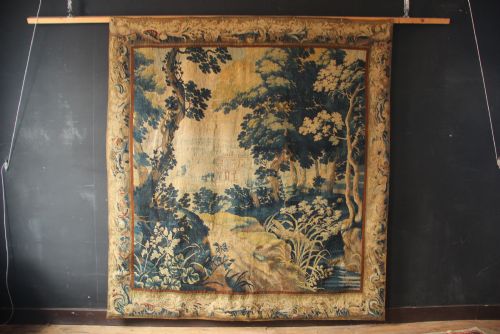
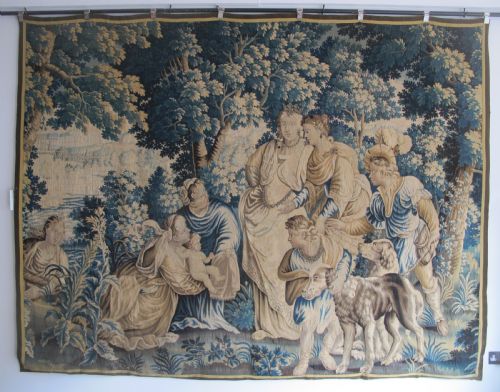
When searching for a woven landscape wall hanging, collectors encounter large wall tapestries and framed tapestry panels spanning from the seventeenth century to the twentieth century. These works depict verdure scenes filled with dense foliage, mythological subjects, and biblical narratives originating primarily from Flemish and French workshops.
The most common examples on this page are seventeenth-century and eighteenth-century Flemish and Aubusson verdure tapestries, alongside nineteenth-century French panels and twentieth-century pictorial rugs. Pieces range from grand scale wall hangings exceeding three metres to narrow horizontal panels designed for specific architectural spaces.
Originating from renowned centres of textile production such as Aubusson and Audenarde, these hangings function as substantial interior furnishings. They capture pastoral landscapes and wooded vistas that define the classic European textile tradition.
Materials and construction methods
These textiles are constructed primarily from natural fibres including wool, silk, linen, and cotton. Weavers utilised these materials to create complex textures and nuanced colour gradations within the landscape scenery.
Heavier wall hangings often incorporate structural support through timber frames or wood surrounds, occasionally complemented by brass elements. The combination of durable wool warps and finer silk or wool wefts allowed workshops to achieve intricate pictorial detail.
Geographic origins represented on this page include Flemish centres like Audenarde alongside French locations such as Aubusson.
Distinctions in quality and execution
Quality in these textiles depends upon the density of the weave, the complexity of the landscape design, and the survival of the original palette. Finer examples display subtle shading in the foliage and crisp rendering of architectural or mythological figures.
The choice of materials also dictates standing, with higher grade pieces integrating silk alongside wool to achieve luminous highlights in the verdure. Scale and proportion further differentiate the work, as grander dimensions require sustained skill across the loom.
The Woven Landscape Wall Hanging Glossary
- Verdure tapestry
- A wall hanging dominated by lush plant foliage, trees, and greenery, often featuring distant hills or birds. These scenes formed a staple of European weaving traditions.
- Aubusson
- A town in France celebrated for its carpet and tapestry production from the seventeenth century onwards. Aubusson pieces typically showcase refined pastoral and architectural motifs.
- Flemish Baroque
- A vibrant artistic style originating in Flanders during the seventeenth century. Tapestries from this tradition display theatrical composition and deep, dramatic perspective.
- Warp
- The vertical threads held taut on a loom before the coloured weft threads are passed through. The quality of the warp affects the structural integrity of the textile.
- Weft
- The horizontal threads woven back and forth across the warp to create the visible design. Skilled weavers manipulated these threads to build tone and texture in the landscape.
Woven Landscape Wall Hanging: Frequently Asked Questions
How do I hang a heavy tapestry?
Large wall hangings require even distribution of weight across a sturdy timber frame or a specialised hanging batten. Fixing directly into wall studs ensures the textile remains secure without straining the historic fibres.
For framed panels, proper picture-hanging hardware suited to the wall type is essential. Keep the piece away from direct sunlight to protect the natural wool and silk dyes.
How do I clean an antique tapestry?
Gentle surface dust removal using a soft brush or low-suction vacuum through a protective mesh screen maintains the fabric. Avoid vigorous rubbing or water treatments, which can weaken old wool and linen.
Professional textile conservators should handle deep cleaning or structural repairs to prevent damage to the historic weave.
How do I identify an Aubusson piece?
Aubusson tapestries generally exhibit lighter, pastel-leaning palettes and refined French decorative motifs such as pastoral vistas or chateau grounds. The weave structure and characteristic subject matter align with traditions specific to the French region.
Comparing the stylistic elements with documented examples helps confirm the origin of the workshop.