





Wool Landscape Tapestry
A wool landscape tapestry brings historic forests, fields, and mythical scenes directly to an interior wall through centuries of textile art.
Wool Landscape Tapestry
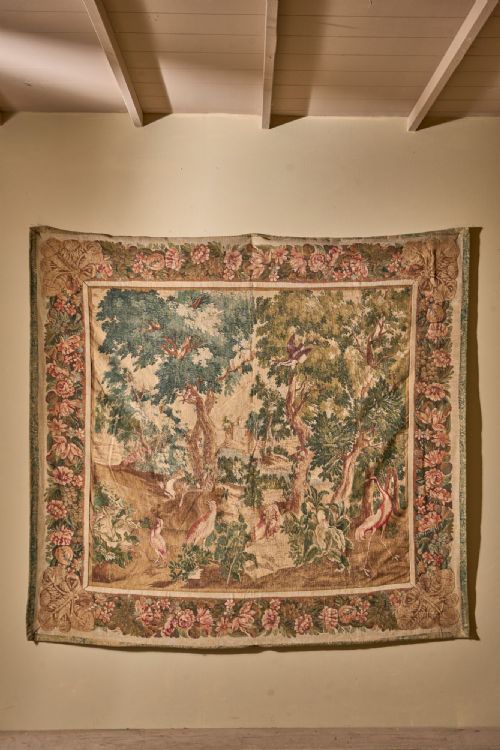
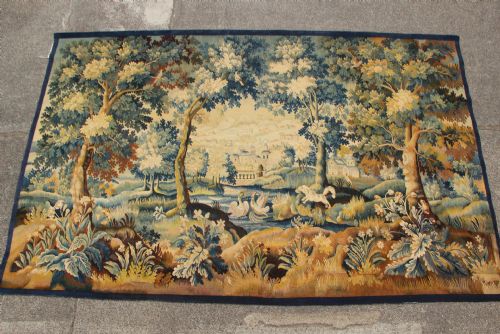
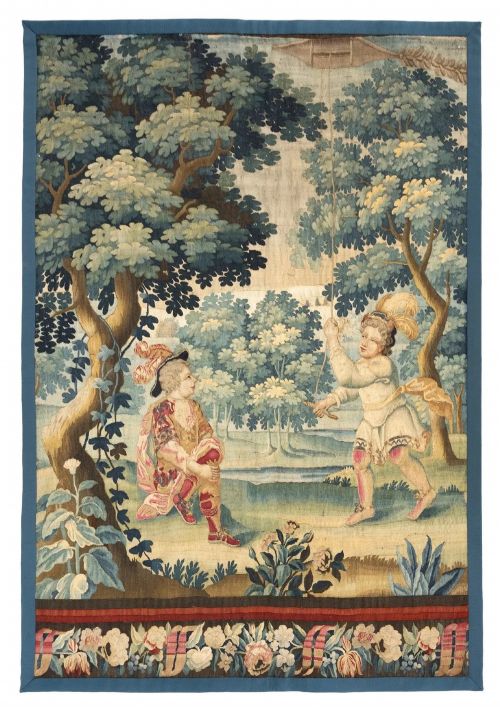
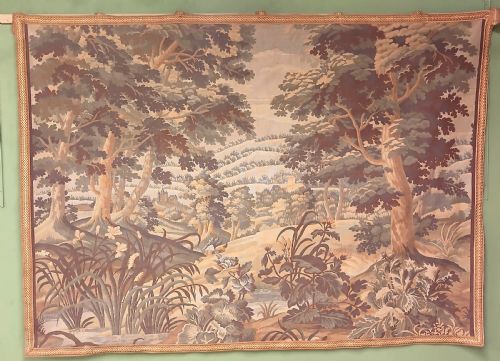
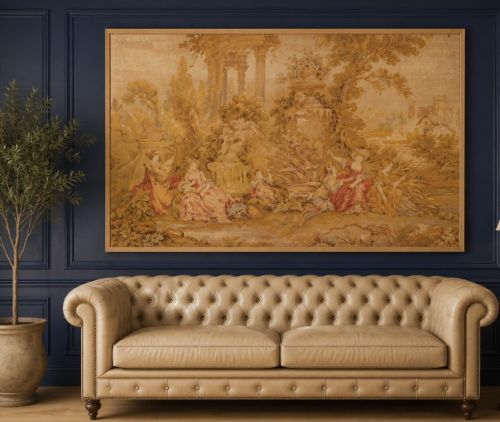
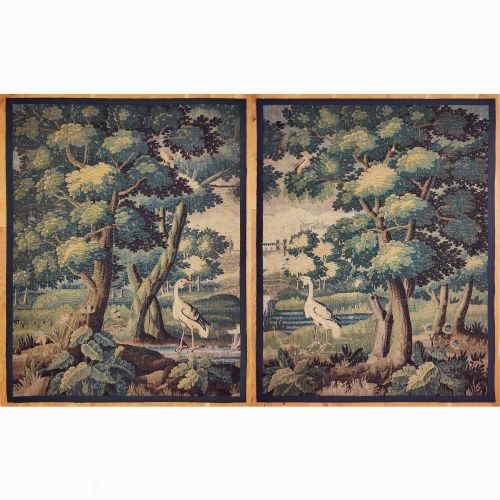
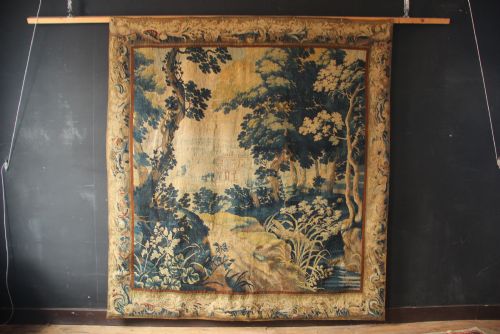
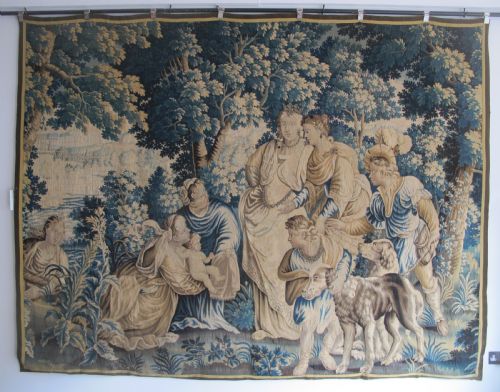
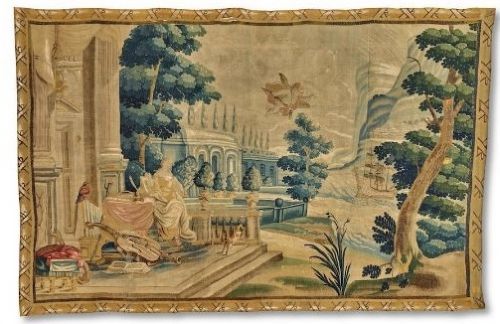
A wool landscape tapestry represents a major textile tradition spanning the seventeenth, eighteenth, and nineteenth centuries, featuring works originating from Flemish and French centres such as Aubusson and Audenaarde. Buyers searching for a wool landscape tapestry frequently encounter verdure scenes depicting lush foliage, trees, and gardens, alongside grand mythological and biblical narratives.
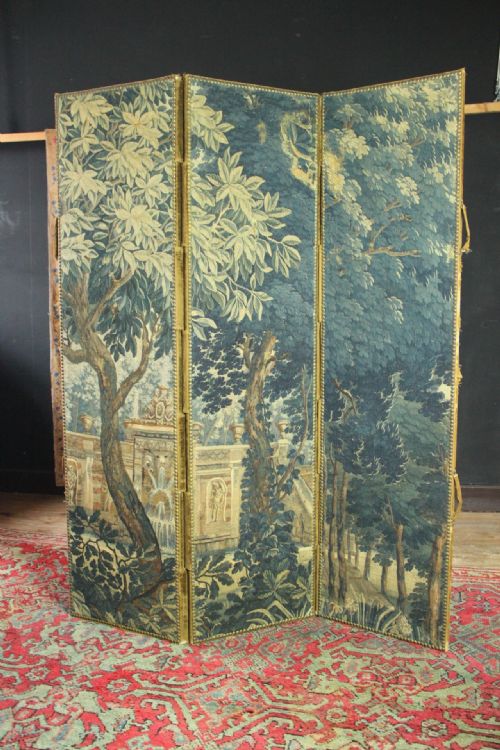
The surviving pieces take various decorative forms, including large wall hangings, framed wall art, folding screens, and detailed needlework pictures created in gros and petit point. These textiles served historically to insulate stone walls while displaying wealth, artistic taste, and narrative skill through woven wool, silk, and cotton yarns.
Originating largely from European workshops, these works demonstrate regional variations in composition and palette, ranging from the deep greens and blues of seventeenth-century Flemish pieces to the lighter pastoral tones of nineteenth-century French production. The selection reflects both grand scale architectural panels and more intimate domestic needlework works.
Measures of quality
Quality in these textiles rests upon the density of the weave, the complexity of the landscape design, and the survival of the original colour palette over centuries. Higher grade pieces display sophisticated perspective, detailed botanical rendering in verdure panels, and careful integration of silk highlights against the wool ground.
The condition of the fibres and the structural integrity of the textile panel also govern distinction, alongside the quality of any associated framing or mounting executed in period materials.
Listings feature wool, silk, cotton, and linen textiles spanning the seventeenth to the twentieth centuries.
The Wool Landscape Tapestry Glossary
- Verdure tapestry
- A textile depicting a landscape dominated by trees, plants, foliage, and often birds or animals. These pastoral scenes formed a major part of seventeenth and eighteenth-century Flemish and French production.
- Aubusson
- A town in France renowned for its tapestry weaving industry from the seventeenth century onward. Works from this origin typically display lighter, more refined pastoral or floral compositions.
- Gros point
- A coarse counted-thread embroidery stitch used in needlework pictures and tapestries. It provides durability and a bold texture well suited to background foliage and architectural elements.
- Audenaarde
- A Flemish centre famous for historical tapestry weaving. Pieces attributed to this location often feature rich verdure and narrative motifs characteristic of seventeenth and eighteenth-century Flanders.
Wool Landscape Tapestry: Frequently Asked Questions
How do I hang a large antique tapestry?
Large wall tapestries require even weight distribution to prevent distortion of the wool fibres over time. Traditional methods involve sewing a sturdy canvas sleeve to the reverse and sliding a flat wooden batten or metal rod through it.
Avoid hanging textiles in direct sunlight or damp environments, as wool and silk yarns are sensitive to ultraviolet fading and moisture fluctuations.
What is a verdure tapestry?
A verdure tapestry is a specific type of textile art focusing on plant life, trees, forests, and occasionally animals or distant chateaux. These scenes were immensely popular in seventeenth and eighteenth-century Flemish and French workshops.
The dominant greens and earth tones were designed to bring the outside landscape into grand stone interiors.
How can I tell a Flemish piece from an Aubusson?
Flemish pieces from the seventeenth and early eighteenth centuries typically feature deeper, moodier palettes with dense foliage and heavy architectural or mythological themes. Aubusson works often lean towards lighter French Baroque and Rococo aesthetics with more open pastoral compositions.
Weaving densities and regional motifs also offer clues to their specific origins.