




Verdure Landscape Tapestry
A verdure landscape tapestry brings deep woodland foliage and distant chateaux into a room through centuries of woven textile artistry.
Verdure Landscape Tapestry
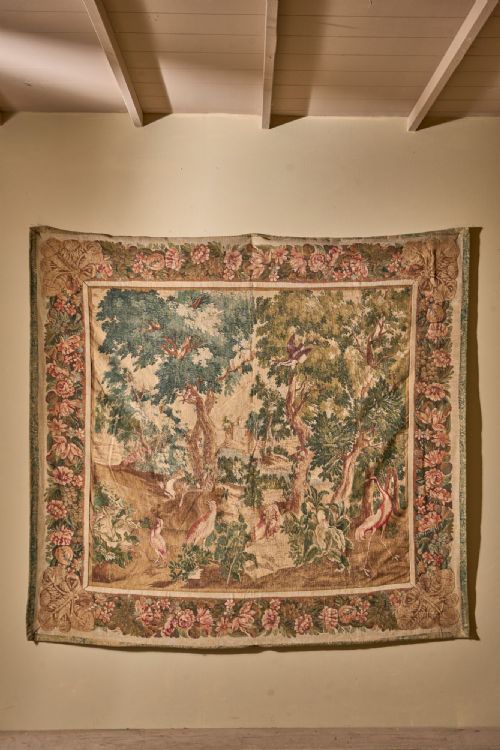
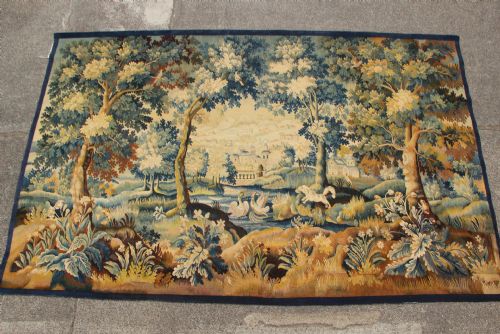
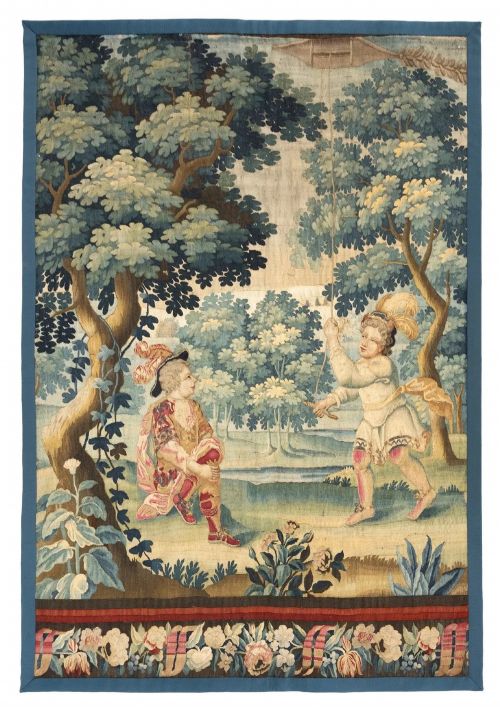
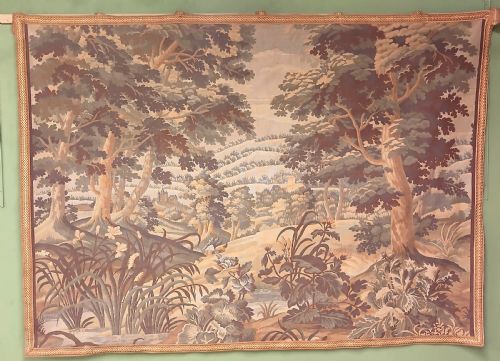
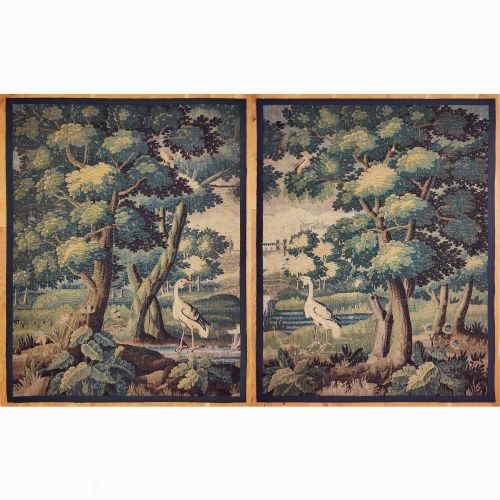
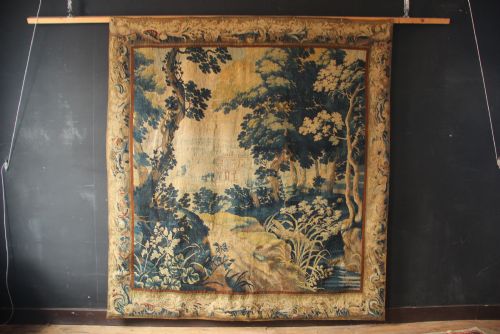
A verdure landscape tapestry displays lush botanical scenes dominated by trees, foliage, and often birds or distant architecture. These large wall hangings and panels transform an interior with textured depictions of nature.
The pieces available span from the seventeenth century through to the nineteenth century, originating from weaving centres in Flanders, Aubusson, and Audenarde. Wall tapestries predominate, alongside occasional folding screens.
Earlier examples display the rich palette of Flemish Baroque and seventeenth-century traditions, while later nineteenth-century French pieces continue the pastoral aesthetic with lighter tones and decorative balance.
Materials and construction
These textiles rely on a combination of wool, silk, cotton, and linen yarns to build depth and tactile variation across the woven surface. Wool provides the heavy structural body and earthy greens, while silk introduces luminous highlights to foliage and water.
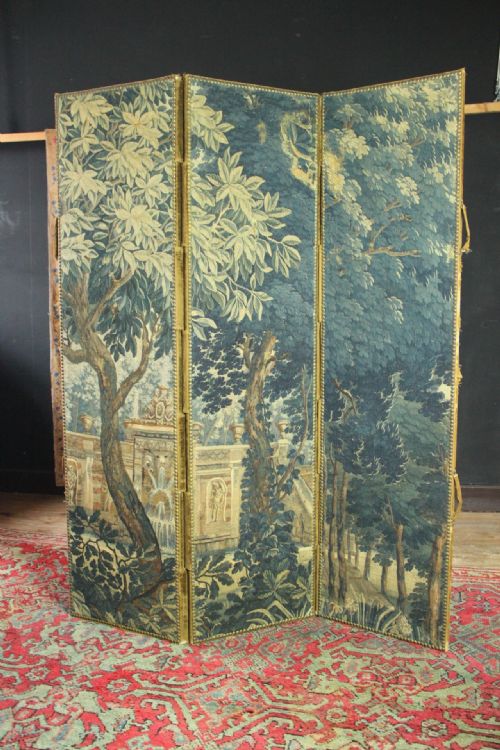
Mounting and framing occasionally incorporate wood and brass, particularly on folding screen formats that adapt the textile for freestanding interior use. Weavers utilised interlocking and hatching techniques to blend shades of green and brown seamlessly.
Materials recorded across current pieces include traditional combinations of wool, silk, cotton, linen, supported by occasional wood and brass framing.
Assessing quality in antique tapestries
The gradation of tone and density of botanical detail separate finer panels from simpler compositions. Master weavers achieved botanical variety in leaves and trees through careful dye selection and tight weave structures.
Preservation of the original yarn integrity and colour saturation dictates the visual impact of the piece. Subtle shifts in silk highlights and the retention of deep indigo and verdant green tones reflect superior workshop execution.
The Verdure Landscape Tapestry Glossary
- Verdure tapestry
- A textile featuring a landscape design dominated by plants, trees, and foliage, often populated by birds or animals. These works served both to insulate stone walls and to decorate grand interiors.
- Aubusson
- A town in central France renowned for its tapestry production, particularly known for pastoral and floral designs. Workshops here produced notable wall hangings from the seventeenth century onwards.
- Flemish Baroque
- An artistic style originating in Flanders during the seventeenth century, characterised by dramatic movement and rich, heavy ornamentation. Tapestries from this tradition display dense, theatrical foliage.
- Warp and weft
- The foundational structural elements of woven textiles, where vertical warp threads support the horizontal weft threads carrying the design colours. The interplay of these threads creates the pictorial surface.
Verdure Landscape Tapestry: Frequently Asked Questions
Where should I hang a large tapestry?
Large wall tapestries require a substantial wall space away from direct sunlight to protect the natural wool and silk fibres from fading. Placing them in principal rooms or hallways allows the expansive botanical scenes to anchor the interior proportion.
Ensure the hanging method distributes the weight evenly across the top edge without straining the fabric. Using a concealed wooden batten or a specialist sleeve attached to the reverse prevents distortion over time.
How do I date an old tapestry?
Dating relies on stylistic markers within the foliage, border designs, and the specific colour palette typical of known weaving centres. Seventeenth-century Flemish works typically display dense, dark canopies and robust architectural elements, while nineteenth-century French pieces often exhibit lighter compositions.
Examining the types of fibres used and the regional characteristics of the weave provides further chronological context. Comparing the piece to documented examples from workshops in Aubusson or Audenarde narrows the period of origin.
What is a verdure screen?
A verdure screen is a functional folding furniture piece inset with panels of landscape tapestry rather than hung directly on a wall. These portable items allowed owners to block drafts or divide large rooms while maintaining a decorative botanical theme.
The textile panels on screens are mounted into wooden frameworks, frequently accented with brass hardware. They combine the artistry of historic weaving with practical interior zoning.