
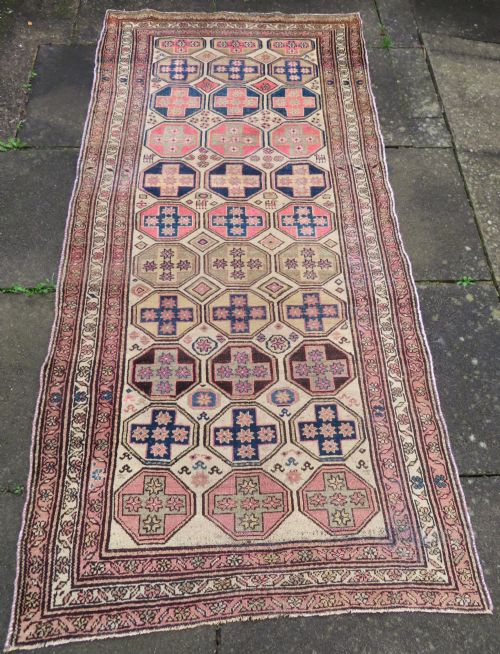
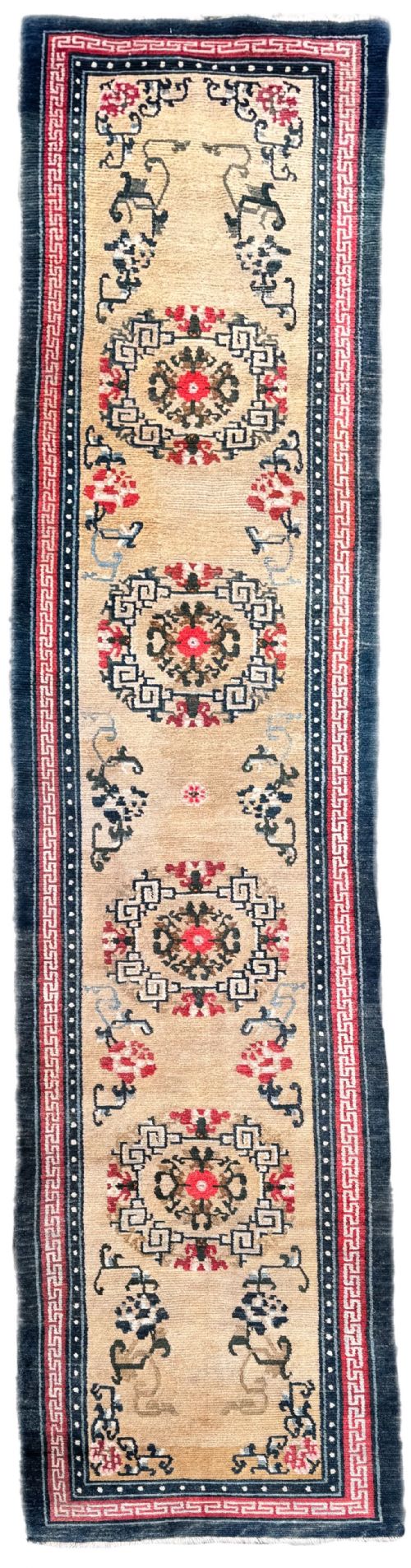


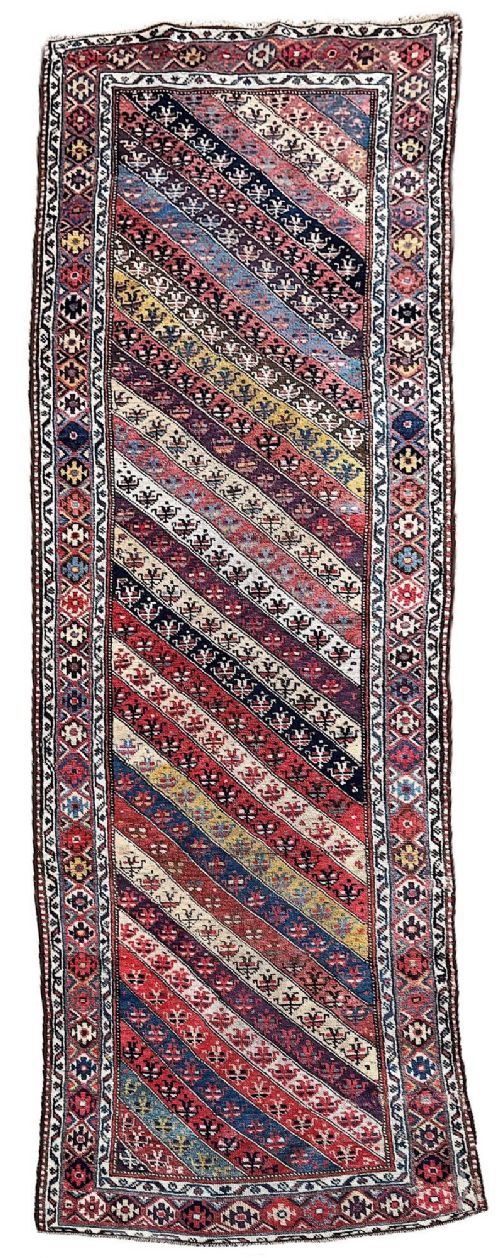


Woven Corridor Rug
These woven corridor rug pieces are long, narrow floor coverings designed to line hallways, built from wool using traditional tribal and village methods.
Woven Corridor Rug
A woven corridor rug is primarily an elongated runner format intended to fit domestic passages, galleries, and landings. The examples seen here encompass regional village and tribal workshops from across the nineteenth and early twentieth centuries.
Buyers meet varied regional styles on this page, including Kurdish, Heriz, Bidjar, and Caucasian weaving traditions. These pieces combine utility with distinct geometric and floral medallion designs suited to narrow spaces.
How they were made
The material structure relies predominantly on wool for the pile and foundation yarns, sometimes accompanied by cotton foundations in specific village productions. Artisans utilise hand-spun wool to build a durable surface that withstands high-traffic areas.
Weavers knot or flatweave these textiles on vertical looms, applying natural dyestuffs to achieve rich colour variations. The density of the weave dictates the sharpness of the pattern, whether structured medallions or all-over shrub designs.
Listings span production dates from the mid-nineteenth century through the 1930s, featuring wool and cotton materials across Persian, Caucasian, and Turkish styles.
What varies in quality
The standard of a piece depends heavily on the integrity of the wool foundation and the tightness of the knotting. Finer weaving allows for crisper geometric definition and greater durability underfoot in busy hallways.
Proportion and scale also separate standard village output from superior examples, particularly in exceptionally long formats that maintain straight, unwarped edges.
The Woven Corridor Rug Glossary
- Runner
- A long, narrow carpet format specifically proportioned for corridors, hallways, and staircases. These pieces measure significantly longer than they are wide.
- Kelleh
- A rectangular carpet format that is longer than a standard room rug but wider than a typical corridor runner. It serves intermediate spatial requirements.
- Kilim
- A flatwoven carpet or runner produced without a pile by tightly interweaving warp and weft threads. This technique yields a lightweight, reversible textile.
Woven Corridor Rug: Frequently Asked Questions
Where should I place a woven corridor rug?
These runners suit long hallways, narrow entryways, and passages where narrow floor coverings soften footfall and protect wooden floorboards.
Their elongated proportions also function effectively alongside long gallery walls or in transitional spaces between primary rooms.
How do I care for an old wool runner?
Regular gentle vacuuming without a rotating brush roll prevents dust accumulation within the wool pile. Professional cleaning suited to antique textiles preserves the natural lanolin in the fibres.
Rotating the piece periodically ensures even wear across high-traffic sections of the corridor.
Are these runners made with natural dyes?
Most pieces from these periods utilise traditional dyestuffs derived from plants and minerals. These materials yield complex, rich tones that age gracefully over decades.
Subtle variations in colour within the field often indicate batch shifts in the dye vats used by village weavers.
How do I identify a Kurdish tribal runner?
Kurdish pieces frequently incorporate bold geometric motifs, latch-hook borders, and sturdy wool foundations designed for heavy domestic use. Their construction tends to feel robust and substantial in the hand.
Design elements like dragon borders or all-over shrub patterns often point toward specific regional weaving groups within Kurdistan.