
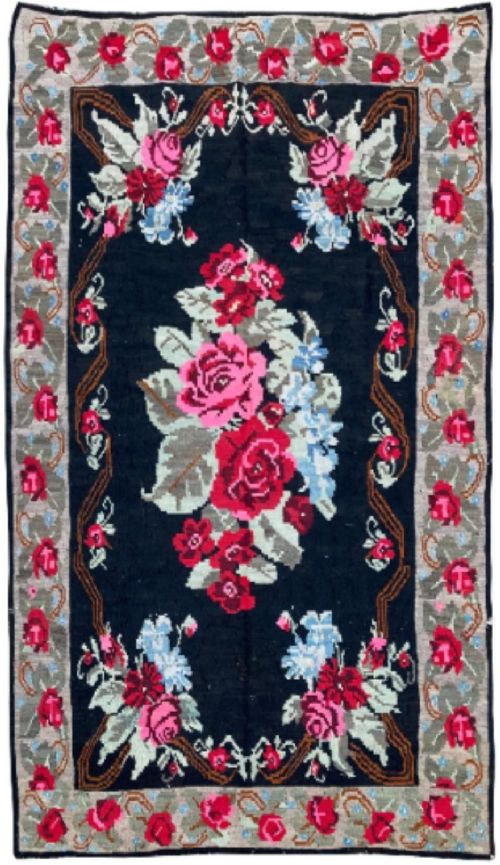
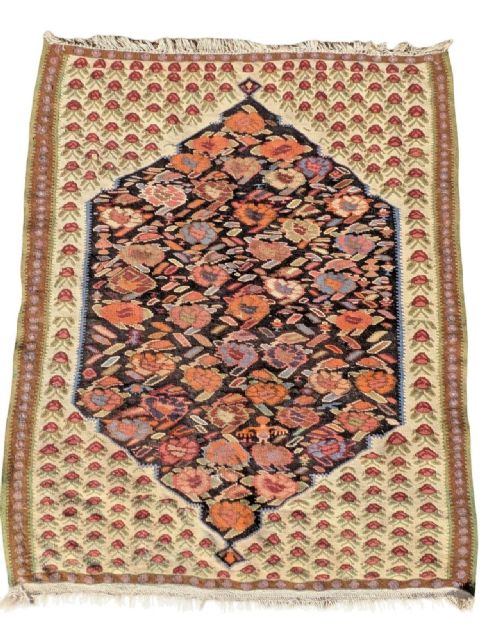
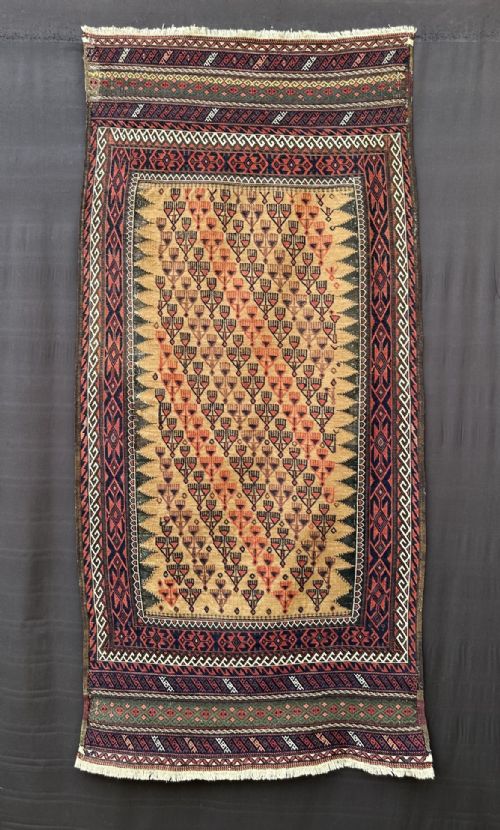


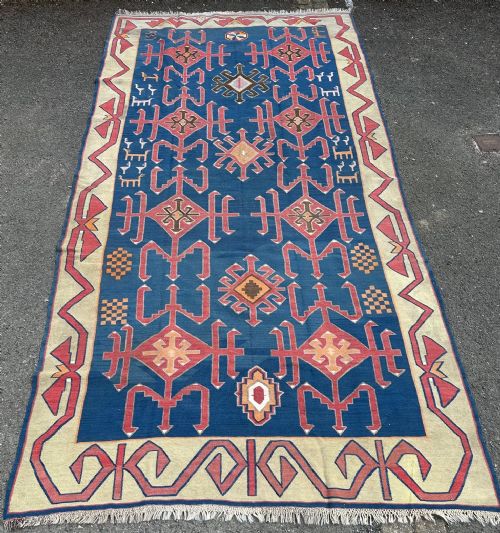


Wool Kilim Runner
A wool kilim runner brings tribal geometry and flat-woven warmth to a hallway or narrow floor space.
Wool Kilim Runner
A wool kilim runner is a flat-woven textile produced by nomadic and village weavers across Persia, Turkey, the Caucasus, and Central Asia. These long, narrow carpets were created for functional daily use in tents and homes, often serving as floor coverings or utilitarian spreads.
The pieces appearing on this page span several decades from the late nineteenth century into the mid-twentieth century. They reflect diverse regional aesthetics, from the bold geometric panels of Central Asian Uzbek makers to the intricate banded designs of Caucasian and Persian tribes.
How they were made
Makers utilised hand-spun wool and cotton foundations, working on portable horizontal looms to interlock the coloured weft threads tightly over the warp. This technique creates a flat surface without a pile, yielding a durable textile suitable for heavy traffic areas.
Natural dyes provide the foundational palette, deriving rich tones from local plants and minerals before synthetic alternatives gradually appeared in later decades. Many larger formats were constructed by weaving narrower strips or panels and joining them securely together.
Some runners are cleverly pieced together from old luggage bags, proving that nomadic weavers hated letting a scrap of good wool go to waste.
What varies in quality
The finesse of the weave sets superior examples apart, measured by the tightness of the interlocked slits and the precision of the geometric motifs. Finer structures demand greater time and skill from the weaver, resulting in sharper graphic definition.
The integrity of the natural dye palette and the condition of the edges and joins also dictate the standing of a piece. Retaining original finishes and strong, harmonious colour shifts elevate the overall character of the textile.
The Wool Kilim Runner Glossary
- Kilim
- A flat-woven carpet or rug produced without a pile by tightly interweaving the weft threads across the warp.
- Sofreh
- A utilitarian spread or cloth woven by tribal groups for dining, bread making, or food preparation.
- Mafrash
- A large luggage bag or storage panel woven by nomadic tribes, often later separated and utilised as flat-weave panels.
- Weft
- The horizontal threads passed back and forth through the warp to create the pattern and colour of the textile.
- Warp
- The stationary vertical threads stretched upon the loom that form the foundational structure of the rug.
Wool Kilim Runner: Frequently Asked Questions
Where should I place a kilim runner?
These narrow textiles suit hallways, corridors, and galley kitchens where floor space is limited and linear geometry works best. Their flat weave allows doors to swing freely overhead without catching.
Protect the antique fibres by placing a quality underlay beneath the textile to prevent sliding and reduce friction against hard flooring.
How do I clean a wool kilim?
Regular gentle vacuuming without the beater bar active removes loose dust and grit from the tight weave. Take care near the edges and historic joins.
Professional specialist cleaning is advised for deeper maintenance, as household washing can damage natural dyes and historic wool fibres.
Why are some runners woven in parts?
Nomadic weavers typically utilised portable horizontal looms with limited width capabilities, requiring them to produce long runners in separate narrow panels. These strips were subsequently joined together by hand to achieve the desired room size.
This construction method is a normal characteristic of authentic tribal and village flat-weaves from regions like Central Asia and the Caucasus.
How do I distinguish regional styles?
Caucasian pieces tend to display crisp, angular medallions and bold geometric bars, while Persian and Anatolian versions often incorporate intricate tribal motifs and softer floral geometry. Central Asian examples frequently utilise striking striped panel designs.
Examining the specific wool texture, dye palette, and structural composition helps identify the likely origin among diverse nomadic groups.