



Narrow Tribal Runner
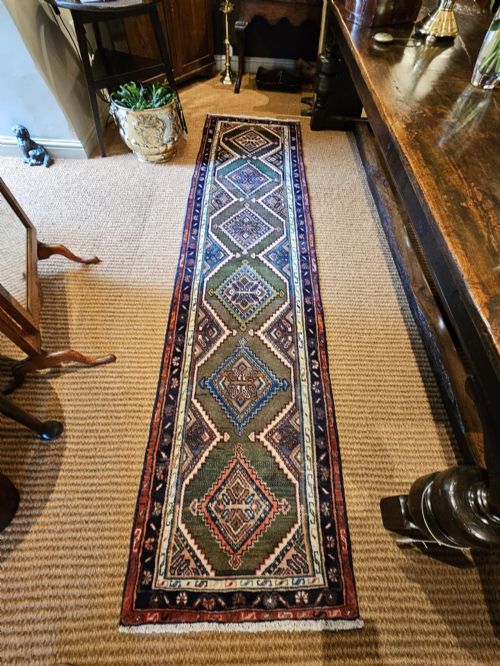
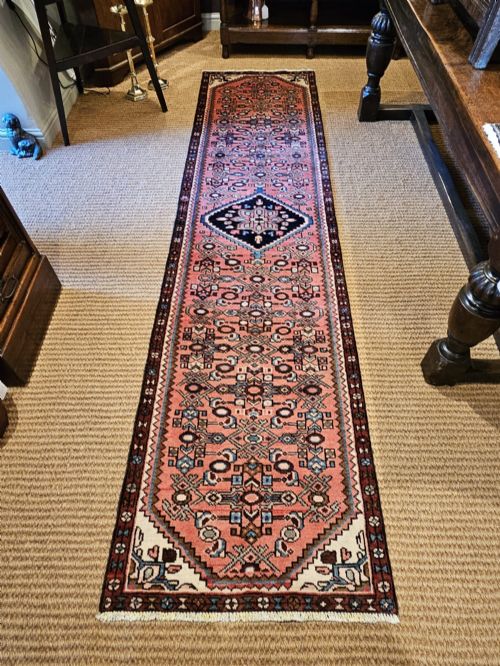
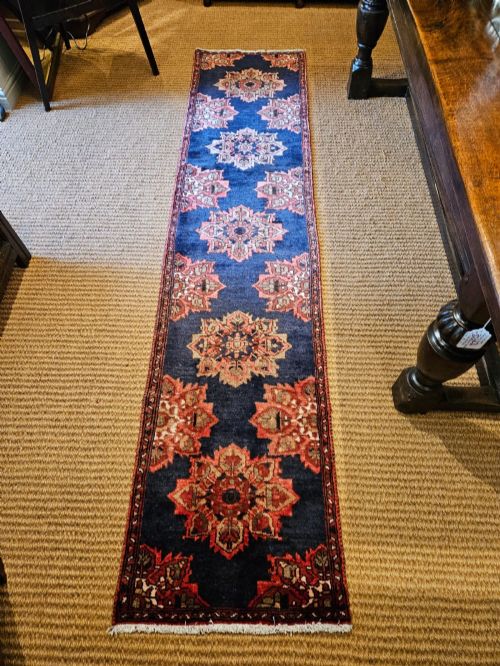
A narrow tribal runner brings warmth and distinct pattern to corridors, drawing the eye down long hallways with geometric designs.
Narrow Tribal Runner
A narrow tribal runner is an elongated floor covering traditionally woven by nomadic or village weavers in regions such as Persia, Turkey, the Caucasus, and North Africa. These pieces are principally designed to fit long spaces like hallways, landings, and corridors where standard rectangular rugs will not work.
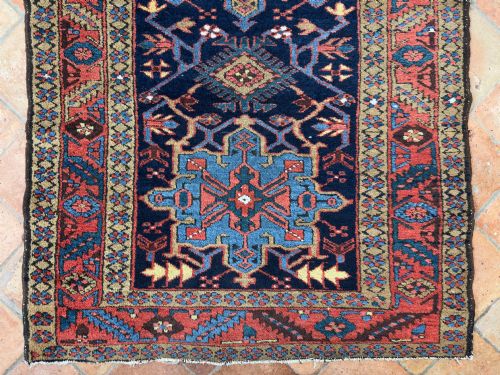
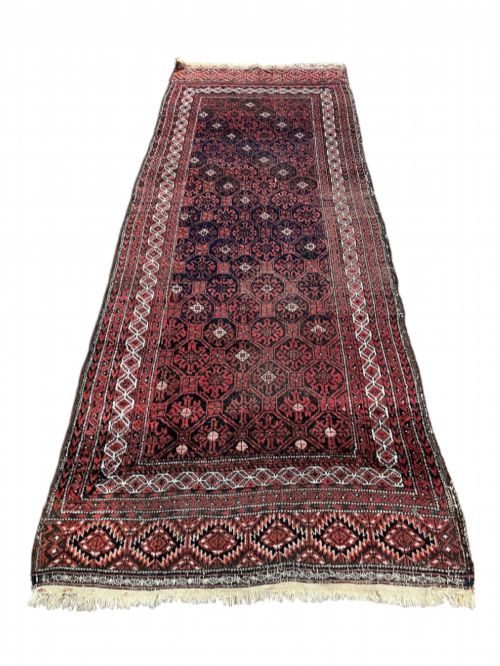
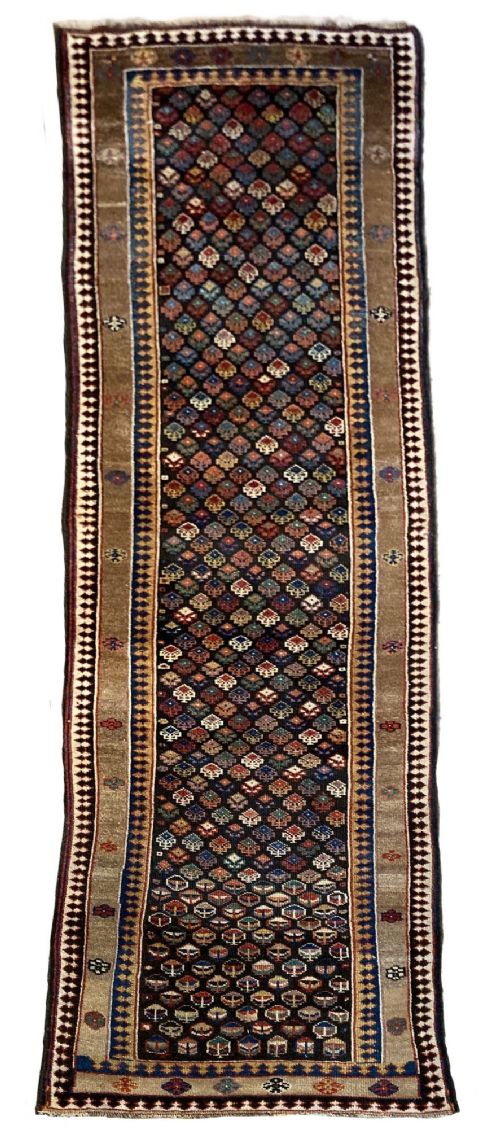
The selections available here span from the late nineteenth century through to the early decades of the twentieth century, originating from specific weaving centres like Hamadan, Heriz, Karaja, and Kurdish districts. They typically display geometric medallions, repeating motifs, and traditional village symbolism woven by hand.
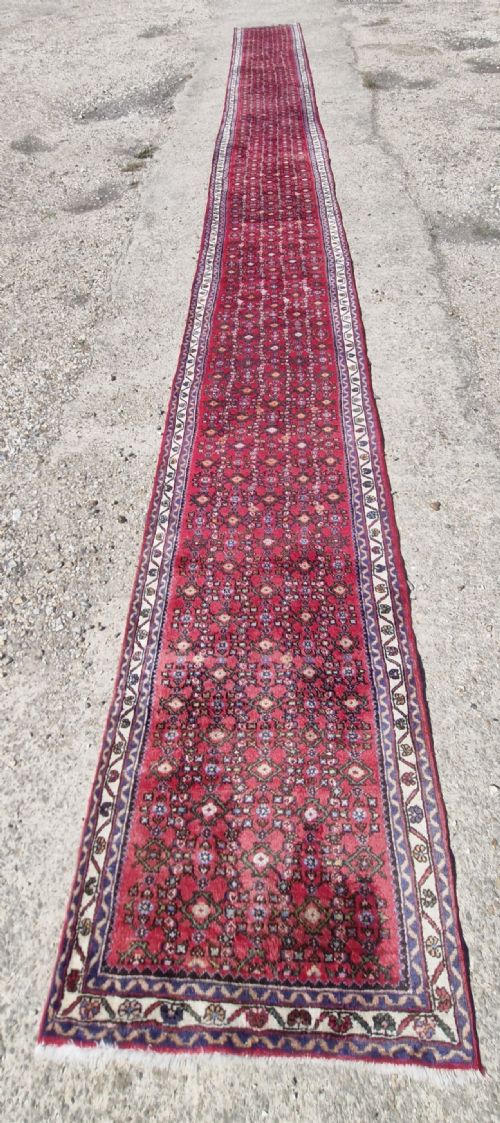
Buyers will encounter formats ranging from modest lengths of two metres up to impressive thirty-foot floor coverings, all sharing a notably slender proportion. These textiles served practical insulating purposes in domestic settings while reflecting the cultural visual language of their makers.
How they were made
These textiles rely on foundations of hand-spun wool and cotton, utilising durable natural fibres that withstand heavy foot traffic in domestic hallways. Weavers knotted or flat-wove these materials onto vertical looms, creating dense structures designed to endure decades of use.
Dyes derived from natural sources provide the deep red, navy blue, olive green, and mellow background tones seen across the pieces. The combination of resilient wool, camel hair, and tight construction gives each runner its characteristic weight and handle.
Listings feature runners dated from the 1870s through to the 1930s, constructed predominantly from hand-spun wool, cotton, and camel hair.
What varies in quality
The standard of a runner depends heavily on the precision of the weave and the crispness of the geometric design. Tighter knots and finer hand-spun wool generally indicate a more accomplished piece that retains its structural integrity over time.
Colour saturation and the harmonious balance of natural dyes distinguish finer examples from simpler village work. A well-executed layout with clear motifs demonstrates the weaver's deliberate control over the narrow format.
Persian Heriz·Kurdish Tribal·Moroccan Berber·Turkish Yagcibedir·Caucasian Shirvan
The Narrow Tribal Runner Glossary
- Kilim
- A flat-woven carpet or runner made without a pile by tightly interweaving warp and weft threads. These textiles often feature sharp geometric patterns and lighter weights than knotted pile rugs.
- Runner
- An elongated rectangular rug specifically proportioned for corridors, stairs, and narrow hallways. Their dimensions prioritize length over width to guide movement through domestic spaces.
- Warp
- The vertical threads stretched tightly on a loom that form the structural skeleton of the rug. Weft threads are passed across these structural elements to secure the knots.
- Weft
- The horizontal threads passed back and forth through the warp threads to hold the knots or flat-weave tightly in place. Together with the warp, they form the foundation of the textile.
- Pile
- The upright cut or looped yarn surface of a rug that forms the soft upper layer. Density and height of this surface vary between nomadic and village weaving traditions.
Narrow Tribal Runner: Frequently Asked Questions
How do I style a narrow tribal runner in a modern hallway?
Place the runner centrally along the length of your corridor, leaving an equal margin of bare flooring on all sides to frame the pattern. This draws the eye forward and creates a defined pathway through the space.
Pair the piece with neutral walls and minimal furniture to let the traditional geometric designs and natural wool textures stand out without visual clutter.
Are these runners suitable for high-traffic areas?
Traditional village and nomadic runners are constructed from durable hand-spun wool and sturdy foundations designed to endure heavy daily use. Their dense construction naturally resists crushing and regular wear.
Using a suitable underlay beneath the runner will prevent slipping and provide extra cushioning, further protecting the vintage fibres from premature degradation.
How do I tell an older Persian runner from a later village piece?
Nineteenth-century and early twentieth-century examples typically display softer, naturally derived colour palettes and slightly irregular geometries that reveal the hand of individual weavers. The handle of the wool tends to feel heavier and more substantial due to traditional preparation methods.
Later or standard commercial productions often feature more rigid symmetry and chemical dyes, lacking the subtle tonal variations found in genuine antique tribal work.
How should I clean and maintain an antique wool runner?
Regular, gentle vacuuming without a rotating brush bar prevents dirt from settling deep into the wool pile. Shake the runner lightly outdoors on occasion to dislodge trapped dust particles.
Professional specialist cleaning is recommended for deeper maintenance, avoiding harsh chemical treatments that can strip the natural lanolin from the vintage wool fibres.