

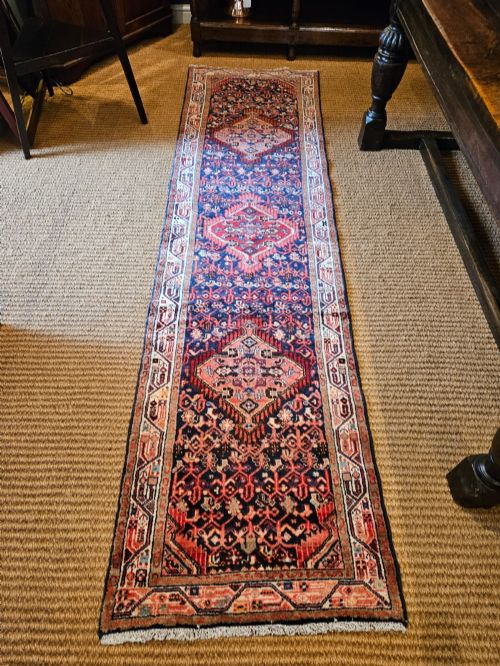
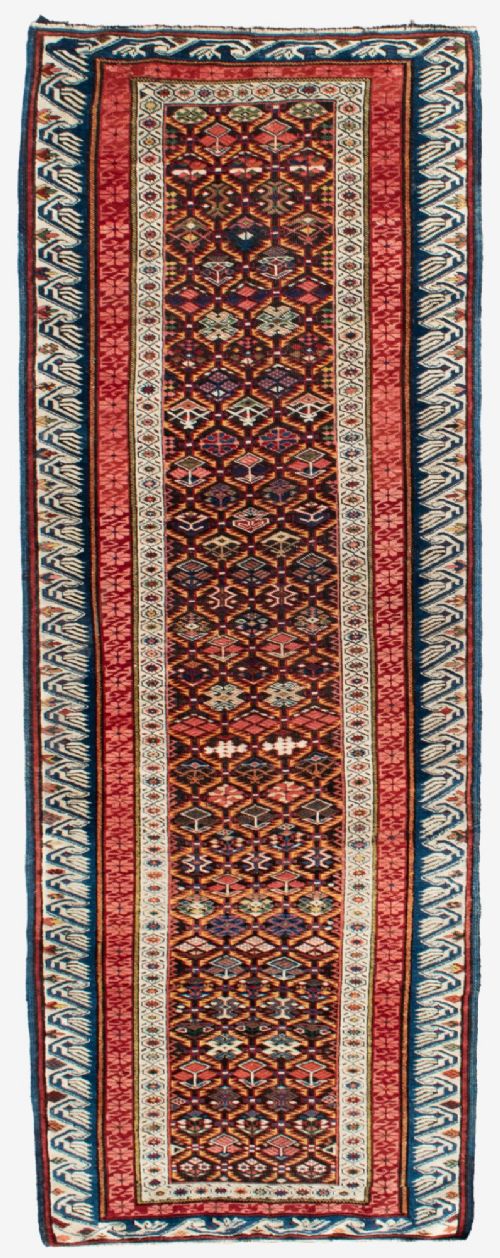
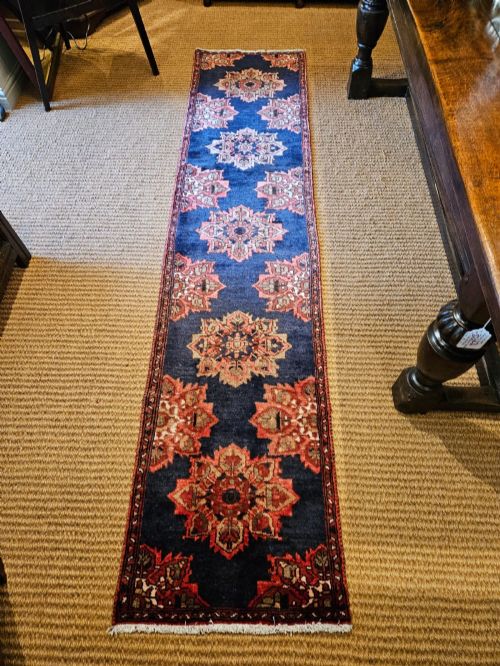
Wool Corridor Carpet
A wool corridor carpet brings warmth and deep heritage to long hallways, spanning tribal Persian and Caucasian traditions from the nineteenth and early twentieth centuries.
Wool Corridor Carpet
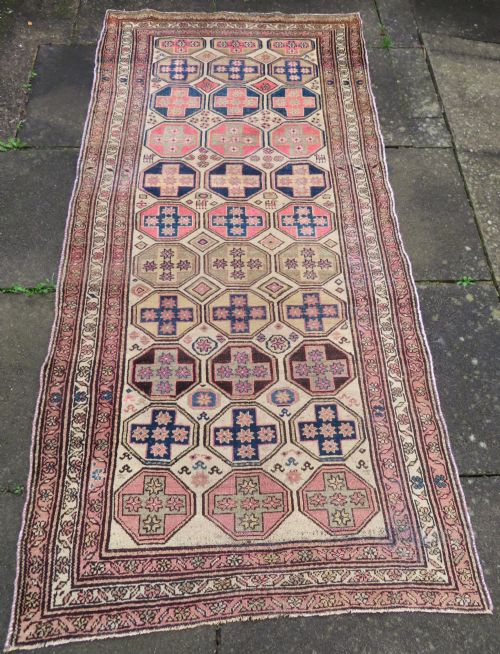
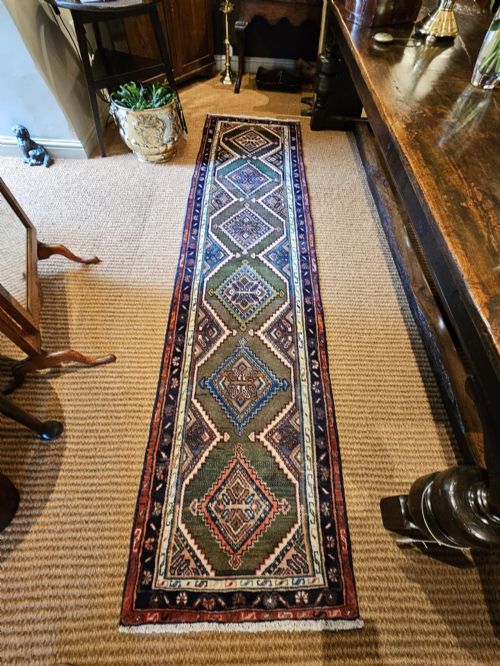
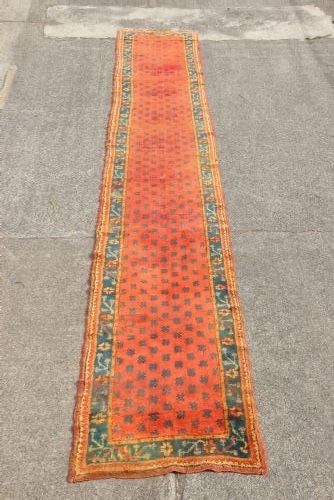
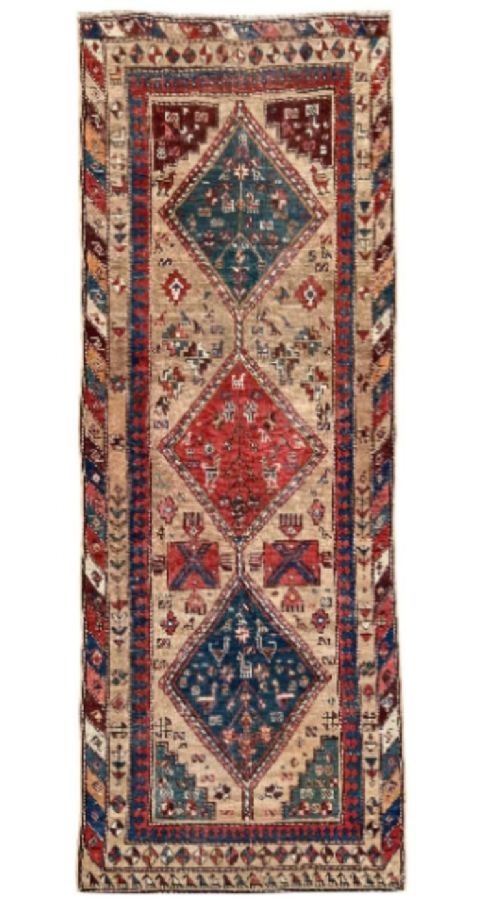
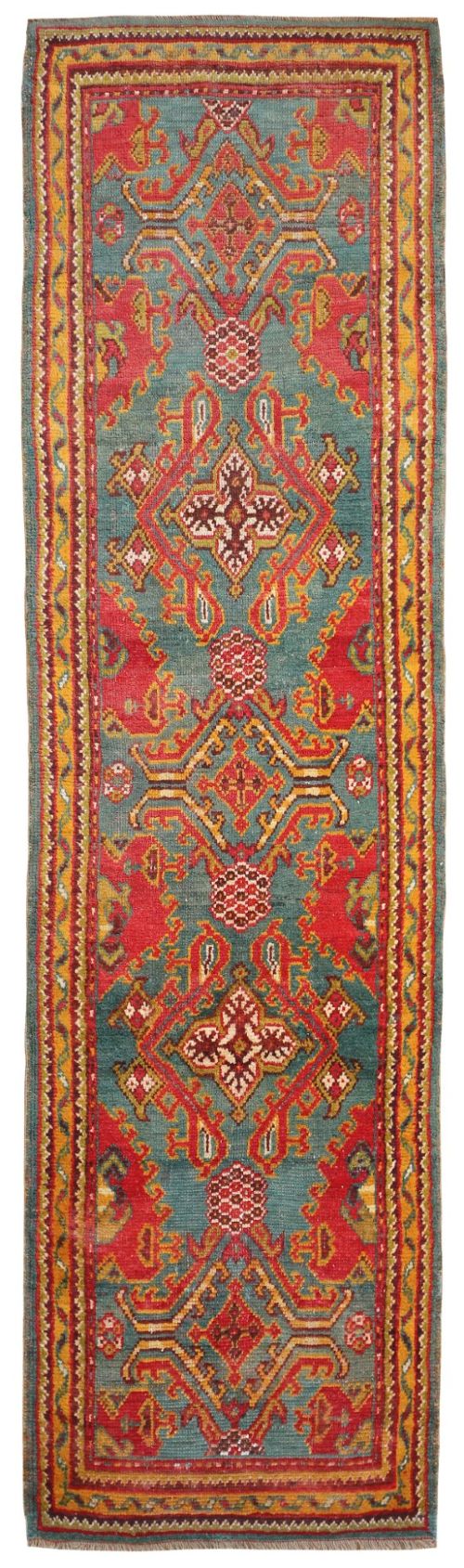
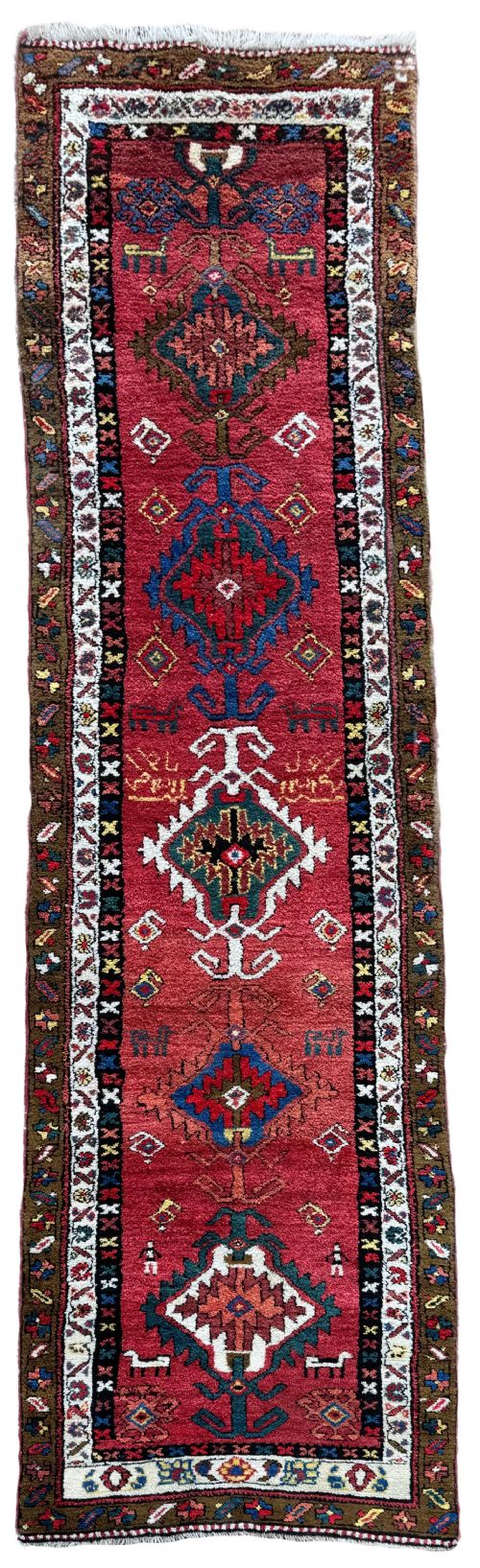
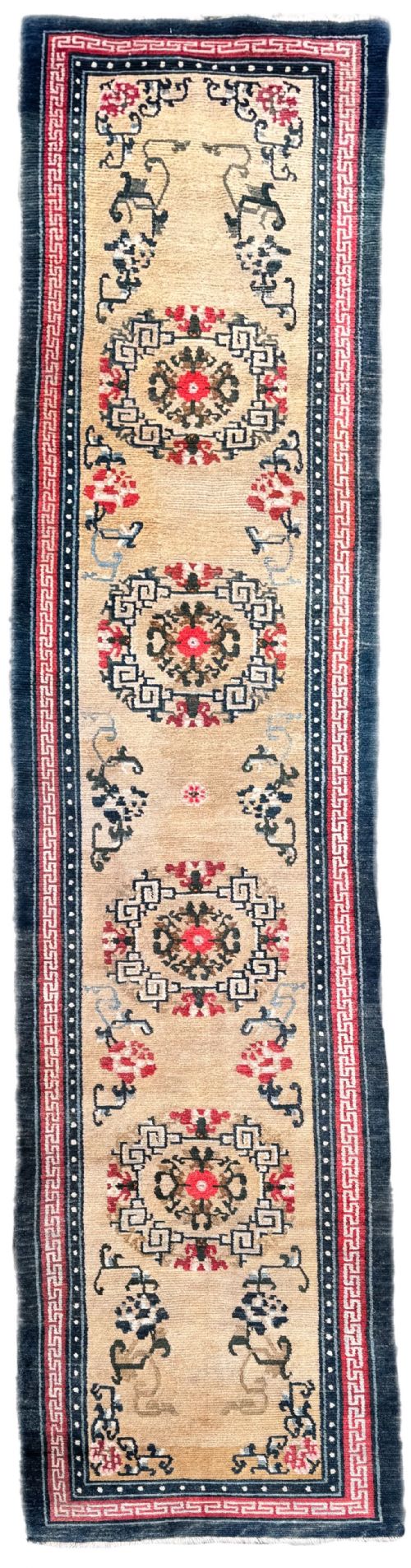
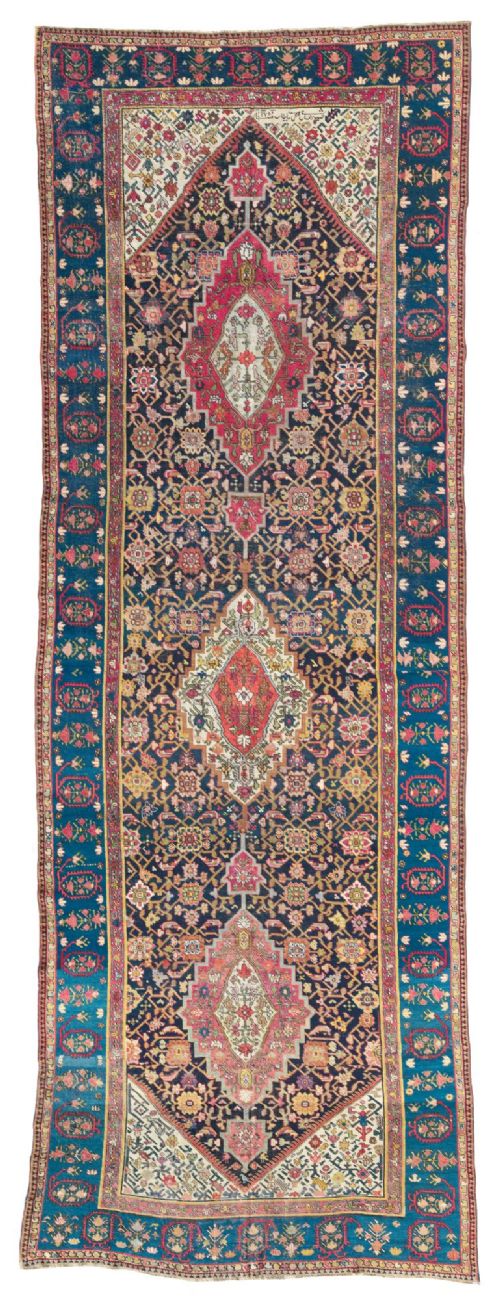
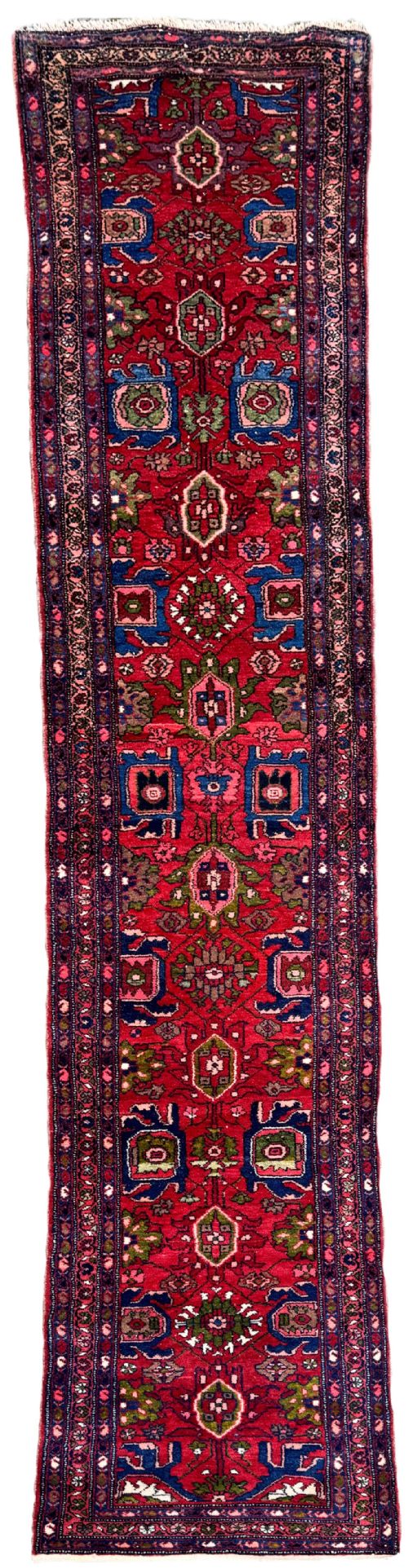
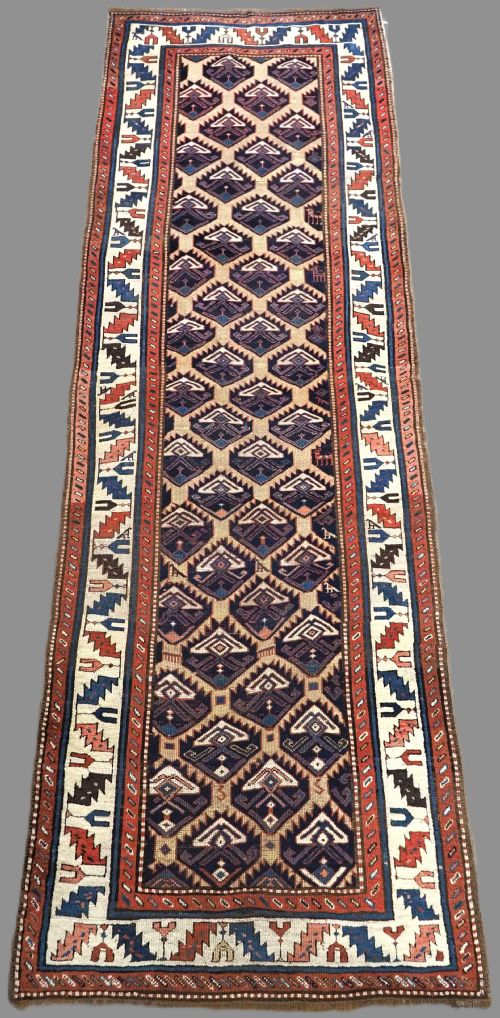
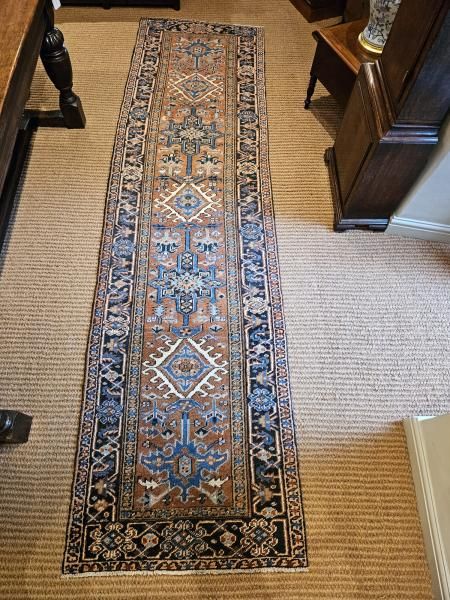
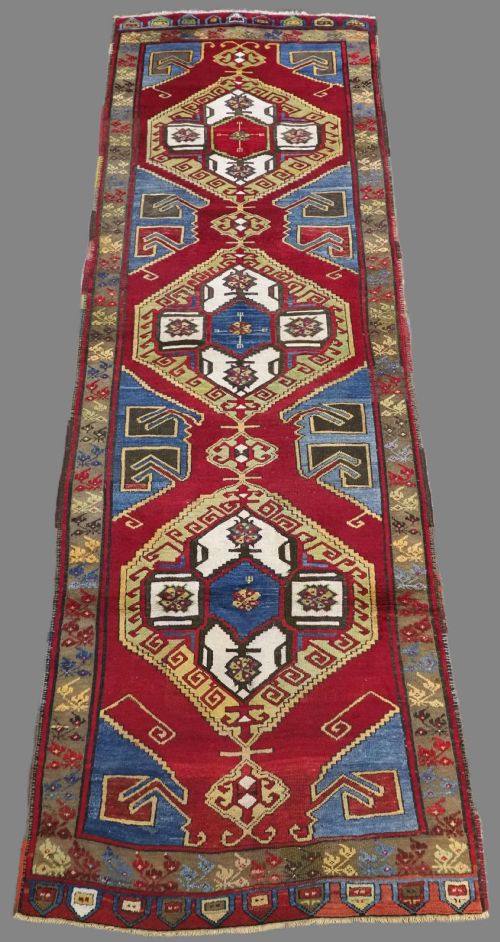
A wool corridor carpet serves long hallways, passages, and narrow landings with extended formats designed specifically for heavy domestic traffic. These pieces span runner rugs, long rugs, and kelleh formats originating from Persian, Caucasian, Turkish, and Tibetan workshops. The listings here centre primarily on late nineteenth and early twentieth-century examples, reaching back through the 1850s and extending into the 1930s.
Buyers encounter distinct regional aesthetics ranging from Kurdish and Heriz geometric designs to Kazak, Ushak, and Hamadan village weaves. Sizes vary from compact lengths under three metres to monumental hallway runners stretching past five or even nine metres. Materials focus firmly on wool and hand-spun wool foundations, often paired with cotton structures.
What Varies in Quality
Quality rests in the density of the knotting and the precision of the tribal or regional motifs executed along the narrow field. Tighter structures hold their integrity better across long spans, while finer hand-spun wool displays superior resilience.
The integrity of the original borders and the preservation of the pile depth distinguish master-woven village carpets from standard utility runners.
The listings here feature wool corridor carpets spanning from the 1850s through the 1930s, incorporating Persian tribal, Caucasian, and Anatolian traditions.
The Wool Corridor Carpet Glossary
- Runner
- A long, narrow carpet format specifically proportioned for corridors, hallways, and staircases.
- Kelleh
- A large, room-sized format or extended rectangular carpet traditionally used in Persian domestic spaces.
- Mina Khani
- A repeating geometric floral pattern distributed evenly across the field, frequently found in Kurdish weaving.
- Warp
- The vertical foundation threads stretched lengthwise on the loom onto which the pile knots are tied.
- Weft
- The horizontal threads passed across the warp threads to lock the rows of knots firmly in place.
Wool Corridor Carpet: Frequently Asked Questions
How do I measure for a corridor carpet?
Measure the clear floor space of your hallway, leaving a uniform border of exposed timber or stone around the edges. Account for door clearance to ensure the thickness of the wool pile allows doors to open smoothly.
Take measurements at multiple points along the corridor because older hand-woven runners can vary slightly in width along their length.
Where should I place a long runner?
These pieces fit naturally in entrance halls, long corridors, and wide landings where narrow floor spaces benefit from warmth and visual anchor points. They protect high-traffic floorboards while defining the axis of a long interior space.
Keep them away from direct, continuous dampness to protect the natural wool fibres over time.
How do I care for antique wool runners?
Vacuum gently using suction settings without a rotating brush roll to prevent snagging the hand-tied knots. Rotate the piece every six months to ensure even wear patterns from foot traffic and sunlight exposure.
Use a quality underlay beneath the carpet to prevent slipping and cushion the wool against hard subfloors.
How do I tell regional styles apart?
Caucasian runners typically display bold geometric medallions and sharp rectilinear lattice designs with saturated primary colours. Persian pieces such as Heriz or Hamadan often incorporate traditional floral motifs, boteh patterns, and structured central poles.
Anatolian and Kurdish examples lean towards tribal village aesthetics with expressive asymmetry and abrash colour variations in the wool.