


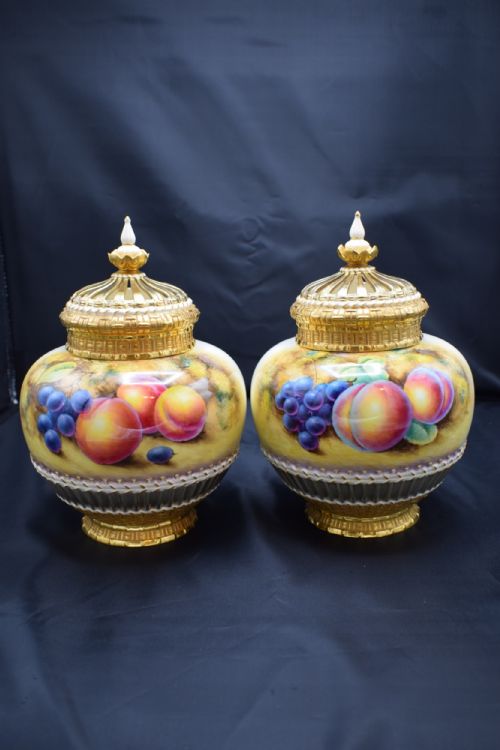


Worcester Porcelain Fruit Pot
A worcester porcelain fruit pot brings together fine English porcelain and hand-painted fruit panels that define a lasting tradition of ceramic artistry.
Worcester Porcelain Fruit Pot
A worcester porcelain fruit pot encompasses various decorative forms including pot pourri vases, ginger jars, and coffee pots created across the twentieth century. These vessels typically showcase detailed painted fruit motifs executed by notable artists working within the tradition.
Collectors frequently encounter pot pourri vases and jars featuring painted fruit alongside classical shapes spanning from the nineteen-twenties to nineteen-sixty. The selection also includes miniature vases and covered vessels reflecting traditional English porcelain styles.
How they were made
Production relies upon fine porcelain and bone china bodies shaped into vases, urns, and jars before undergoing high-temperature firing. Artisans then apply detailed enamel paints by hand to create realistic depictions of fruit.
Gilt, gold leaf, and delicate gilding finish the rims, handles, and covers to complement the painted scenes. Master painters sign their finished works directly onto the porcelain surface.
Several pieces include pierced lids specifically designed to let sweet scents escape while keeping dried petals neatly hidden inside.
What varies in quality
The distinction between standard examples and finer pieces rests primarily upon the skill of the artist and the complexity of the painted fruit composition. Signed works by recognised painters command particular attention for their artistic execution.
The application of gold leaf and gilding also influences the character of each vessel, with superior items displaying precise hand-gilded detailing that enhances the porcelain form.
Royal Worcester
The Worcester Porcelain Fruit Pot Glossary
- Pot pourri
- A perforated vessel designed to hold dried scented plant material and release fragrance into a room. These jars and vases often feature pierced covers.
- Bone china
- A type of porcelain incorporating bone ash to achieve a bright white appearance and increased strength. This material provides a smooth base for enamel painting.
- Enamel
- Vitreous coloured glass fused to the porcelain surface during firing. It provides the vibrant pigments used in fruit studies.
- Gilding
- The application of gold leaf or gold paint to ceramic surfaces. It highlights borders, handles, and finials.
- Ginger jar
- A covered storage vessel featuring a rounded body and wide mouth. Twentieth-century English makers adapted this shape for decorative display.
Worcester Porcelain Fruit Pot: Frequently Asked Questions
What is a worcester porcelain fruit pot?
These items are decorative ceramic vessels, including pot pourri vases and ginger jars, adorned with hand-painted fruit designs.
They represent a long-standing British tradition of fine porcelain manufacture and artistic painting.
How do I identify the artist?
Many pieces feature signatures or initials painted directly onto the porcelain surface near the fruit motifs.
Artists such as H Ayrton, John Smith, William Ricketts, Kitty Blake, and Freeman signed their painted works.
Were these pots used for pot pourri?
Vessels featuring pierced covers functioned as pot pourri holders to fragrance rooms in traditional homes.
Solid-bodied jars and vases served purely decorative roles on mantelpieces and side tables.
What periods do these pieces date from?
The available selection primarily dates across the twentieth century, specifically spanning the nineteen-twenties to nineteen-sixty.
Earlier archive examples extend back to the eighteenth century for related tableware.