


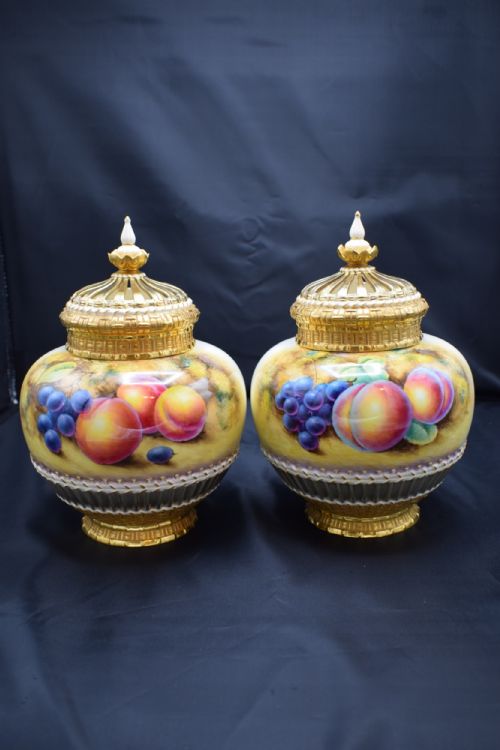


Worcester Fruit Painted Urn
A Worcester fruit painted urn is a hand-decorated porcelain vessel from English traditions, sought after for its detailed botanical study and gilding.
Worcester Fruit Painted Urn
When you search for a worcester fruit painted urn, you encounter decorative vessels produced across several periods, from Regency ice pails to mid-century pot pourri vases and ginger jars. The pieces you meet most often on this page date from the twentieth century, particularly the 1950s and 1960s, alongside examples from the Victorian, Edwardian, and Regency eras.
The forms vary from covered pot pourri vases and ewers to spill vases, rose jars, and two-handled cups. These items originate from English porcelain traditions, encompassing traditional English styles and Art Deco influences alongside nineteenth-century works.
What Varies in Quality
The distinction between tiers rests upon the execution of the hand-painted fruit and the finesse of the surrounding gilding. Signed works by notable painters demonstrate a higher standard of brushwork and artistic control than unsigned or standard production items.
The complexity of the vessel form, such as pierced covers on pot pourri vases or paired ewers, influences the overall character of the piece. The crispness of the porcelain moulding and the preservation of the gilt highlights further define the grade.
Some pot pourri jars come with hidden inner lids, ensuring the dried petals stay firmly put while the perfume does the work.
Royal Worcester·Flight Barr And Barr
The Worcester Fruit Painted Urn Glossary
- Pot pourri vase
- A vessel featuring a pierced or decorative cover designed to release scent from dried plant material inside. These often include inner lids beneath the main pierced cover.
- Gilding
- The application of gold or gold-coloured leaf onto the porcelain surface. This technique highlights rims, handles, and foot rings.
- Bone china
- A type of porcelain containing bone ash, creating a durable and translucent body. It provides a bright white background for enamel painting.
- Ewer
- A large jug with a wide spout and shaped handle, historically used for water but collected as a decorative object. Pairs of ewers often feature matched painted scenes.
- Enamel
- Vitreous coloured glass fused to the porcelain surface through firing. Painters utilise enamel pigments to achieve saturated fruit tones.
Worcester Fruit Painted Urn: Frequently Asked Questions
What is a worcester fruit painted urn?
A worcester fruit painted urn is an English porcelain vessel decorated with hand-painted fruit studies and gilt embellishments. These objects include pot pourri jars, ewers, and vases produced across the Victorian, Edwardian, and mid-twentieth-century periods.
Collectors prize them for the skill of the studio painters who rendered detailed peaches, grapes, and berries against shaded backgrounds.
How were these urns used?
Many of these vessels functioned as ornamental display pieces on mantelpieces, sideboards, and cabinets within formal interiors. Covered forms, such as pot pourri vases and rose jars, held dried aromatic plant mixtures to scent rooms.
Other shapes, including ice pails and ewers, originated as functional dining or serving items before transitioning purely to decorative display roles.
How do I identify the period?
Dating relies upon factory backstamps, styles, and recorded signatures of specific painters associated with the works. Regency pieces like ice pails display different forms and paste characteristics compared to twentieth-century examples from the 1950s and 1960s.
Examining the gilding style, typography of factory marks, and overall vessel shape helps place an item within Victorian, Edwardian, or later twentieth-century eras.
Are signed pieces more desirable?
Signed pieces bearing the names of recognised porcelain painters command attention from collectors due to verified individual authorship. Signatures indicate work by specific studio artists who specialised in detailed fruit compositions.
Unsigned examples still display fine porcelain bodies and traditional painting techniques, though signed items link directly to named decorators recorded in factory archives.